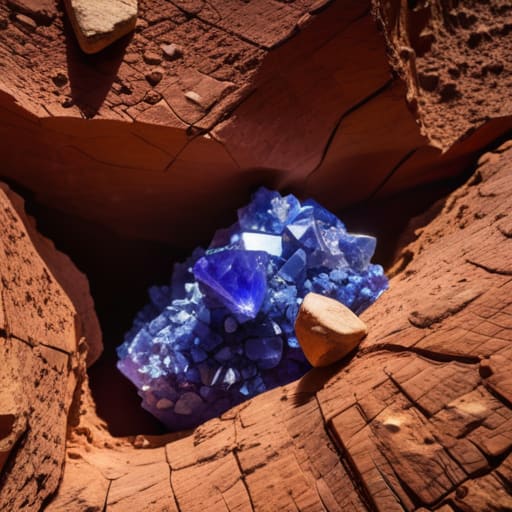
I spent six years hunched over a microscope in a grading lab, and if there is one thing that gets under my skin, it’s the way people wrap gemstones in layers of expensive, mystical nonsense. You’ll see shops charging a premium for “spiritual energy” when all you really need to know is the chemistry and the geology. People often get lost in the hype surrounding tanzanite and why it comes from one place only, treating it like some magical relic rather than a specific variety of blue zoisite. It isn’t magic; it’s just a very particular set of geological circumstances that happened once, in one spot, and only once.
I’m not here to sell you a dream or tell you how a stone will change your life. My goal is to strip away the marketing fluff and give you the actual facts. I’ll explain the science behind that deep, violet-blue hue—which, to me, always looks like the ocean just after a storm hits the coast—and I’ll show you exactly how to distinguish a genuine stone from the synthetic imitations trying to trick you. I’ll give you the real story of the Merelani Hills, and once you have the truth, what you do with it is entirely up to you.
The Raw Truth of Tanzanite and Why It Comes From One Place Only
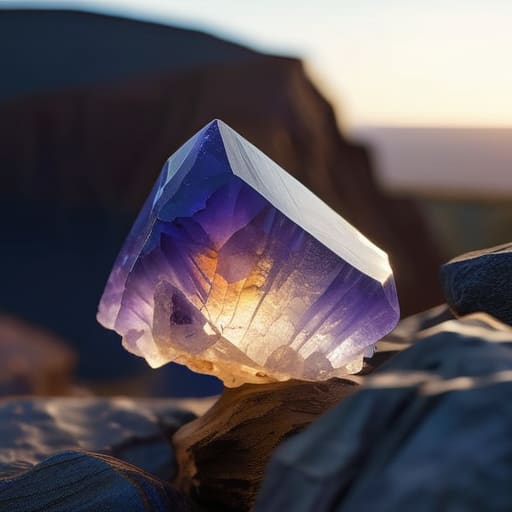
To understand why this stone is so elusive, you have to look at the Merelani Hills gemstone deposits. Most gemstones are spread across continents, but tanzanite is a geological fluke. It formed during a specific, violent window of tectonic activity millions of years ago, creating a very narrow chemical recipe that only happened in one tiny corner of Africa. When I look at a specimen, I don’t just see a pretty color; I see the result of a very specific geological formation that essentially closed its doors the moment it was finished.
Because it is trapped in such a small pocket of earth, the supply is finite. You aren’t just buying a stone; you are buying a piece of a vanishing map. This is where people often start a tanzanite vs sapphire comparison, thinking they are interchangeable because they both sit in that blue-violet family. But they aren’t. A sapphire is a sturdy, widespread classic, whereas tanzanite has this strange, shifting color trichroism—it can look like a deep ocean blue, a bruised violet, or even a warm burgundy depending on how the light hits it. It’s a temperamental beauty, but that’s exactly what makes it worth the hunt.
Unearthing the Secrets of the Merelani Hills Gemstone Deposits
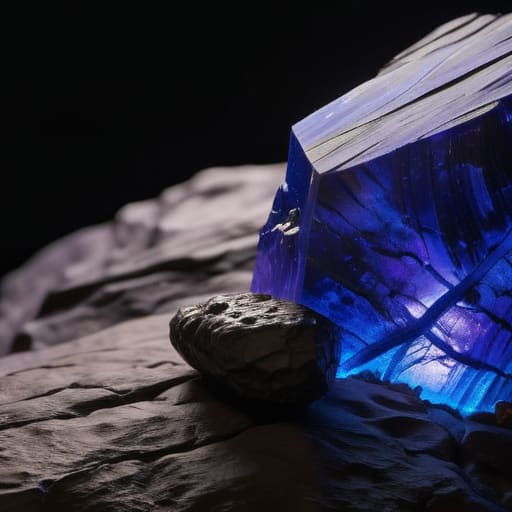
To understand why this stone is so stubborn about its geography, you have to look at the Merelani Hills gemstone deposits. It isn’t just a lucky patch of dirt; it’s the result of a very specific, high-pressure geological formation of tanzanite that happened deep within the Earth’s crust. The chemistry required to produce these specific blue-violet hues is incredibly picky. You need the right mix of vanadium and chromium, squeezed under just the right tectonic conditions. It’s a narrow window of possibility that, quite frankly, doesn’t seem to be opening anywhere else on the planet.
When I’m looking at a specimen through my loupe, I’m looking for that signature tanzanite color trichroism explained by its unique crystal structure—the way it flashes different colors depending on how the light hits it. Some people try to pass off blue sapphires as tanzanite, but a quick comparison shows the difference immediately. A sapphire is steady and predictable, whereas tanzanite has a shifting, restless quality. It looks like the sea just as a wave breaks—that deep, bruised indigo that turns to a bright, translucent violet when the light catches the edge.
Tracing the Violent Geological Formation of Tanzanite
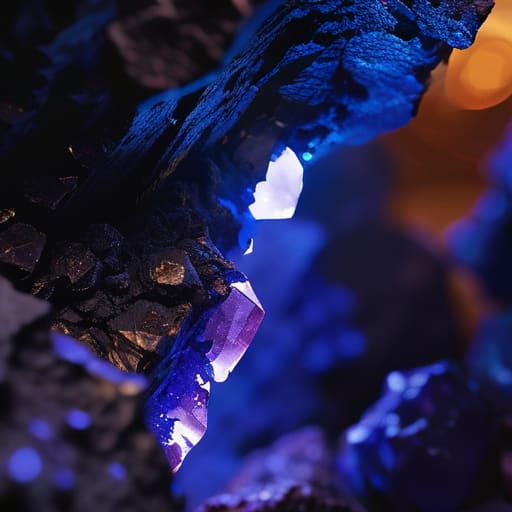
To understand why this stone is so rare, you have to look at the sheer violence of its birth. We aren’t talking about a slow, peaceful settling of silt. The geological formation of tanzanite was a high-pressure, high-heat event that occurred during the Pan-African orogeny. Imagine the Earth’s crust buckling and tearing under immense tectonic stress, forcing metamorphic fluids through cracks in the rock. It was a chaotic, messy process that happened millions of years ago, and it only happened in that specific chemical “sweet spot” near the Merelani Hills.
The result is a mineral that is chemically a variety of zoisite, but with a specific trace element—vanadium—that gives it that signature hue. When I look at a specimen under a loupe, I’m looking for that specific tanzanite color trichroism explained by its unique structure; it shows different colors depending on the angle of light. It can look like the deep, bruised purple of a storm cloud or the bright, electric blue of the North Sea after a heavy rain. Because that specific cocktail of heat, pressure, and chemistry is so localized, the stone simply doesn’t exist anywhere else.
Understanding the Rarity of Blue Violet Gemstones
When people talk about the rarity of blue violet gemstones, they often get lost in the mysticism of it all. I prefer to look at the chemistry. Tanzanite is a variety of zoisite, and while zoisite exists in other parts of the world, it rarely shows up with this specific, intense saturation of color. To my eye, a high-quality stone looks like the deep, bruised purple of a North Sea wave just before a storm breaks. It’s that specific intersection of blue and violet that makes it so hard to replicate.
This brings us to a common point of confusion: the tanzanite vs sapphire comparison. If you’re looking at a sapphire, you’re looking at corundum, a completely different beast. Sapphires can be found all over the globe, but tanzanite is tethered to that one specific geological moment in the Merelani Hills. Because the conditions required to create this exact chemical cocktail are so narrow, we aren’t just looking at a rare stone; we are looking at a geological fluke that happened once, and perhaps won’t happen anywhere else.
Tanzanite Color Trichroism Explained Without the Sales Pitch
If you’ve ever held a piece of tanzanite up to the light and felt like you were seeing three different stones at once, you aren’t imagining things. This is what we call trichroism. Unlike a sapphire, which tends to hold a fairly consistent hue, tanzanite is a bit of a shapeshifter. Depending on which angle you tilt the stone, it might flash a deep, velvety violet, a bright cornflower blue, or even a subtle, brownish-red. When I see a high-quality specimen, the color looks like the deep indigo of the North Sea just before a storm hits.
This isn’t some mystical trick; it’s a result of how the light interacts with the crystal’s internal structure. In a tanzanite vs sapphire comparison, this is often the deciding factor for collectors. While a sapphire is prized for its steady, singular color, tanzanite offers this restless, shifting energy. When you are looking at these stones, don’t just check the color from the top. Turn it. If it doesn’t show those distinctly different hues as you move it, you might be looking at a treated stone or something else entirely.
A Fair Tanzanite vs Sapphire Comparison for the Wise Buyer
If you’re standing in a shop looking at two blue stones, it’s easy to get confused. You’ll see a sapphire and a tanzanite and think they are cousins, but they are more like distant relatives from different continents. A sapphire is corundum, a very hard, stable mineral that can handle being part of an engagement ring for decades without a scratch. Tanzanite is a variety of zoisite, which is significantly softer. If you look at the color, a sapphire is often a deep, uniform navy—like the ocean just before a storm. Tanzanite, however, has that shifting, multi-tonal quality because of its trichroism. It’s never just one flat color; it’s a mix of blues, purples, and even flashes of red.
When you weigh them up in a tanzanite vs sapphire comparison, you aren’t just choosing a color; you’re choosing a lifestyle. Because of its lower Mohs hardness, I always tell people to think twice before putting a tanzanite in a ring that sees heavy daily wear. A sapphire is a workhorse. Tanzanite is a mood; it’s a piece of the Merelani Hills that demands a bit more respect and perhaps a bit more care.
Inside the Tanzania Gemstone Mining Industry and Its Real Cost
When you look at a finished stone in a velvet-lined display case, it’s easy to forget the grit and sweat that actually brought it to the surface. The Tanzania gemstone mining industry isn’t a polished machine; it’s a landscape of small-scale artisanal miners working in difficult, often precarious conditions. Most of the tanzanite being pulled from the Merelani Hills doesn’t come from massive, high-tech corporations, but from individuals using hand tools to navigate narrow, unstable shafts. It is a heavy, physical way to make a living, and the reality on the ground is far less romantic than the marketing brochures suggest.
There is a real tension here between the extreme rarity of blue violet gemstones and the people who extract them. Because the supply is so concentrated in one tiny geological pocket, the market is volatile. When prices spike, the pressure on the miners increases, often leading to rushed or unsafe practices. I don’t mean to dampen the mood, but if you want to respect the stone, you have to respect the human cost of its journey from the earth to your hand.
A Matter of Geology, Not Magic
People like to talk about tanzanite as if it’s a mystical gift from the earth, but the reality is much more grounded—it is a specific chemical accident that happened in one tiny, violent pocket of the Merelani Hills, and because geology doesn’t repeat itself like that, you won’t find its equal anywhere else on the map.
Dagny Solheim
Final Thoughts on a Rare Find
We have covered a lot of ground, from the violent tectonic shifts that birthed these stones to the specific, narrow strip of the Merelani Hills where they still hide. You now know that tanzanite isn’t just a pretty blue-violet color; it is a complex variety of zoisite with a very specific chemical history. Whether you are comparing it to sapphire or trying to decipher its trichroic flashes under a loupe, remember that its rarity is a matter of geological fact, not marketing fluff. If you can spot the difference between a genuine, deep-hued stone and a glass imitation, you are already ahead of most of the market. Knowing the composition and the source is what turns a simple purchase into an informed one.
At the end of the day, whether you hold a piece of tanzanite because you admire its crystal structure or because you feel a connection to its energy, that is entirely up to you. I am here to talk about the hardness and the chemistry, but I won’t tell you how to feel about the beauty. There is something deeply grounding about holding a piece of the earth that only exists in one tiny corner of the world. It is a finite piece of history held in the palm of your hand. Go ahead and enjoy it—just make sure you know exactly what you’re holding.
