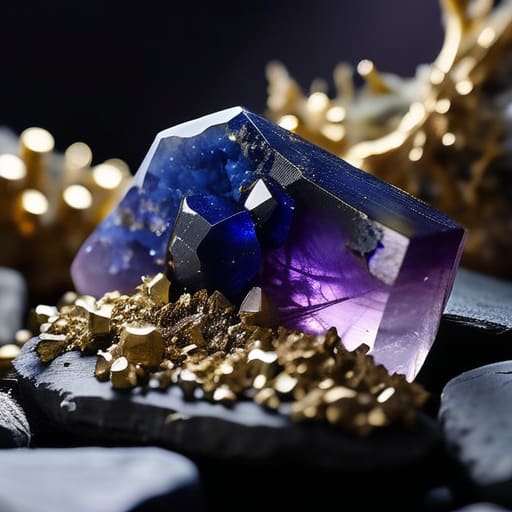
I was sitting in a cramped grading lab in Bergen, staring through a loupe at a piece of amethyst that looked like it had been dyed in a vat of grape soda, when I first realized how much nonsense people buy into. The salesperson was spinning some yarn about how this specific stone was the only way to survive the chaos of mercury retrograde and the stones people reach for, charging a premium for what was essentially colored glass. It’s frustrating to see people lose their hard-earned money to manufactured magic when the real beauty of a mineral lies in its actual lattice structure and its history, not in a sales pitch designed to exploit a bad week.
I’m not here to tell you that a piece of quartz is going to fix your communication issues or stop the planets from doing whatever they do. What I am going to do is show you the actual minerals people tend to grab when things get messy, and more importantly, how to tell if you’re holding a genuine specimen or just a shiny piece of junk. I’ll give you the geology, the physical properties, and the truth about the stone; what you decide to do with that energy once you have it in your hand is entirely up to you.
The Chaos of Mercury Retrograde and the Stones People Reach for
When the planets shift like this, the world tends to get loud and cluttered. People come to me during these periods looking for something to steady the noise—usually because their emails are going sideways or they can’t stop overthinking a conversation from three years ago. I see it as a search for grounding gems for retrograde periods, a way to tether themselves when the mental fog starts rolling in like a North Sea mist. It isn’t about changing the orbit of a planet; it’s about finding a physical object that feels solid when everything else feels fluid.
Most people I talk to are looking for communication clarity crystals to help them stop tripping over their words. They want something to act as a buffer between their brain and their mouth. Whether you’re using a piece of smoky quartz to stay centered or a bit of blue lace agate to keep your tone even, I don’t judge the intent. I just focus on the mineral. If you’re trying to find some semblance of order amidst the planetary shifts, you need stones that actually possess the structural integrity to match that goal.
Finding Communication Clarity Crystals Amidst the Static
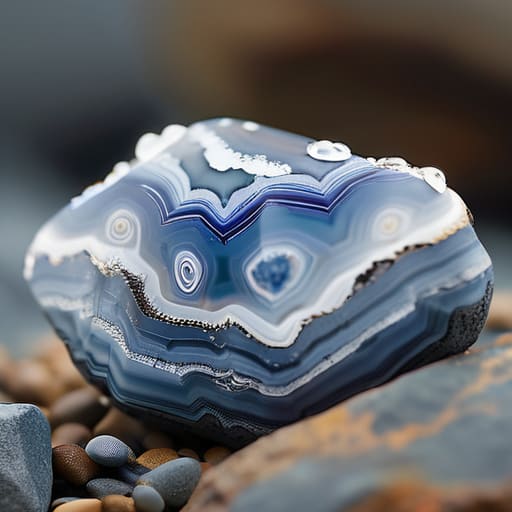
When everything feels like a garbled radio signal, people usually look for communication clarity crystals to help cut through the noise. I tend to look toward Blue Lace Agate. It’s a variety of chalcedony, a microcrystalline quartz, and it has this specific, soft color—like the sky just after a heavy rain has stopped and the clouds are starting to break. Because it’s a quartz, it’s quite hard, so you aren’t going to find many fakes made of soft limestone, though you might see dyed glass. If the color looks too uniform or “electric,” it’s likely just colored glass.
If you’re struggling with that specific brand of mental static, you might also reach for Sodalite. It’s a sodium aluminum silicate, often found in deep, navy hues that look like the North Sea on a stormy afternoon. It’s excellent for managing mercury retrograde chaos because it has a heavy, grounding presence. I don’t care much for the “astral alignment” talk, but if having a piece of dense, blue stone on your desk helps you focus when your brain feels like it’s underwater, then it’s doing its job.
Managing Mercury Retrograde Chaos With Honest Earth Matter
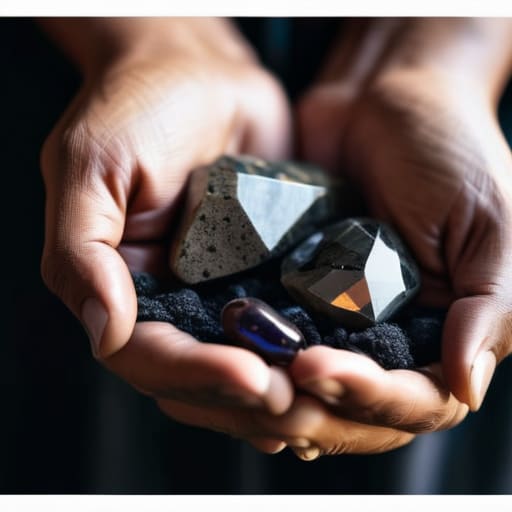
When everything feels like it’s spinning out of control, people tend to look for something heavy to hold onto. I get it. Whether you believe the planets are actually tugging at your nerves or you just find the seasonal shift a good excuse to slow down, there is a psychological comfort in holding something that took millions of years to form. I usually suggest looking toward grounding gems for retrograde—stones that don’t care about celestial alignments because they are too busy being solid.
Black tourmaline is my go-to here. It’s a complex silicate mineral, often found in pegmatites, and it has a weight to it that feels very intentional in the palm. It’s a deep, matte black, like a piece of slate that’s been sitting in a tide pool after a storm. If you’re looking for spiritual protection during planetary shifts, this is a reliable choice. Just make sure you aren’t buying a piece of dyed obsidian; real tourmaline has a distinct, slightly grainy structure under a loupe. If it looks too perfectly uniform or glassy, it’s likely something else. Use it to steady your hands; what happens in your head is your business.
Healing Crystals for Mental Fog What Is Real Stone
When people talk about using healing crystals for mental fog, they are usually looking for something to clear the cobwebs when the world feels a bit too loud. Often, that means reaching for Fluorite. In its best form, Fluorite has a color like a shallow fjord in mid-winter—a translucent, icy purple or sea-green that looks almost liquid. It’s a calcium fluoride mineral, and a good piece should feel substantial, not light or hollow like the cheap, dyed resin imitations I see in gift shops. If you hold a piece of Fluorite up to the light and it looks like cloudy, colored plastic, it probably is.
If you’re looking for grounding gems for retrograde to help steady your focus, you might also gravitate toward Sodalite. Real Sodalite is a sodium aluminum silicate, usually a deep, navy blue with white streaks that look like sea foam hitting dark rocks. It shouldn’t have a greasy sheen; it should be matte and solid. I don’t care if you use these stones to help your brain find its center or just as a tactile fidget while you navigate a messy week, but please, make sure you’re holding actual earth matter and not just a bit of molded glass.
Grounding Gems for Retrograde Separating Substance From Salesmanship
When everything feels like it’s spinning out of control, people tend to look for something heavy and solid to hold onto. I see this all the time—a sudden surge in demand for black tourmaline or smoky quartz. These are classic grounding gems for retrograde, and for good reason. They are dense, dark, and chemically stable. A piece of high-quality smoky quartz, for instance, has a color like wet peat moss, a deep, translucent brown that feels anchored to the earth.
However, the market is flooded with cheap, dyed obsidian or even black glass being sold as “protective” stones. If you’re looking for spiritual protection during planetary shifts, don’t just grab the first thing in a velvet pouch. Real black tourmaline should have distinct vertical striations—tiny grooves running along the length of the crystal. If it’s perfectly smooth and suspiciously light, it’s likely just plastic or glass. I’m not saying you need a stone to keep your feet on the ground, but if you do choose to use one, at least make sure you’re holding actual geology rather than a polished bit of junk.
Astrological Energy Balancing Stones That Actually Hold Weight
When people talk about astrological energy balancing stones, they often get lost in the fluff. They’ll tell you a stone has “vibrations” that can fix a cosmic misalignment, which is a bit like saying a piece of granite has a “vibe” that can fix a broken leg. I don’t deal in vibes, but I do deal in density. When the planets feel like they’re spinning out of control, you want something with actual mass. I tend to reach for Hematite. It’s an iron oxide, heavy and cold, with a metallic luster that looks like wet slate under a direct light. It doesn’t care about your horoscope, but its weight in your palm provides a physical anchor when everything else feels flighty.
If you are looking for spiritual protection during planetary shifts, skip the cheap, dyed calcite being sold in gift shops. Look for something with a structural integrity that matches the chaos. I like Sodalite for this; it’s a sodium aluminum silicate with a deep, navy hue that reminds me of the North Sea just before a storm. It’s sturdy, it’s real, and it stays put. Whether that helps you navigate the stars or just gives you something solid to hold while you vent, that’s your call.
Spiritual Protection During Planetary Shifts Know Your Minerals
When people talk about spiritual protection during planetary shifts, they usually reach for Black Tourmaline. It’s a classic for a reason. Chemically, it’s a complex borosilicate, and when you find a high-quality piece, the black is deep and opaque, like a piece of coal pulled straight from a wet seabed. If you’re looking at something that looks too shiny or translucent to be real, it might just be black glass. If it’s genuine, it has a weight to it that feels honest.
I’ve seen a lot of people use these stones to help with managing mercury retrograde chaos, and I don’t judge the intent. If holding a heavy, solid piece of Tourmaline makes the world feel a little less frantic while the planets do their thing, then it’s doing its job. Just don’t expect the mineral to change its lattice structure to suit your mood; it’s going to be exactly what it is, regardless of the astrological weather. Whether you’re using it as a psychological anchor or something more, start by checking the cleavage and the luster to ensure you aren’t just carrying around a polished bit of plastic.
Substance Over Static
Whether you’re looking for a stone to steady your nerves while the planets do their thing or just something pretty to hold, remember that a crystal’s value lies in its chemistry and its history, not in the promises printed on a sales card. I can tell you exactly what a piece of fluorite is made of and how to spot the dyed glass junk being sold as it; what you decide to do with that piece of earth once it’s in your hand is entirely up to you.
Dagny Solheim
Final Thoughts on Stone and Sky
We have looked at everything from the communicative blue of a genuine Sodalite to the heavy, grounding presence of Hematite. Whether you are reaching for stones to clear the mental fog of a planetary shift or looking for something to steady your nerves when communication breaks down, the most important thing is to ensure you are holding actual mineral matter. I have spent too many hours under a loupe to let you walk away with a piece of dyed glass or a plastic imitation when you are looking for stability. Knowing the difference between a real specimen and a cheap imitation isn’t about being cynical; it’s about making sure that when you reach for something to help you through the chaos, you are holding something with real geological substance.
At the end of the day, Mercury will do what it does, and the stars will follow their own clock. I cannot tell you that a piece of Fluorite will stop a technical glitch or a misunderstanding, but I can tell you that holding something formed over millions of years under immense pressure provides a certain perspective. There is something quiet and certain about a stone that has survived the crushing weight of the earth. If holding a cold, heavy piece of quartz helps you find your center while the world feels like it’s spinning a bit too fast, then that is enough for me. Just make sure it’s a real stone.
