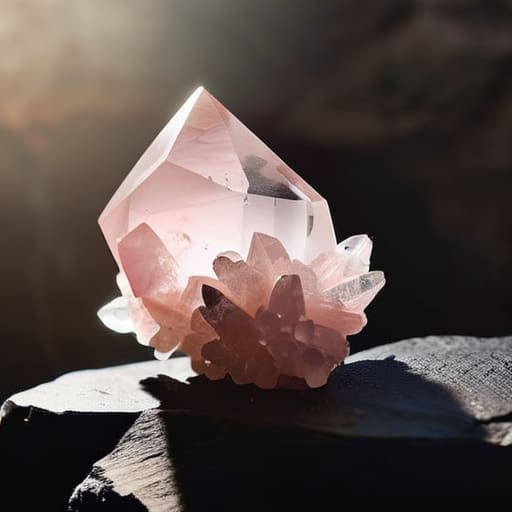
I spent six years in a grading lab staring through a loupe at stones that were often nothing more than glorified industrial scrap, so I have a very low tolerance for the marketing fluff that follows rose quartz. You’ll see it sold in every boutique as some kind of magical panacea for your broken heart, but when you strip away the expensive packaging, you’re left with a variety of quartz that is chemically simple: silicon dioxide. There is a massive gap between the mineralogy of the stone and the stories we tell ourselves about rose quartz and what people hope it does, and frankly, most of the “healing” claims you read online are just creative writing.
I’m not here to tell you that a piece of pink feldspar or glass won’t help you feel better—if holding a pretty object gives you a moment of peace, that’s your business. What I am going to do is tell you exactly what you are holding, how to spot the real translucent pink variety from the cheap, dyed junk, and what the actual geological history of the stone is. I’ll give you the scientific reality of the mineral, and you can decide for yourself if you want to use it as a tool for meditation or just a nice paperweight.
The Composition of Pink Quartz and What People Hope It Does
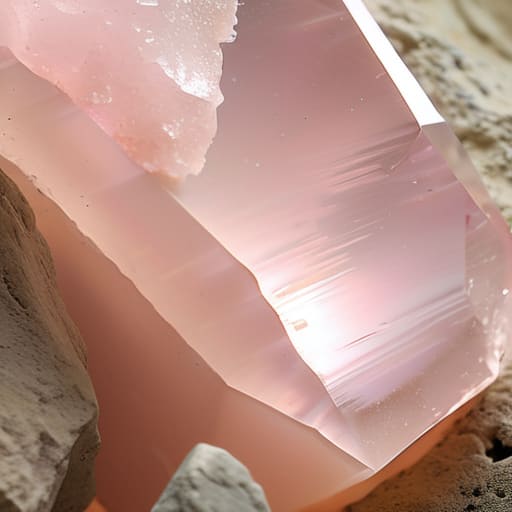
Chemically speaking, rose quartz is just a variety of quartz—silicon dioxide—with some trace amounts of titanium, iron, or manganese that give it that soft, translucent hue. When I see a specimen that looks like a piece of wet, pale peach skin, I know I’m looking at the real thing. It’s a hexagonal crystal system, though you rarely see well-defined terminations in rose quartz; it usually shows up in massive, milky chunks. If you find a piece that is perfectly clear or has a neon, electric pink glow, it’s likely glass or a synthetic treated stone.
Once you’ve confirmed you actually have a mineral and not a piece of plastic, you run into the side of the industry I find more interesting: the intention. People flock to these stones for rose quartz healing properties, usually hoping to mend a broken heart or find a new partner. There is a massive market around using rose quartz for self-love, treating the stone as a physical anchor for an internal shift. Whether you view these metaphysical uses of pink quartz as a psychological tool or a literal energetic frequency, the stone remains the same hard, silicate structure it has always been.
Separating the Real Stone From the Marketing Hype
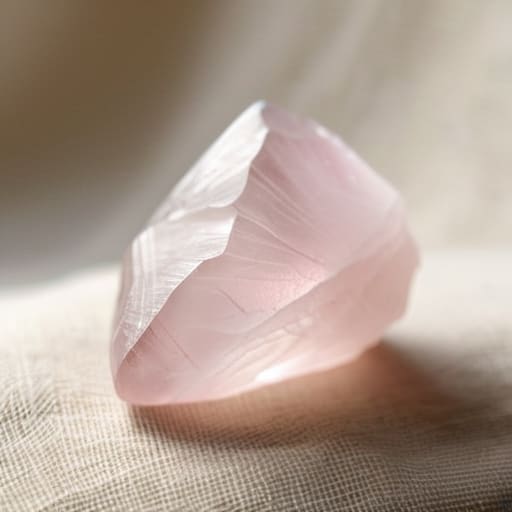
When you’re scrolling through a shop online, you’ll see a lot of pink stones being sold with grand promises of rose quartz healing properties that sound more like a fairy tale than geology. The easiest way to spot a fake is to look at the clarity and the color. Real rose quartz is rarely a perfect, transparent pink; it usually looks like a piece of sea glass that’s been tumbled in a bucket of milk—milky, translucent, and often filled with tiny internal fractures or “veils.” If you see a stone that is perfectly clear, neon pink, and looks like a piece of hard candy, you aren’t looking at quartz. You’re looking at dyed glass or even synthetic resin.
I’ve spent enough time under a loupe to know that the market is flooded with these imitations. People are often searching for love and emotional healing crystals to help them through a rough patch, and sellers know that’s a powerful hook. If the price seems too good to be true for a massive, flawless specimen, it probably is. I don’t care if you use a genuine piece of silicon dioxide to meditate or just to decorate your desk, but you should at least know you’re holding the actual mineral.
The Truth About Rose Quartz Healing Properties
Now, let’s talk about the gap between the mineralogy and the mysticism. If you search for this stone online, you’ll be flooded with claims about rose quartz healing properties that sound more like a pharmaceutical brochure than a geological reality. People will tell you it’s a tool for attracting romance or that it acts as a magnet for soulmates. As a gemmologist, I can tell you that the stone doesn’t have a magnetic field capable of influencing your dating life, nor does it possess a biological mechanism to alter your neurochemistry.
However, I’m not here to tell you that the metaphysical uses of pink quartz are a waste of time. If you find that holding a cool, heavy piece of quartz helps you sit still for five minutes of meditation, then it’s doing something. If using rose quartz for self-love serves as a tactile, physical reminder to be kinder to yourself, then that’s a psychological tool, not a geological miracle. Whether you view it as a way to tap into a heart chakra connection or just a pretty object to keep on your desk, the value is in how you interact with it, not in the chemical formula of the silica.
Navigating Love and Emotional Healing Crystals Without Fear
If you’ve spent any time in a crystal shop, you’ve likely felt that sudden, sharp pressure to buy something because you’re going through a breakup or a rough patch at work. It’s a heavy feeling, and it’s easy to feel like you’re failing if a stone doesn’t immediately change your mood. But when you’re looking into love and emotional healing crystals, try to approach them like a tool rather than a magic wand. I think of a stone like a piece of heavy, wet granite on a shoreline—it is solid, it is there, and it is indifferent to your problems. It won’t reach out and fix your life, but it can serve as a physical anchor when things feel chaotic.
Instead of worrying if you’re “doing it right,” focus on the tactile reality of the mineral. If you find yourself using rose quartz for self-love, let it be a sensory prompt. Hold the cool, pale pink surface in your hand when you feel overwhelmed. Use the weight of the stone to bring your attention back to your own breathing. Whether you believe in the rose quartz heart chakra connection or you just like the way the light hits the inclusions, the stone is a constant. It doesn’t demand anything from you, and that’s often exactly what you need.
Understanding the Rose Quartz Heart Chakra Connection
In the world of energy work, you’ll constantly hear about the rose quartz heart chakra connection. The idea is that this stone, with its color reminiscent of a bruised petal or a sunset reflecting off wet sand, vibrates at a frequency that matches the center of your chest. People use it to bridge the gap between physical sensation and emotional state, hoping that holding a piece of silicon dioxide will somehow unblock the pathways of the heart.
While my geology background doesn’t provide a way to measure “chakra energy,” I do recognize why this association exists. There is something inherently calming about the stone’s visual softness. When people look into the metaphysical uses of pink quartz, they aren’t usually looking for a chemical reaction; they are looking for a focal point. Whether you are using rose quartz for self-love or simply using it as a tactile reminder to breathe through a moment of anxiety, the stone serves as a physical anchor for an internal process. It doesn’t do the heavy lifting for you, but it gives your hands something steady to hold while you do the work.
Exploring the Metaphysical Uses of Pink Quartz
When people talk about the metaphysical uses of pink quartz, they aren’t usually discussing its Mohs hardness or its silicate structure. Instead, they are looking for a tool to navigate their own internal weather. I see people carrying these stones like little talismans, hoping the soft, pale pink—the color of a bruised sky just before dawn—will act as a stabilizer. Whether you are using rose quartz for self-love or simply like the way it feels in your palm, you are essentially using a physical object to anchor a psychological intention.
There is a massive market built around rose quartz healing properties, promising everything from mending broken marriages to attracting soulmates. I don’t subscribe to the idea that a mineral can perform surgery on your social life, but I do understand the ritual of it. If holding a stone helps you pause and breathe during a moment of panic, then the stone has served a purpose. For many, the love and emotional healing crystals they collect aren’t magic wands; they are sensory reminders to be a bit kinder to themselves.
Using Rose Quartz for Self Love on Your Own Terms
If you’ve decided to bring a piece of rose quartz into your life, don’t feel like you need to follow a manual written by someone who has never stepped foot in a geology lab. For some, it’s about the ritual; for others, it’s just a pretty object on a desk. If you are interested in using rose quartz for self-love, my suggestion is to treat it as a tactile anchor. When things feel chaotic, holding a stone that has been cooling in the earth for millions of years can be a grounding sensation. It isn’t magic, but the physical weight of it can serve as a reminder to breathe.
You don’t need to perform complex ceremonies to explore the metaphysical uses of pink quartz. Some people find that placing a specimen near their bed helps them wind down, while others use it as a focal point during meditation to settle their thoughts. Whether you are looking for rose quartz spiritual benefits or you just like the way the light hits the inclusions, the stone doesn’t care. It just sits there, being quartz. You decide what it means to you.
## A Matter of Perspective
“At the end of the day, a piece of rose quartz is just silicon dioxide with a bit of titanium or manganese making it look like the sky just after a storm; it isn’t going to rewrite your DNA or force someone to love you, but if holding a cool, heavy stone helps you breathe a little easier when things get messy, then I suppose it’s doing exactly what it needs to do.”
Dagny Solheim
Final Thoughts on the Pink Stone
At the end of the day, we’ve looked at the hard facts: rose quartz is a variety of silicon dioxide, colored by trace amounts of titanium or manganese, and it isn’t going to magically rewrite your DNA. I’ve shown you how to check for those internal fractures that prove it’s a natural crystal rather than a piece of dyed glass, and we’ve navigated the wide gap between mineralogical reality and the metaphysical claims found in most gift shops. Whether you view it as a beautiful specimen of pink quartz or a tool for heart chakra work, the stone remains the same physical object. It is a piece of the earth’s crust that has survived millions of years of pressure, and knowing exactly what you are holding is the first step to enjoying it.
I don’t care if you keep your rose quartz in a velvet-lined box or use it as a focal point for meditation during a difficult breakup. If holding a stone that looks like a wet, pink sunset helps you take a breath and find a moment of stillness, then it has served a purpose. Science can explain the chemistry, but it can’t dictate how you choose to relate to the world around you. Take the stone, look at it closely, and let it be whatever you need it to be. After all, the history of the stone is fixed, but its meaning is yours to write.
If you find yourself holding a piece of rose quartz and feeling that sudden, sharp urge to figure out why your current relationship feels so heavy, I get it. While the stone won’t rewrite your interpersonal dynamics, sometimes having a bit of external perspective helps you understand the patterns you’re trying to heal. I’ve found that using a tool like AstroNoir.ai can be a useful way to map out the energy between people, giving you something tangible to reflect on while you sit with your stones. It doesn’t change the chemistry of the quartz, but it might give you a better starting point for the work you’re doing.