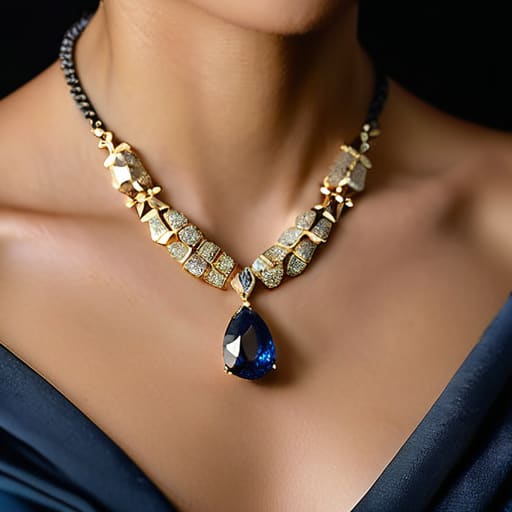
I spent six years in a grading lab, hunched over a microscope until my neck felt like it was made of rusted iron, and if there is one thing I’ve learned, it’s that people love to make jewelry more complicated than it needs to be. I see these “style guides” online telling you there is a rigid, mathematical rule for choosing between a choker and long chain for a single statement stone, as if the mineral itself cares about your neckline. They’ll try to sell you on “proportions” and “aesthetic balance” like you’re decorating a museum exhibit rather than just putting on a piece of history. It’s exhausting.
My goal here isn’t to give you a lecture on fashion etiquette; I’m here to talk about the stone. I want to help you understand how the weight of a piece of labradorite or the specific cut of a garnet will actually sit against your skin, whether it’s high on the throat or swinging low. I’ll tell you how to spot a high-quality specimen so you don’t get swindled, and then I’ll give you my honest take on how to wear it. No fluff, no nonsense.
What Lies Within the Gem Identifying the Real Stone
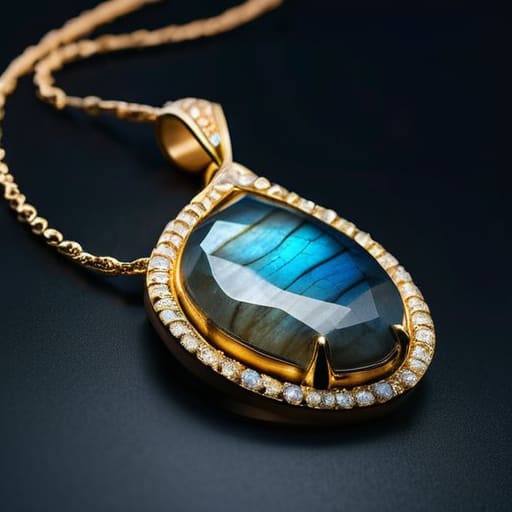
Before you decide how to hang a stone around your neck, you need to know if you’re actually holding a piece of the earth or just a bit of polished glass. Take a Labradorite, for instance. When it’s dry, it can look like a dull, grey pebble, but once you get it under a good light, that labradorescence should flash like the surface of the North Sea just after a storm. If the color looks painted on or stays static no matter how you tilt it, you’ve likely got a synthetic imitation.
If you’re looking at a piece for minimalist gemstone layering, pay close attention to the inclusions. A real emerald should have “jardin”—tiny, internal fractures that look like moss trapped in ice. If it’s too perfect, it’s probably lab-grown or glass. Knowing the mineral’s true nature helps you respect the weight and the way it sits against your skin. Whether you choose a short fit or a long drop, knowing the stone is authentic makes the whole neckline guide for statement jewelry feel a lot more grounded in reality.
The Choker and Long Chain for a Single Statement Stone
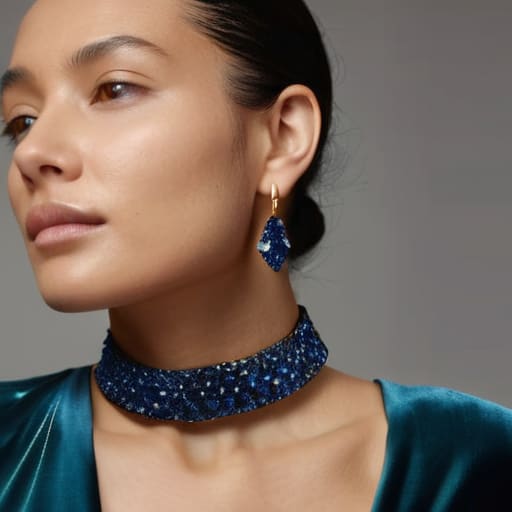
Once you’ve confirmed your stone is the real deal—and not some glass imitation—you have to decide how to actually show it off. If you have a single, heavy piece, like a deep teal sapphire or a chunky piece of labradorite, you’re essentially looking at a choice of framing. Wearing it on a choker pulls the focus upward, right toward your jawline and face. It feels deliberate and a bit more formal. On the other hand, a long chain lets the stone hang lower, creating a vertical line that moves as you walk. It’s less about making a statement at eye level and more about the weight and movement of the mineral against your clothes.
If you can’t decide, you don’t actually have to. I often find that mixing choker and pendant lengths is the most effective way to give a single stone some context. You might pair your main gem on a longer chain with a simple, slim gold choker sitting higher up on the neck. This kind of minimalist gemstone layering prevents the single stone from feeling lonely or out of place. It turns a solitary object into a curated look, whether you’re heading to a gallery opening or just out for a walk by the fjord.
Mastering the Art of Mixing Choker and Pendant Lengths
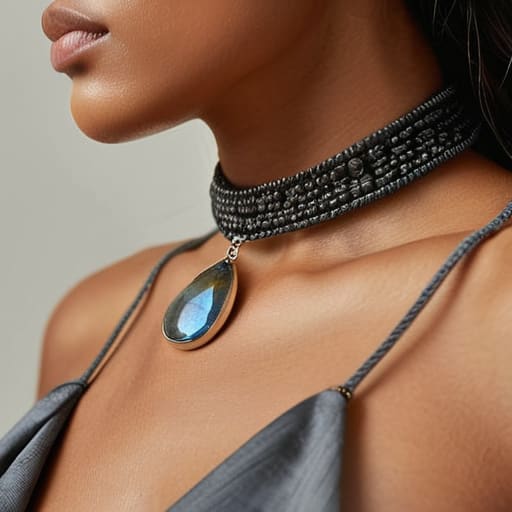
When you start mixing choker and pendant lengths, you aren’t just playing with fashion; you’re managing the visual weight of the stones. If you have a single, heavy Labradorite pendant that looks like a dark, stormy sea after a rainstorm, don’t bury it under a clutter of other gems. Instead, use a slim, silk-cord choker to create a “frame” at the base of your neck. This gap between the choker and the pendant provides breathing room, allowing the eye to travel naturally from the throat down to the stone. It creates a sense of intentionality rather than a pile of jewelry.
For those who prefer a more subtle approach, minimalist gemstone layering works best when you play with textures. I often find that pairing a smooth, polished gold choker with a long, faceted quartz pendant creates a beautiful contrast between light and shadow. If you are following a neckline guide for statement jewelry, remember that the closer the stone sits to your collarbone, the more it becomes a focal point of your face. The longer the chain, the more it becomes a part of your silhouette. It’s all about balance.
A Neckline Guide for Statement Jewelry and Real Gems
If you’re looking for a practical neckline guide for statement jewelry, I usually start with the shape of the collar. A V-neck is my personal favorite for a single, substantial stone; it creates a natural frame that draws the eye downward, allowing a pendant to sit exactly where it should without fighting your clothes. If you’re wearing a crew neck or a high turtleneck, a choker works beautifully to break up the expanse of fabric, but you’ll want to ensure the stone is high-quality—something like a deep, mossy green jade or a clear quartz—so it doesn’t get lost against the solid color.
For those experimenting with mixing choker and pendant lengths, the goal is balance rather than perfection. If you have a heavy, labradorite pendant on a long chain, a thin, delicate choker helps ground the look without making it feel cluttered. I’ve found that the most successful minimalist gemstone layering happens when you respect the scale of the stone. If the gem is large and heavy, let it breathe. If it’s smaller, you can afford to be a bit more adventurous with how many layers you stack.
Minimalist Gemstone Layering Without Losing the Stones Soul
When people talk about minimalist gemstone layering, they often make the mistake of adding too much noise. If you have a piece with a really striking clarity—say, a Labradorite that flashes like the North Sea after a storm—you don’t want to bury it under a mountain of gold and beads. The goal isn’t to create a cluttered look, but to provide a frame. I usually suggest picking one primary stone and pairing it with a very fine, almost invisible chain. This keeps the focus on the mineral’s specific light refraction rather than the metalwork.
If you are experimenting with mixing choker and pendant lengths, keep the secondary piece incredibly simple. If your statement stone is a deep, mossy green tourmaline, perhaps the shorter chain is just a plain silk cord or a tiny, solid gold bead. You want to create a sense of depth without competing for attention. It’s about using the geometry of the necklaces to draw the eye toward the specimen, treating the jewelry like a display case rather than a costume.
Versatile Crystal Jewelry Sets Choosing Your Own Path
If you aren’t interested in the solo act, you might find yourself looking at versatile crystal jewelry sets that come pre-packaged. I see these a lot in shops—a matching pair of a short strand and a longer one. My advice is to look closely at the stones before you commit. If the set features a high-quality Labradorite with that deep, blue-grey flash you see in a tide pool, ensure the second stone isn’t just a cheap piece of glass meant to fill the gap. You want the mineral composition to be consistent so the pieces actually feel like they belong together.
When you start mixing choker and pendant lengths within a set, you have more freedom to play with the rhythm of your outfit. You don’t have to follow a strict rulebook; you can treat the pieces as individual tools. If you have a set with a faceted garnet, you might find that wearing the shorter piece alone on a Tuesday feels more “you” than the full ensemble. It’s about finding a balance that respects the stone’s clarity and your own sense of style.
How to Wear Dual Length Necklaces Your Own Way
When you’re getting into layered gemstone necklace styling, the biggest mistake I see is trying to make the pieces compete. If you have a single, high-quality stone—say, a deep teal sapphire that looks like the North Sea after a storm—you don’t want to bury it under a mountain of beads. The trick to mixing choker and pendant lengths is to let one piece act as the anchor while the other provides the frame. A tight choker creates a clean line at the base of the neck, which actually pushes the eye downward toward your longer pendant.
I tend to think of it like topography. You want levels. If your choker is a simple gold chain or a thin strand of tiny garnets, it sets a high baseline. This allows your main statement stone to hang freely without tangling. You don’t need a complex neckline guide for statement jewelry to get this right; just ensure there is enough “negative space” between the two lengths so the stones don’t clatter against each other. It’s about creating a visual path for the eye to follow, rather than a cluttered pile of minerals.
The Weight of the Stone
Whether you pin a heavy piece of labradorite high against your collarbone on a choker or let it swing low on a long chain, the physics of the metal doesn’t change the chemistry of the stone; my job is just to make sure what’s hanging there is actually what you paid for.
Dagny Solheim
Finding Your Own Balance
At the end of the day, whether you are layering a deep, mossy green jade pendant on a long gold chain or sitting a bright, sea-glass blue sapphire against your throat on a velvet choker, the goal is the same: making the stone the star. We’ve talked about checking the hardness of your gems so you don’t end up with a piece of dyed glass, and we’ve looked at how different necklines can either frame a stone or hide it entirely. It really comes down to understanding the physical reality of what you are wearing. If you know the mineral, know its weight, and know how the light hits its facets, you won’t feel like you’re just wearing a bit of shiny clutter. You’ll be wearing something with actual substance.
I don’t care if you follow my layering rules to a T or if you decide to throw a single, heavy labradorite on a random cord and call it a day. My job is to make sure you know the difference between a genuine crystal and a clever imitation. Once you have the real thing in your hands, the way it sits against your skin—whether it’s high and tight or swinging low against your chest—is entirely your prerogative. Jewelry is just a way to carry a little bit of the earth’s history with you. So, pick a stone that speaks to you, wear it in a way that feels right for your body, and enjoy the weight of it.
