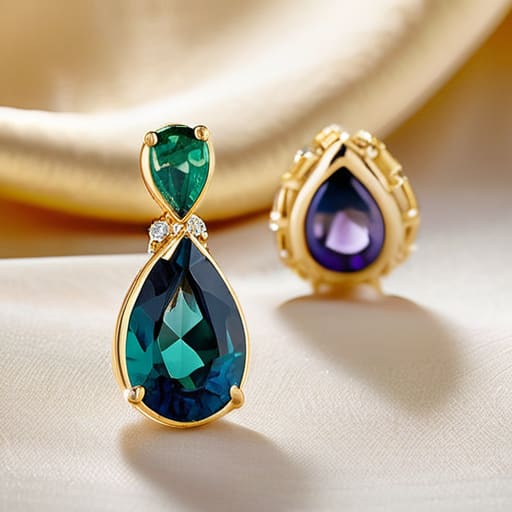
I spent six years in a grading lab, hunched over a microscope until my neck ached, staring at stones that were supposed to be rare treasures but were actually just clever bits of glass. Most people think that finding the right studs and drops for coloured stones requires a massive budget or a degree in high jewelry, but that’s just marketing noise designed to make you feel small. You don’t need a mountain of gold to make a garnet or a tourmaline look right; you just need to understand how the light hits the facet and how the metal interacts with the mineral.
I’m not here to sell you on “energy” or tell you that a specific setting will change your aura. What I will do is give you the technical reality of how different settings affect the way a stone performs. I’ll show you why a certain cut needs the security of a stud and why a drop setting might actually make a mediocre stone look like it was pulled straight from a wet, mossy riverbed. I’ll tell you what the stone is, how to spot the fakes, and how to choose settings that actually respect the geology of what you’re wearing.
The Truth About the Stone and Its Setting
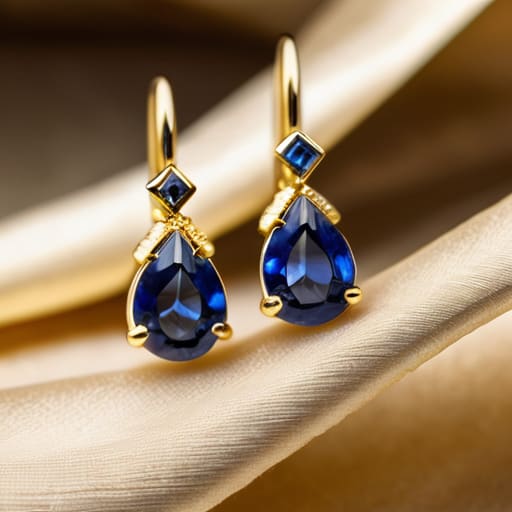
When you’re looking at a pair of earrings, the first thing I do is look past the sparkle and check the metal holding the stone. If you’re eyeing a sapphire, for instance, you want to know if that blue is trapped in a secure claw setting or just sitting in a heavy bezel. I’ve spent years looking at how light hits a facet, and I can tell you that the way a stone is seated changes everything. Whether you are looking at precious stone earring settings in gold or silver, the goal is to see the mineral, not just the metal. A well-chosen mounting should let the light reach the stone’s heart, not choke it.
There is also a massive difference between stud and dangle earrings when it comes to how the stone actually performs. A stud stays fixed, showing off the stone’s clarity and its specific, wet-looking hue, while a drop allows the gem to catch the light as you move. If you’re navigating different gemstone earring mounting options, remember that a heavy stone needs a sturdy base. I don’t care if you buy them for their supposed “energy” or just because they look sharp; I just want you to know you aren’t wearing a piece of glass held by cheap tin.
Studs and Drops for Coloured Stones Realities of the Craft
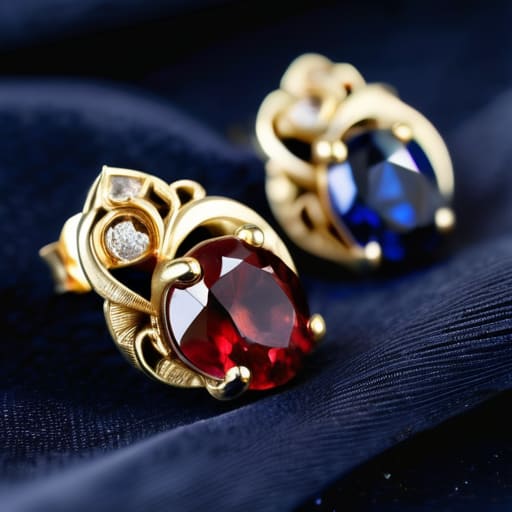
When you’re looking at gemstone earring mounting options, you have to consider how the metal interacts with the stone’s physical properties. A heavy sapphire or a dense garnet needs more than just a delicate prong to stay secure; it needs a setting that respects its weight. I’ve seen too many beautiful stones lost because a jeweler prioritized a trendy look over the actual structural integrity of the piece. If you are opting for a stud, the stone sits flush against the ear, which is great for stability, but it doesn’t allow the light to dance through the pavilion quite as much as a drop might.
The difference between stud and dangle earrings isn’t just about movement; it’s about how the light hits the facets. A drop earring allows a stone to swing, catching the light like sunlight hitting a wet pebble on a shoreline. This movement is what makes fine jewelry earring styles so captivating, but it also means the connection point—the jump ring or the wire—needs to be high quality. Whether you want something quiet or something that moves, just make sure the setting is as solid as the mineral itself.
Deciphering Precious Stone Earring Settings Without the Hype
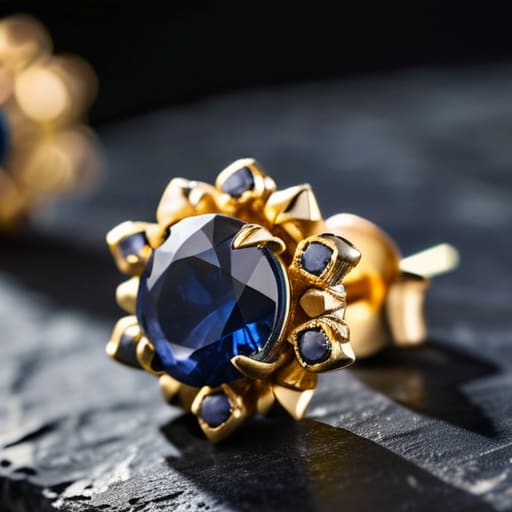
When you’re looking at gemstone earring mounting options, you’ll see a lot of marketing speak about “capturing the essence” of a stone. I prefer to look at the mechanics. A setting isn’t just a cage; it’s a structural choice that dictates how light hits the crystal lattice. If you have a sapphire with a deep, ink-like blue—the kind that looks like the North Sea just before a storm hits—a heavy bezel setting will protect the edges, but it might swallow some of that color. A prong setting, however, lets the light dance through the pavilion, which is vital if you want to see the true saturation of the mineral.
The difference between stud and dangle earrings often comes down to how much movement you want the stone to have. Studs are stable; they sit close to the lobe and are perfect for smaller, high-quality stones where you want the focus to be on the clarity. Dangle earrings allow for more kinetic energy, which can be lovely for lighter stones like aquamarine, but you have to be mindful of the weight. I’ve seen many precious stone earring settings fail simply because the metal was too thin to support the density of the gem. It’s about finding the balance between the stone’s physical properties and how you intend to wear it.
Gemstone Earring Mounting Options for the Discerning Eye
When you start looking at specific gemstone earring mounting options, you have to think about how the metal interacts with the stone’s physical properties. A heavy sapphire, for instance, shouldn’t be forced into a flimsy wire setting that might bend under the weight. I usually look for a bezel setting if I want to protect the girdle of a stone, or perhaps prongs if I want the light to actually reach the facets. It’s a balance between security and how much of that inner fire you want to see.
The choice often comes down to the difference between stud and dangle earrings, which changes how the stone behaves in the light. A stud stays fixed, making it great for stones with high refractive indices that you want to see clearly from a single angle. A drop earring, however, allows the stone to move, catching the light like a pebble shifting under a shallow tide. While some people follow colored gemstone jewelry trends that favor massive, chunky pieces, I find that the most elegant way to wear a stone is to let its natural geometry dictate the mounting.
The Difference Between Stud and Dangle Earrings Explained
When you’re looking at the difference between stud and dangle earrings, try to ignore the marketing fluff and look at how the stone sits against the skin. A stud is straightforward: the post goes through the lobe and the stone stays put. Because the weight is centered, it’s the best way to showcase a stone with high clarity or a particularly interesting inclusion pattern. If you have a sapphire that looks like a deep, dark puddle after a storm, a stud setting keeps that color concentrated right where the light hits it best.
Dangle earrings, or drops, are a different beast entirely. They rely on gravity and movement. Instead of sitting static, the stone hangs from a link or a hook, meaning it will catch the light from different angles as you move. This is where precious stone earring settings really start to show off their personality. A teardrop-cut garnet, for instance, will swing and flash like wet seaweed under a pier. It’s a more kinetic way to wear a stone, though you have to consider the weight; a heavy stone on a thin wire is a recipe for a lopsided look.
Fine Jewelry Earring Styles That Respect the Gem
When you’re looking at fine jewelry earring styles, the goal shouldn’t be to let the metal swallow the stone. I’ve seen too many high-quality sapphires—the kind with that deep, ink-blue hue you only see when a tide pool is particularly dark—trapped in overly chunky, heavy prongs that choke the light out of them. If you have a stone with incredible clarity, you want a setting that acts like a window, not a cage. A simple four-prong basket is often the most honest way to present a gem; it holds the weight without obscuring the mineral’s natural geometry.
The way a stone sits against your skin also matters. While some people focus heavily on choosing earrings for face shape, I tend to focus on how the light hits the facet. For instance, a teardrop-shaped tourmaline looks best in a drop setting that allows it to move slightly. That subtle kinetic energy helps the light dance through the crystal lattice. Whether you are leaning into current colored gemstone jewelry trends or sticking to something classic, remember that the best setting is the one that stays out of the way of the chemistry.
Choosing Earrings for Face Shape and Lasting Trends
When it comes to choosing earrings for face shape, I tend to look at it like looking at a geological cross-section. It’s all about balance and lines. If you have a more angular, square jawline, a sharp, geometric stud might feel a bit harsh; instead, I usually suggest a drop earring with a rounded cabochon to soften those edges. Conversely, if your face is more oval or round, a long, slender dangle can provide a nice verticality that breaks up the softness. It isn’t about rules, though—it’s just about how the light hits the stone and where your eyes go first.
As for colored gemstone jewelry trends, I’ve noticed a move away from the massive, heavy statement pieces that dominated a few years ago. People seem to be leaning back toward more intentional, refined pieces. We are seeing a lot of interest in “organic” settings that don’t try to hide the mineral’s natural character. Whether you are looking at delicate precious stone earring settings or something more substantial, the goal lately seems to be about finding pieces that feel like they belong to the wearer, rather than pieces that wear the person.
On the weight of a stone
A stud lets you look a stone right in the eye, while a drop lets it dance; but whether you’re wearing a lab-grown sapphire that looks like a piece of the sky after a storm, or a rough-cut garnet that looks like wet blood, the setting shouldn’t hide the mineral. It should just hold it steady while you live your life.
Dagny Solheim
Finding Your Own Balance
At the end of the day, choosing between a stud and a drop comes down to how much of the stone you want to actually see. We’ve looked at how the metal setting holds the weight, how to tell a natural garnet from a glass imitation, and why a simple prong setting often does more for a stone’s light performance than a heavy, ornate bezel. Whether you are looking for a subtle sapphire stud that stays tucked against your lobe or a dramatic emerald drop that moves when you walk, the goal is the same: respecting the mineral’s integrity. You don’t need to follow every trend or buy the most expensive platinum mounting to have something beautiful; you just need to understand what is actually sitting in that setting before you hand over your money.
I spent years looking at stones through a loupe, and if there is one thing I learned, it is that a gemstone is a tiny, frozen piece of geological history. It doesn’t care about fashion cycles or whether it’s paired with a cocktail dress or a thick wool sweater. A stone is just a stone—a specific arrangement of atoms that survived millions of years of pressure to end up in your jewelry box. When you finally pick out those earrings, don’t worry so much about whether they are “on trend.” Just find the ones that make you feel a connection to the physical reality of the gem, and wear them until they become a part of you.
