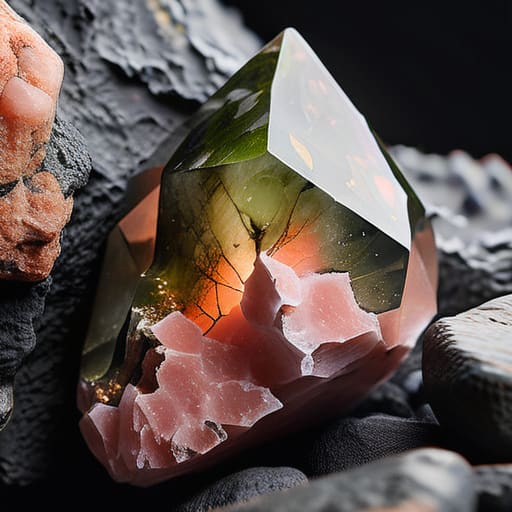
I spent six years hunched over a microscope in a grading lab, and if there is one thing that gets under my skin, it’s seeing people pay “healing crystal” premiums for what is essentially a pretty bit of metamorphic rubble. You’ll see shops online claiming that unakite and the three minerals in one stone possess some sort of cosmic, high-frequency energy that can rewrite your destiny, but let’s be honest: that’s just marketing fluff. I remember holding a specimen once that looked like a sunset, but under my loupe, it was clearly just dyed quartz and cheap glass. I don’t care if you use your stones for meditation or just like how they look on a shelf, but you shouldn’t have to pay for fairy tales when you’re actually buying geology.
In this post, I’m going to strip away the mysticism and show you the actual science of what is happening inside that rock. We’ll look at the epidote, the potassium feldspar, and the quartz that make up the real deal, and I’ll give you the specific visual cues to use so you don’t get swindled by a fake. Once you know the true composition, what you decide to do with the stone is entirely up to you.
Unakite and the Three Minerals in One Stone Whats Actually Inside
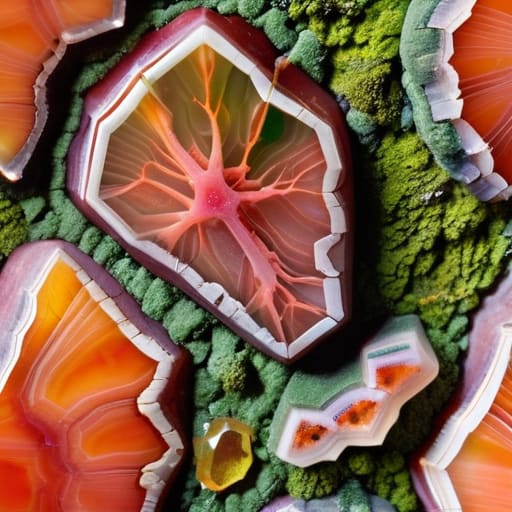
To understand Unakite, you have to stop looking at it as a single gemstone and start seeing it as a crowded room of three distinct minerals. It isn’t a single crystal, but a metamorphic rock that formed under intense heat and pressure. When I look at a specimen under my loupe, I’m looking for the specific marriage of orthoclase feldspar, quartz, and epidote. The feldspar provides those salmon-pink patches that look like a sunset hitting a wet granite slab, while the quartz acts as the clear or milky glue holding the whole mess together.
The real character comes from the epidote. It’s responsible for those mossy, olive-green streaks that look like seaweed clinging to a rock after a North Sea swell. When you are identifying unakite stone, you want to see those colors intermingled naturally. If the colors look too uniform or “painted” on, you’re likely looking at dyed quartz or a composite. In a genuine piece, the green epidote and the pink feldspar should feel like they’ve been fighting for space in that stone for millions of years.
The Truth About the Quartz Component of Unakite
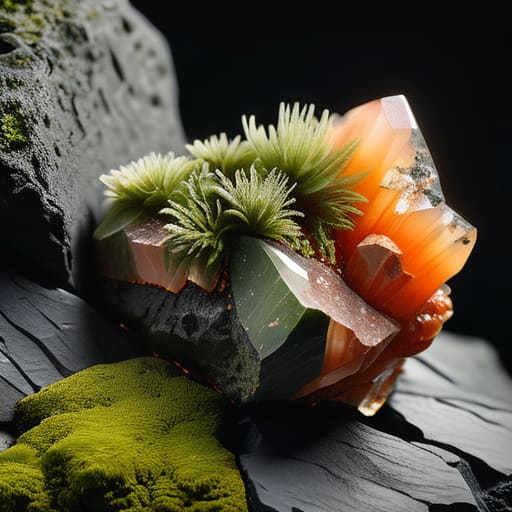
When you look at a piece of unakite, the quartz is the glue holding the whole show together. It isn’t usually the star of the piece—the green and orange get all the attention—but without this quartz component of unakite, you wouldn’t have a rock at all. It acts as the matrix, the structural foundation that allows the other minerals to sit side-by-side. In most specimens I’ve graded, the quartz is milky or translucent, looking much like the frosted, greyish water of the North Sea on a cloudy morning.
Because quartz is incredibly hard and chemically stubborn, it survives the intense heat and pressure required for the geological formation of unakite. This is actually a great way of identifying unakite stone in the field; if you see a specimen where the colors look like they are just painted on the surface, you’re likely looking at a composite or a dyed stone. In a real piece, the quartz is deeply integrated, wrapping around the epidote and feldspar in a way that feels solid and permanent.
How Orthoclase Feldspar in Unakite Defines Its Pink Hue
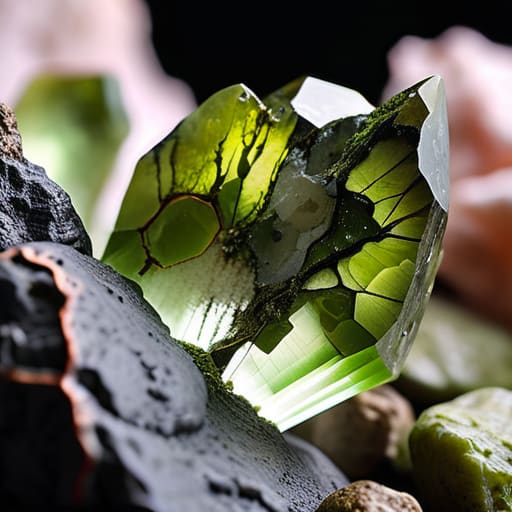
While the quartz provides the structure, it’s the orthoclase feldspar in unakite that dictates the visual personality of the stone. If you’ve ever looked at a piece of salmon caught fresh from a cold fjord, you’ll recognize that specific, fleshy pink. That is exactly what the feldspar looks like when it’s wet. It isn’t a uniform, painted-on color; it’s a milky, opaque presence that sits alongside the green crystals.
In my years in the lab, I’ve noticed that the quality of the pink depends entirely on the distribution of this feldspar. In high-quality specimens, the pink isn’t just a smudge; it’s a distinct, chunky block of color that contrasts sharply with the dark, mossy tones of the epidote. When you are identifying unakite stone, look closely at how those pink patches interact with the rest of the matrix. If the pink looks too uniform or suspiciously bright, you might be looking at dyed quartz rather than a true metamorphic rock. Real unakite has a certain grit and a layered, uneven way of displaying its colors that a factory-made imitation just can’t replicate.
Unpacking the Epidote Green Mineral Properties You Should Know
Now we get to the epidote, which is really what gives this stone its character. While the pink feldspar and clear quartz do the heavy lifting visually, the epidote provides that specific, mossy green. When I look at a high-quality specimen, the color reminds me of seaweed clinging to a wet granite rock at low tide—that deep, saturated olive that looks almost heavy. It isn’t a bright, neon green; it’s a grounded, earthy shade that sits somewhere between a forest floor and a shallow fjord.
When you are identifying unakite stone, pay close attention to how that green is distributed. In a genuine piece, the epidote doesn’t just sit on the surface like a stain; it is integrated into the rock. You’ll see tiny, needle-like crystals or irregular patches woven through the quartz and feldspar. If the green looks too uniform or like it was painted on, be skeptical. Because the epidote green mineral properties are tied to the specific pressure and temperature during the stone’s metamorphic journey, the way those green flecks cluster tells you a lot about the stone’s actual history.
The Geological Formation of Unakite How Nature Built It
To understand the geological formation of unakite, you have to stop thinking about it as a single crystal growing in a neat little pocket. It isn’t. Instead, think of it as a messy, high-pressure collision. It’s a metamorphic rock, which means it was born from intense heat and squeezing deep within the Earth’s crust. Most of the specimens I see come from regions where ancient tectonic activity forced existing rocks to undergo a radical transformation, rearranging their chemistry into this specific, mottled patchwork.
It’s less like a slow-growing gem and more like a chemical soup that suddenly cooled and solidified. During this process, the quartz component of unakite, the pink orthoclase feldspar, and the green epidote didn’t just happen to land next to each other; they were forced into a tight, interlocking embrace. This isn’t a polished, manufactured look—it’s the result of minerals fighting for space under immense pressure. When you are identifying unakite stone in the wild, look for that interlocked texture; if the colors look too perfectly swirled or “painted” on, you aren’t looking at a geological miracle, you’re looking at a factory.
Identifying Unakite Stone So You Dont Buy a Lie
When you’re looking at a piece of unakite in a shop window or online, you have to be careful. Because the color palette is so specific, it’s easy for dealers to take a piece of dyed quartz or even a cheap composite and pass it off as the real thing. My first trick is to look at the boundaries. In a genuine specimen, the orthoclase feldspar in unakite doesn’t just look like a pink wash smeared over the surface; it exists as distinct, often blocky patches nestled against the other minerals. If the pink looks too uniform or seems to “bleed” into the green like ink in water, put it back.
I also always check the light. Real unakite has a certain depth because of how the minerals interact. Grab a torch and look for the way the epidote green mineral properties catch the light—it should look like the color of moss on a wet stone, slightly translucent but structurally solid. If the stone looks “flat” or if the colors seem suspiciously neon, you’re likely looking at a synthetic imitation. Identifying unakite stone comes down to trusting your eyes and looking for that messy, beautiful geological reality rather than a polished lie.
Decoding the Unakite Crystal Meaning for Your Own Purposes
Now that we’ve looked at the chemistry—the way the orthoclase feldspar in unakite provides that salmon-pink shade and how the epidote green mineral properties ground the piece—we get to the part where people usually start talking about “vibes.” I’ve sat in enough labs to know that a mineral doesn’t have a soul, but I also know that people find a lot of comfort in the stories they wrap around them. Whether you view the unakite crystal meaning as a tool for emotional balance or just a pretty specimen of metamorphic rock, that’s your prerogative.
If you’re someone who uses stones for meditation or intention-setting, you might find the combination of these three minerals useful for finding a sense of equilibrium. To me, the way the quartz component of unakite weaves through the pink and green feels like a metaphor for stability amidst change. I don’t care if you’re using it to manifest a new career or just to decorate a shelf in your sunroom; once you’ve finished identifying unakite stone as the genuine article, the stone’s job is done. What you decide to do with that connection is entirely up to you.
The reality of the stone
Unakite isn’t some magical singular substance; it’s a messy, beautiful collision of quartz, feldspar, and epidote that happened deep underground. I’ll tell you how to spot the real mineral assembly so you don’t waste your money on a dyed piece of glass, but once you have the real thing in your hand, whether you treat it as a geological marvel or a tool for meditation is entirely up to you.
Dagny Solheim
Final thoughts on a complex stone
At the end of the day, Unakite is really just a beautiful, messy collaboration between quartz, orthoclase feldspar, and epidote. When you look at a specimen, you aren’t just looking at a pretty pink and green pattern; you are looking at a specific geological moment where these three minerals grew together under pressure. Whether you are checking for the characteristic grainy texture of the feldspar or ensuring the green epidote doesn’t look like a cheap glass dye, knowing the chemistry helps you cut through the marketing noise. Once you understand that it is a metamorphic rock rather than a single crystal, you can shop with a bit more confidence and a lot less worry about being swindled.
I don’t care much for the lofty claims that a stone can rearrange your destiny, but I do care about the history written in its structure. There is something deeply grounding about holding a piece of Earth that took millions of years to assemble its parts. If you want to keep it on your desk to feel more centered, or if you just want to admire the way the green looks like moss after a heavy rain, that is your prerogative. A stone is a physical fact first, and everything else is just how you choose to live with it.
