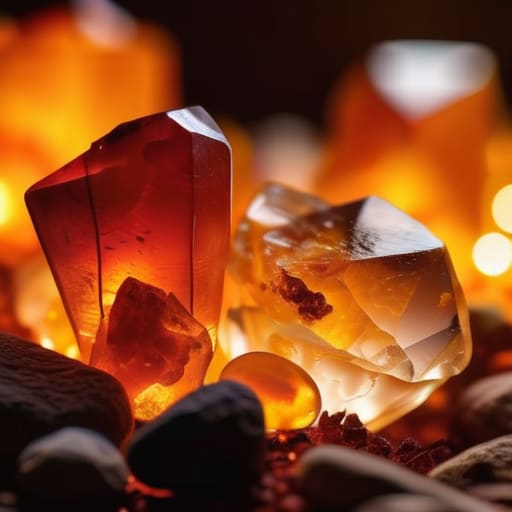
I spent six years in a grading lab, staring through a loupe until my eyes burned, and if there is one thing I’ve learned, it’s that a stone’s “energy” doesn’t change its chemical formula. I often see shops charging a massive premium for “zodiac-aligned” pieces, peddling the idea that a specific crystal is a mandatory requirement for certain personalities. It feels a bit like being told you can’t go for a swim unless you have a specific brand of towel. When it comes to fire signs and the stones people choose for them, there is a lot of expensive, flashy nonsense designed to separate you from your money by promising a spiritual shortcut that simply isn’t there.
My goal here isn’t to debunk your spirituality, but to ground it in something actual. I’m going to tell you exactly what these stones are made of—whether it’s corundum, quartz, or something far more common—and how to spot the glass imitations being passed off as the real thing. I’ll give you the mineralogy and the history, and then you can decide how you want to use them. What you do with the stone is entirely your own business.
The Raw Truth About Fire Signs and the Stones People Choose for Them
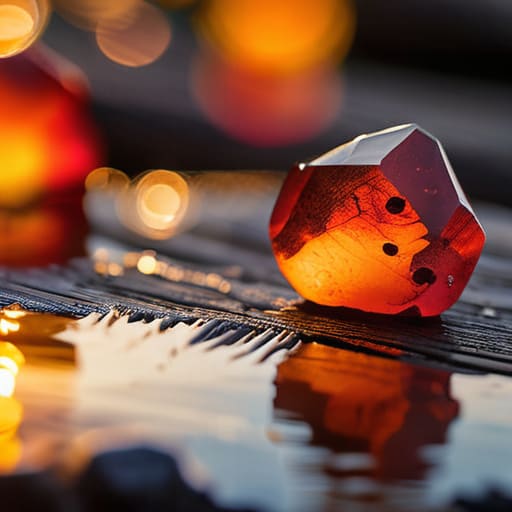
When I look at a tray of stones marketed for Aries, Leo, or Sagittarius, I don’t see “personality traits” in the minerals. I see silicate structures, lattice patterns, and chemical compositions. Most of what you’ll find in shops labeled for these signs are high-saturation reds and oranges—garnets, carnelian, or citrine. People gravitate toward them because they want to feel that heat, often looking for the spiritual benefits of red gemstones to match their perceived temperament. I get that. There is a psychological pull to wearing something that looks like a dying ember or a splash of sunset on a wet pier.
The trouble is that the market for zodiac crystal compatibility is flooded with glass and dyed quartz. If you are looking for specific Aries birthstones and energy, you need to know that a real garnet won’t turn pale if you leave it in the sun, and a real carnelian has a waxy, translucent depth—not the flat, plastic look of dyed chalcedony. I’m not here to tell you that a stone can change your temperament, but I can tell you that a real mineral is a piece of the earth’s history, and it’s worth knowing if you’re actually holding it.
Aries Birthstones and Energy Separating Real Heat From Glass
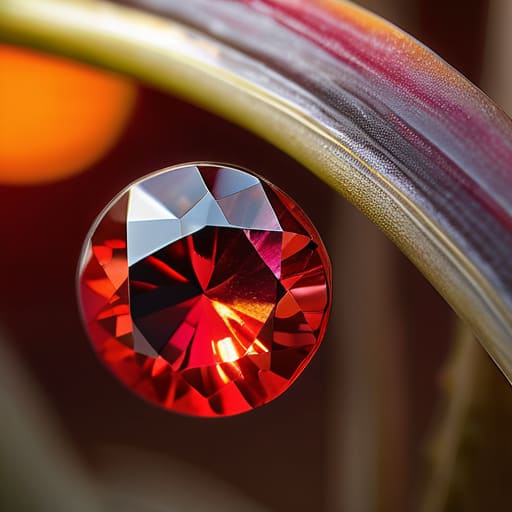
When people look for Aries birthstones and energy, they usually gravitate toward anything that mimics the color of a dying ember. Most often, that means garnet. Real almandine garnet has a weight to it; it feels substantial in the palm, and under a loupe, you’ll see those tiny, characteristic inclusions that prove it’s a crystal and not just dyed glass. If you’re looking at a stone that looks like a bright, translucent cherry candy but feels suspiciously light, you’re likely holding a piece of synthetic glass.
I’ve spent enough time in labs to know that the spiritual benefits of red gemstones are often used to market these cheap imitations. A real garnet or even a piece of red jasper has a specific mineral density. Jasper, being an opaque variety of chalcedony, has a grit and a history written in its microcrystalline structure. It shouldn’t look perfectly uniform. If the color is too “perfectly” distributed, it’s probably a factory-made substitute. I don’t care if you use the stone for meditation or just to keep in your pocket for luck, but you should at least know if you’re holding actual geology or just a bit of colored silica.
Leo Crystal Healing Properties What the Mineral Actually Does
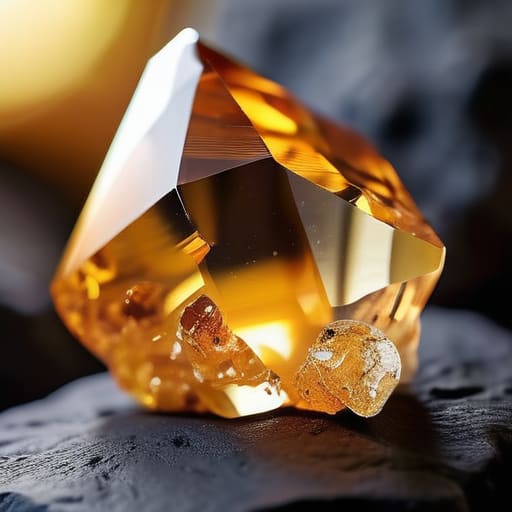
When people talk about Leo crystal healing properties, they usually lean heavily into the idea of “radiating confidence.” If you’re looking for a stone to help you command a room, you’ll likely end up with something like Citrine or Pyrite. From a mineralogical standpoint, these don’t possess any magical ability to alter your personality, but they do have a visual weight. A high-quality, natural Citrine has a color like honey left out in the sun, whereas the cheap, irradiated amethyst sold as “citrine” looks like neon orange juice.
If you are trying to work on balancing fire element energy, you aren’t looking for a chemical reaction; you are looking for a psychological anchor. Holding a heavy, polished piece of Sunstone—which is actually feldspar with tiny inclusions of hematite—can feel grounding. It’s a tactile reminder of warmth. I don’t care if you believe the stone is actually boosting your solar plexus; if the weight of the mineral in your hand helps you feel centered, then the stone has done its job.
Sagittarius Zodiac Minerals Finding Substance Beneath the Hype
When people talk about Sagittarius, they usually go straight for Turquoise or Topaz. If you’re looking at the turquoise, you’re likely looking at a stone of copper aluminum phosphate. When it’s high quality, the color is that deep, saturated teal you see in a tide pool just before the sun goes down. However, the market is flooded with reconstituted turquoise—basically crushed stone held together by resin. If the stone feels strangely warm to the touch or looks too uniform, it’s likely a composite. Real turquoise has a structural complexity that resin simply cannot mimic.
Then there is the Topaz. Most Sagittarius-themed shops will try to sell you “Blue Topaz,” which is frequently just Swiss Blue or London Blue treated with radiation to achieve that specific hue. While the color is striking—resembling the sea after a heavy rain—it is a manufactured look. If you want the real thing, look for the natural, slightly paler shades. Whether you are seeking Sagittarius zodiac minerals for their aesthetic or for something more personal, knowing the difference between a treated crystal and a natural specimen is the only way to ensure you’re actually holding a piece of the earth.
Balancing Fire Element Energy Without the Mystical Nonsense
When people talk about balancing fire element energy, they often treat it like a thermostat you can adjust with a piece of quartz. I don’t see it that way. To me, if you’re feeling “too much fire”—which usually just means you’re restless, impatient, or running on adrenaline—a stone isn’t going to magically cool your blood. However, there is a psychological weight to holding something substantial. If you’re looking for a way to ground yourself, don’t reach for a piece of heat-treated glass marketed for its spiritual benefits; reach for something with actual density, like a heavy piece of garnet or a matte jasper.
The trick isn’t in the “magic,” but in the sensory shift. When I’m feeling scattered, I find that focusing on the specific, cool weight of a real mineral helps pull me out of my head. Whether you are looking at Aries birthstones and energy or trying to find a steadying stone for a Leo, the goal should be tactile reality. A stone that feels like a piece of the earth—cold, hard, and unyielding—is much better at centering you than a piece of plastic that’s been dyed to look like a sunset.
The Spiritual Benefits of Red Gemstones and Their Physical Reality
When people talk about the spiritual benefits of red gemstones, they usually lean into metaphors of vitality, courage, and “grounding” the heat of a fire sign. I get that. If holding a piece of garnet makes you feel more centered, that’s your experience, and I’m not here to argue with your intuition. However, from my side of the loupe, that “energy” is really just a physiological response to a specific wavelength of light and a very tangible mineral structure. A deep, blood-red pyrope garnet is a silicate mineral; it has a specific gravity and a refractive index that doesn’t change based on your mood.
The trouble starts when people mistake cheap, dyed glass for the real thing. You’ll see “energy stones” for sale that are actually just poured resin or heat-treated quartz. If you are looking for Sagittarius zodiac minerals or anything else to aid in balancing fire element energy, you need to check the inclusions. Real stones have internal character—tiny fractures or mineral growth patterns that look like frozen liquid. If a red stone looks too perfect, too uniform, and feels unnaturally warm in your hand, it’s likely just a piece of plastic or glass masquerading as something ancient.
Zodiac Crystal Compatibility How to Spot a Genuine Match
When people talk about zodiac crystal compatibility, they often treat it like a mathematical equation where a certain stone automatically fixes a personality trait. In my experience in the lab, that isn’t how it works. A stone doesn’t care about your sun sign, but it does care about its own chemistry. If you are looking for a match, don’t start with a horoscope; start with the physical properties. A real match is about finding a mineral that holds its integrity. If you’re chasing the spiritual benefits of red gemstones to ground yourself, you need to make sure you aren’t actually holding a piece of dyed chalcedony or a bit of cheap resin.
To truly find a stone that fits, look for structural consistency. For instance, if you are seeking Sagittarius zodiac minerals to aid focus, you want something with a clear lattice structure, like a high-quality quartz or a solid garnet, not a porous, heat-treated imitation. A genuine match is found when the physical durability of the stone meets your actual lifestyle. If you want to wear it every day, pick a mineral with a high Mohs hardness, regardless of what the astrology books say.
Substance Over Symbolism
People look to fire signs and reach for anything red or glowing, but a stone’s value isn’t in how well it matches your horoscope; it’s in the lattice of its atoms and the way it holds light. I don’t care if you use a garnet for its chemistry or for its ‘spirit’—just make sure you aren’t paying pyrite prices for a piece of dyed glass.
Dagny Solheim
Final Thoughts from the Lab
We have spent a lot of time looking at the intersection of celestial archetypes and mineralogy. Whether you are hunting for an Aries ruby, a Leo citrine, or a Sagittarius garnet, the goal remains the same: finding something with actual substance. We have covered how to distinguish a genuine gemstone from a piece of dyed glass or a synthetic imitation, and we have stripped away the idea that a stone possesses a magical charge simply because of its chemical formula. At the end of the day, a stone is a collection of atoms—silicon, oxygen, iron—arranged in a specific lattice. Knowing that composition is the foundation of everything you hold in your hand is the only way to ensure you aren’t being sold a polished bit of junk.
Once you have verified the hardness, the cleavage, and the refractive index, the rest is up to you. If holding a piece of real, deep-red spinel makes you feel more grounded or more aligned with your zodiac sign, then that is a valid experience. I don’t care if you use your stones for meditation, for investment, or just to admire how the light hits them when they are wet and freshly rinsed. The mineral doesn’t care what you think of it, but it deserves your respect for being real. Go out, find something beautiful, and trust your own eyes first.