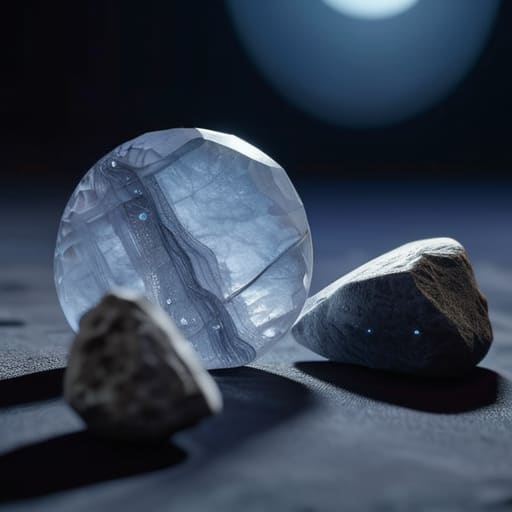
I spent six years in a grading lab staring through a loupe until my eyes felt like they were full of sand, and if there is one thing I’ve learned, it’s that people will try to sell you anything if you wrap it in enough moonlight. I see it all the time on shop sites: expensive, milky quartz being peddled as “high-vibration lunar essence” at triple the price. It makes my skin crawl when people conflate the celestial cycles with the actual mineralogy of a specimen. I’m not here to debunk your connection to the moon and the stones tied to it, but I am here to tell you that a stone’s physical reality shouldn’t be a mystery.
In this series, I’m stripping away the flowery sales copy to get to the chemistry. I’ll tell you exactly what these stones are made of—whether it’s feldspar, labradorite, or just glass—and how to spot the fakes before you hand over your hard-earned money. Once we’ve established what is actually sitting in your palm, what you do with it is entirely up to you.
The Truth of the Moon and the Stones Tied to It
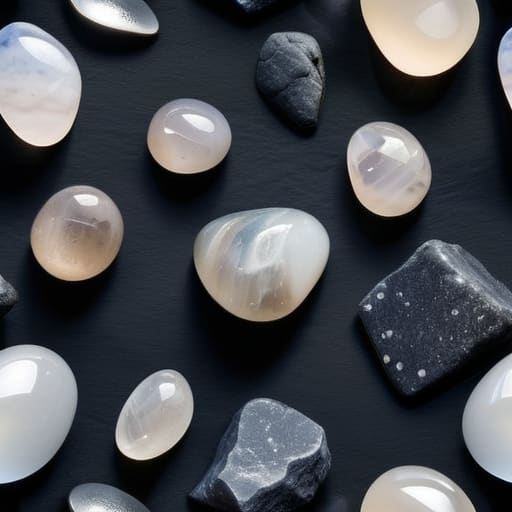
When people talk about the moon, they usually drift into the ethereal, but I prefer to look at the mechanics. If you are looking for moonlight ritual gemstones, you aren’t looking for magic; you are looking for a way to anchor a feeling. From a geological standpoint, the moon is a massive, dead silicate body, but its gravity pulls at our oceans and our tides. It makes sense, then, that people feel a pull toward stones that mimic its aesthetic—those milky, translucent pieces that look like a wet pebble pulled from a dark fjord.
I see a lot of people practicing lunar cycle crystal cleansing, and while I can’t tell you if a full moon actually recharges a quartz lattice, I do know that the ritual creates a moment of stillness. Whether you are charging crystals under moonlight to reset your intentions or simply because you like the way the light hits a selenite tower, the physics of the stone remains the same. It is still just calcium sulfate or silicon dioxide. The stone doesn’t change its hardness because the moon is full, but the way you hold it might.
Decoding Celestial Stone Meanings Without the Empty Fluff
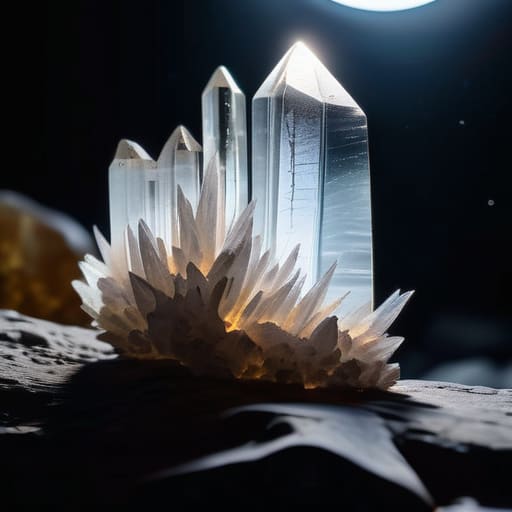
When you look at a shop listing for “moonlight ritual gemstones,” you’ll often find a wall of text promising that a specific stone will align your chakras with the tides. I don’t care much for the physics of it, but I do understand the psychology. People use these stones as anchors. If you decide that a piece of Selenite helps you reset during a specific lunar cycle crystal cleansing, that is a valid way to interact with an object. The stone isn’t doing the work through magic; it’s doing it through your own intentionality.
The problem arises when sellers conflate the chemical properties of a mineral with these celestial stone meanings. A piece of Moonstone (feldspar) has a specific cleavage and a pearly luster that tells me about its cooling history in the crust; it doesn’t actually possess a connection to the lunar orbit. However, if you find comfort in charging crystals under moonlight, you aren’t lying to yourself—you’re just creating a ritual. I treat the mineralogy as the facts and the ritual as the human experience. One is about what the stone is, and the other is about what it means to you.
How to Spot a Fraudulent Gemstone Before You Pay
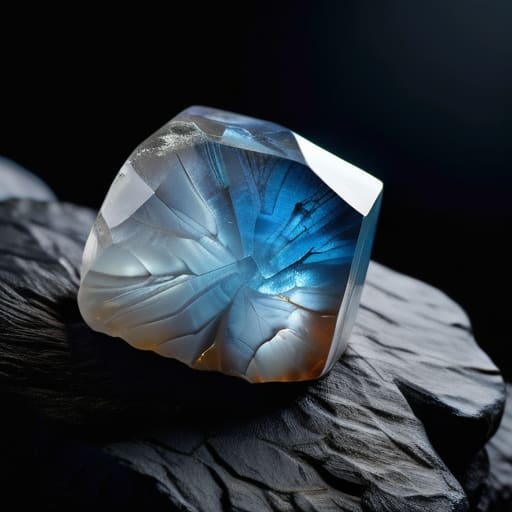
If you’re hunting for moonstone, the first thing you need to do is look past the name. Real moonstone is a feldspar, specifically orthoclase or albite, and it should have that characteristic adularescence—that milky, ghostly glow that seems to float just beneath the surface. If the light looks like it’s sitting right on top of the stone, or if the color looks too uniform, like a piece of polished plastic, put it back. I’ve seen too many sellers peddling glass or cheap labradorite as “high-vibration” lunar specimens. A real stone has depth; it looks like a fog rolling in over the North Sea, not a flat coat of paint.
Don’t let the marketing distract you from the chemistry. People get caught up in moon phases and gemstone energy, which is fine, but that energy won’t matter if you’re holding a piece of synthetic resin. Check the temperature; real stones stay cool to the touch longer than glass or plastic. If you are planning on charging crystals under moonlight, you want something with a stable lattice structure that can actually withstand the handling. A fraudster relies on you being too enamored with the idea of the moon to check the hardness of the mineral. Stay skeptical.
The Science of Moon Phases and Gemstone Energy
I don’t subscribe to the idea that the moon is broadcasting a literal radio signal to your amethyst, but I do respect the rhythm of it. If you look at it through a geological lens, we are talking about tidal forces and the subtle shifts in light that have dictated life on this planet for eons. When people talk about moon phases and gemstone energy, they are usually trying to sync their own internal clock with that cycle. Whether that’s a biological reality or just a helpful psychological framework is beside the point; the ritual itself provides a sense of structure.
For those who practice lunar cycle crystal cleansing, the process is often about intention rather than actual chemical alteration. Placing a piece of selenite or moonstone on a windowsill isn’t going to change its Mohs hardness or its refractive index, but it does mark a moment of pause. I’ve spent plenty of nights sitting by the coast, watching the light hit the water, and there is something grounding about charging crystals under moonlight that feels less like magic and more like a way to reset your own focus.
Charging Crystals Under Moonlight Method and Reality
I’ve seen people treat charging crystals under moonlight like some kind of high-stakes chemistry experiment, but it’s actually much simpler than that. If you want to follow the tradition, you just set your stones on a windowsill or outside during a full moon. There is no specific “frequency” you need to tune into; you are essentially just letting the stones sit in the light. I usually do this after a cold swim when my head is clear, treating it more like a quiet moment of observation than a heavy task.
From a mineralogical standpoint, the light isn’t “recharging” the lattice structure of the crystal—that would require a particle accelerator, not a night sky. However, if you view lunar cycle crystal cleansing as a way to reset your own intention, it works quite well. It’s a ritual, not a recharge. Just be careful with certain specimens. I wouldn’t recommend leaving a piece of Selenite or a soft Fluorite out in the dew; they can react to moisture, and you don’t want your stone dissolving into a puddle before the sun comes up.
Practical Lunar Cycle Crystal Cleansing for Your Collection
If you want to practice lunar cycle crystal cleansing, you don’t need a cathedral or a complex ceremony; you just need a windowsill and a bit of patience. I usually wait for the full moon, when the light looks like polished silver spilled over wet slate. I take my stones out of their velvet boxes and set them on a tray near the glass. It isn’t about magic altering the molecular structure of the silicate or the carbonate; it’s more about a mental reset. For me, it’s a way to clear the mental clutter that accumulates while I’m working in the lab.
When you are charging crystals under moonlight, pay attention to the specific stone’s durability. I wouldn’t dream of leaving a soft selenite or a delicate fluorite out in a damp environment, even if the ritual calls for it. Some people use the different moon phases and gemstone energy to dictate which stones get which treatment, but I keep it simple. I look at the stone, I see the light hitting the facets, and I feel a sense of quiet order. Whether you believe the light is washing away “negativity” or you just like the way the glow hits a piece of labradorite, the ritual works because it makes you stop and actually look at what you own.
Moonlight Ritual Gemstones and the Logic of Astrology
When people talk about moonlight ritual gemstones, they are often trying to bridge the gap between a predictable orbit and the unpredictable mess of human emotion. From a geological standpoint, a piece of Selenite or Moonstone doesn’t change its lattice structure just because the moon is full. However, I understand why the connection exists. Astrology isn’t physics, but it is a framework—a way of mapping the rhythms of the sky onto the rhythms of our lives. If you find that aligning your intentions with the moon helps you feel more grounded, that is a valid psychological tool, even if the stone itself is just a collection of calcium sulfate or feldspar.
The logic of astrological crystal healing relies on the idea of resonance. You aren’t changing the mineral; you are using it as a focal point. When I look at the moon phases and gemstone energy through a practical lens, I see it as a form of seasonal discipline. Just as we might change our habits when the light shifts in Bergen, people use these cycles to signal a change in mindset. Whether you are using a stone for meditation or just like the way it looks on your desk, the rhythm of the cycle provides the structure.
The Physics and the Feeling
A moonstone is just feldspar with light trapped in its structure, but that doesn’t make the way it catches the light any less of a miracle; I don’t care if you think it holds lunar energy or just refractive physics, because whether it’s a chemical reaction or a spiritual one, the stone is real, and that’s enough for me.
Dagny Solheim
Final Thoughts from the Lab
We have covered a lot of ground, moving from the actual mineralogy of these specimens to the ways people use them to mark the passing of a lunar month. I’ve tried to give you the tools to separate the chemical reality of a stone from the marketing hype, whether you are looking at Moonstone—which is really just a variety of feldspar with those lovely light-interference patterns—or something more obscure. We looked at how to spot a fake, how the moon’s gravity actually affects our environment, and how you might use these cycles to organize your own collection. At the end of the day, the goal isn’t to decide if the “magic” is real, but to ensure you know exactly what you are holding in your hand when you hold it up to the light.
Whether you see these stones as mere geological curiosities or as anchors for your personal rituals, they both possess a certain weight and history that deserves respect. A stone doesn’t care if you believe in its energy, but it does care about its hardness and its clarity. When you find a piece that speaks to you—perhaps a labradorite with a flash as deep as the North Sea after a storm—take the time to understand its structure. Once you understand the science of the thing, the way you choose to connect with it becomes entirely your own discovery.
