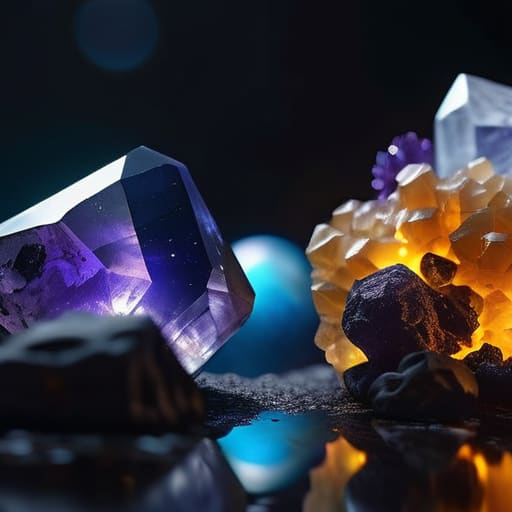
I’ve spent enough hours hunched over a microscope in a dim lab to know that most “spiritual” advice is just expensive fluff designed to make you buy a stone you don’t actually need. I often see people getting lost in a thicket of jargon, trying to figure out what a ruling planet is and why it guides stone choice as if they’re studying for a doctorate in astrophysics rather than just picking out a piece of Earth. To me, the idea that a celestial body is physically pulling on a crystal’s lattice structure is nonsense, but I’m not here to tell you that your connection to the stars isn’t real.
I’m not going to lecture you on cosmic energy or try to sell you a “manifestation kit.” Instead, I want to bridge the gap between the heavy science of mineralogy and the personal reasons you reach for a stone in the first place. I’ll explain the traditional logic behind these planetary associations so you can navigate the claims with a bit of common sense. Once we’ve cleared up the confusion, you can decide which stones resonate with your life—I’ll provide the facts, and you decide what to do with them.
The Truth About What a Ruling Planet Is and Why It Guides Stone Choice
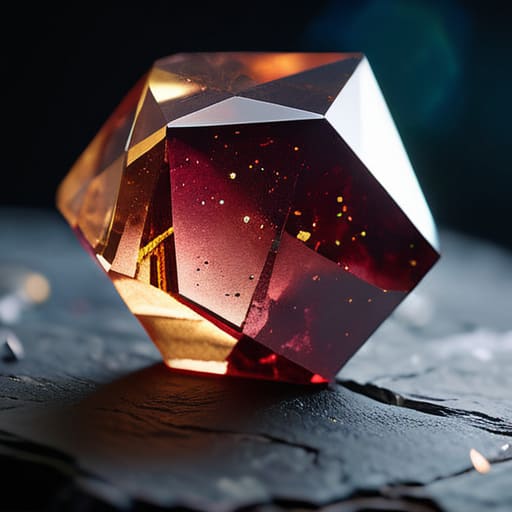
When people talk about astrological gemstone correspondences, they aren’t talking about the chemical bonds holding a crystal together. As a geologist, I know a garnet is just a silicate mineral, regardless of what the stars say. But if we move away from the lab bench and look at how people actually relate to these objects, the concept of a ruling planet becomes a way of organizing intention. Think of a ruling planet as a sort of cosmic shorthand. Instead of trying to map out every single mineral on Earth, people use the zodiac sign ruling planets to narrow the field down to stones that feel “right” for their specific temperament or life stage.
It isn’t physics, and it isn’t something you’ll find in a mineralogy textbook, but it serves a purpose. Using planetary vibrations in minerals is essentially a way to create a bridge between the physical world and your own internal state. If you feel like your life is a bit too chaotic, you might look for a stone associated with Saturn to help you feel grounded. I don’t care if the stone is actually “absorbing” chaos; if holding a piece of dark, heavy hematite helps you sit still and breathe, then the stone has done its job.
Deciphering the Planetary Vibrations in Minerals and Their Real Impact
When I look through a loupe, I see inclusions, lattice structures, and chemical impurities. I don’t see “vibes.” But I understand that when people talk about planetary vibrations in minerals, they aren’t talking about the Mohs scale; they are talking about a sense of resonance. If you are looking into astrology-based crystal therapy, you aren’t searching for a change in the stone’s molecular weight, but rather a way to align your own internal state with a specific archetype. It is the difference between the hard reality of a silicon dioxide crystal and the way that crystal makes you feel when you hold it during a heavy week.
Finding your way through these astrological gemstone correspondences can feel like a lot of guesswork if you don’t have a map. Most people start by looking at their zodiac sign ruling planets to see which celestial body is supposedly “in charge” of their temperament. Whether you are trying to figure out how to choose stones by birth chart or just looking for something that feels “right,” it’s really about finding a tool that matches your current energy. I don’t claim the stars are physically pulling on a piece of amethyst, but if wearing a certain stone helps you feel more grounded, then the stone is doing its job.
How Zodiac Sign Ruling Planets Shape the Stones True Nature
When we talk about zodiac sign ruling planets, we aren’t talking about the chemical bonds that hold a crystal together, but rather the framework people use to assign meaning to them. From my perspective, it’s a bit like looking at a piece of granite through a loupe; the science tells me it’s feldspar and quartz, but the person holding it might see a symbol of stability because of their chart. If you are looking into how to choose stones by birth chart, you are essentially trying to find a mineral that mirrors the specific energetic archetype assigned to your sign.
For instance, an Aries might gravitate toward a carnelian because Mars is their ruler, seeking that fiery, restless energy. To a geologist, that carnelian is just chalcedony with iron oxide inclusions—giving it a color like a sun-baked clay bank after a heavy rain—but to the wearer, it’s a connection to a celestial force. I don’t mind the distinction. Whether you are chasing the physical properties of the mineral or exploring astrological gemstone correspondences, you’re ultimately looking for a way to bridge the gap between the heavy, silent earth and the sky above.
Unmasking the Astrological Gemstone Correspondences You Should Know
When you start looking into astrological gemstone correspondences, you’ll find a lot of conflicting lists online. Some say one thing, some say another, and half of them seem to be guessing. To keep it simple, I look at it through the lens of the dominant celestial energy. If you’re trying to figure out how to choose stones by birth chart, don’t get bogged down in the fluff. Start with the heavy hitters—the planets that govern your core signs. For example, if Mars is your ruler, you aren’t looking for a soft, pastel quartz; you’re looking for something with the structural grit of a garnet or a red jasper.
It isn’t about finding a “magic” rock, but about finding a mineral that matches the specific frequency you’re trying to tune into. When people talk about planetary vibrations in minerals, they are essentially talking about how the physical properties of a stone—its hardness, its luster, its specific chemical makeup—align with the archetypes we assign to the planets. I don’t care if you believe the stone is actually vibrating; I just care that the physicality of the gem feels right for the person holding it.
Mapping Your Path How to Choose Stones by Birth Chart
If you want to get serious about how to choose stones by birth chart, you have to look past just your sun sign. Most people stop at their birthday, but a birth chart is a whole map of where the planets were sitting when you arrived. If your Mars is sitting in a heavy, grounded position, you might find yourself drawn to the deep, iron-rich reds of hematite rather than something lighter. It isn’t about following a rigid rulebook; it’s about finding the mineral that matches the specific planetary vibrations in minerals that align with your personal blueprint.
I usually tell people to look at their chart and identify which planet feels “loudest” or most influential in their life right now. Are you feeling the heavy, slow pull of Saturn, or the frantic, bright spark of Mercury? Once you identify that energy, you can hunt for a stone that either mirrors it or provides a much-needed counterweight. Whether you are using it for astrology based crystal therapy or just because you like the way a certain spinel catches the light, the goal is to find a stone that feels like it actually belongs in your hand.
The Raw Reality of Celestial Energy and Crystal Healing
When people talk about celestial energy and crystal healing, the conversation often drifts into a fog of vague metaphors. As someone who has spent more hours than I can count staring through a 10x loupe at inclusions, I prefer to ground the concept. To me, it isn’t about magic beams hitting a rock; it’s about the historical and symbolic link between the heavens and the earth. We use astrology based crystal therapy to create a framework, a way to categorize how certain minerals might resonate with a person’s temperament. It’s a way of organizing the chaos of the natural world into something that feels personal.
I don’t claim that a piece of quartz can physically alter your orbit, but I do understand why people seek that connection. If you are looking at astrological gemstone correspondences to find a sense of balance, you aren’t looking for a scientific miracle—you’re looking for a tool. Whether you use a stone to ground yourself during a stressful day or simply because you like the way its deep, teal hue looks when it’s wet from a morning swim, that is your prerogative. The minerals have their chemistry; the rest is how you live with them.
Practical Astrology Based Crystal Therapy Without the Empty Fluff
If you want to try astrology based crystal therapy, my advice is to skip the incense-heavy rituals and just look at the mechanics of it. You don’t need to perform a ceremony to use a stone; you just need to understand the intent. If you’ve spent time learning how to choose stones by birth chart, you already know that you aren’t just picking a pretty object. You are picking a mineral that shares a symbolic link with your own temperament. For me, it’s like choosing the right gear for a hike—you wouldn’t wear linen to climb a fjord, and you wouldn’t pick a stone that clashes with your baseline energy if you’re looking for balance.
When I’m working with celestial energy and crystal healing, I treat it as a way to anchor a specific mood. If your zodiac sign ruling planets suggest a need for grounding, you grab something dense and dark, like a hematite that looks like a wet slate stone on a rainy morning. It isn’t magic that changes the chemistry of your blood, but the physical weight and specific color of the mineral can act as a sensory cue to shift your focus. It’s a practical tool, nothing more.
## The Logic of the Connection
“A ruling planet isn’t some invisible force field, but think of it more like a blueprint—it’s the historical framework people use to categorize the ‘personality’ of a mineral. I don’t care if you believe the energy is actually coming from Jupiter or if it’s just a way to organize your collection; knowing which planet claims a stone helps you pick one that matches the specific frequency you’re looking for.”
Dagny Solheim
Finding Your Own Way
We’ve looked at the mechanics of it all—how a ruling planet acts as a sort of celestial compass, linking the specific mineral composition of a stone to the broader patterns of your birth chart. We’ve stripped away the fluff to see that choosing a stone through astrology isn’t about magic spells, but about finding a resonance between your own temperament and the physical properties of the earth. Whether you are matching a sapphire to Saturn or a citrine to Jupiter, you are essentially looking for a mineral that reflects the energy you want to cultivate. It’s a way to bridge the gap between the cold, hard facts of geology and the subjective experience of being human.
At the end of the day, whether you see these connections as cosmic physics or just a helpful way to organize your collection, the stone remains the same. A piece of quartz doesn’t care what sign you are, but it certainly has a history written in its crystal lattice that is worth respecting. Use the planetary guides to help narrow down the infinite options, but don’t be afraid to follow your own intuition if a stone speaks to you for reasons the charts can’t explain. The science tells you what it is, but you decide what it means. Go out, find something that catches the light like a wet pebble on a North Sea shore, and make it yours.
