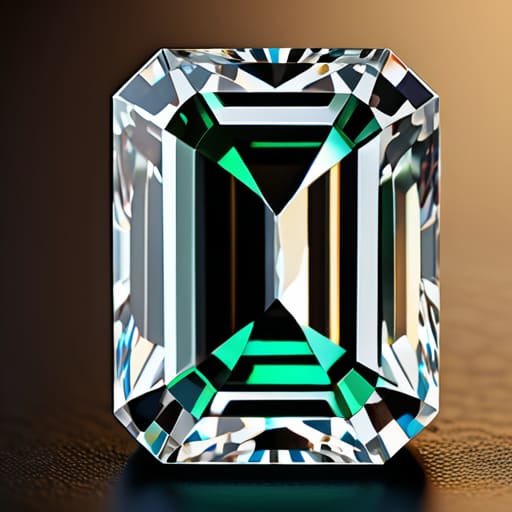
I spent six years hunched over a bench in a grading lab, staring through a loupe until my eyes felt like they were full of sand. I’ve seen enough “investment grade” stones to know that most people are sold a fantasy when they buy a large gemstone. They get caught up in the romanticism of the shape, but they completely miss the actual mechanics of the stone. If you don’t understand the step facets of an emerald cut, you’re essentially walking into a shop blindfolded. People will try to sell you on “brilliance” and “fire,” but an emerald cut isn’t supposed to dance like a round brilliant; it’s supposed to show you the clarity and depth of the mineral through those long, parallel lines.
I’m not here to give you a lecture on light refraction or sell you some spiritual nonsense about “aligning your energy.” My goal is much simpler: I want to show you exactly what those facets should look like under magnification so you don’t get swindled by a bad cut. I’ll explain the geometry, tell you how to spot a poorly proportioned stone, and show you how to tell a high-quality facet from a messy one. Once you know what to look for, what you choose to do with the stone is entirely up to you.
Beyond the Surface Deciphering the Step Facets of an Emerald Cut
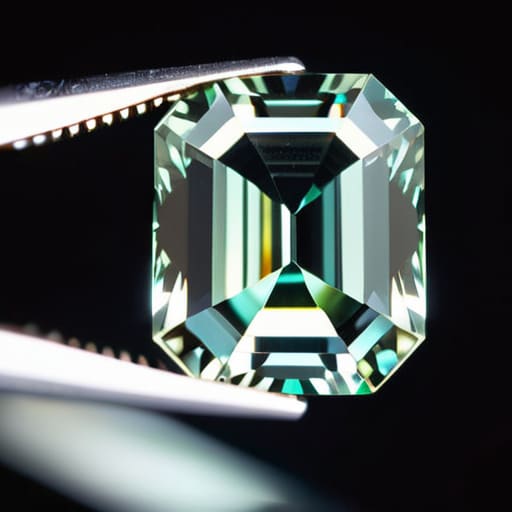
When you look through a loupe at an emerald cut, you aren’t looking for the frantic, kaleidoscopic fire you’d see in a round brilliant. Instead, you’re looking for order. The diamond facet arrangement here is deliberate; the facets are cut in long, parallel rows that resemble a staircase. This is the hallmark of emerald cut diamonds. Because these facets are broad and flat, they don’t bounce light around in a chaotic scramble. Instead, they create a rhythmic, architectural flash. If the steps look uneven or “wavy,” it’s usually a sign of poor craftsmanship rather than a flaw in the stone itself.
This structural choice changes how we judge the gem. In a brilliant cut, the sparkle can actually hide a lot of internal mess, but the open architecture of an emerald cut is unforgiving. It acts like a window. You’ll notice that emerald cut clarity and inclusions are much more visible because there is nowhere for them to hide in those wide, flat planes. If you see a dark spot or a tiny feather, it sits right there in the light, plain as day. It requires a certain level of confidence to buy a stone that shows its true self so clearly.
The Hallmarks of Emerald Cut Diamonds What to Look for
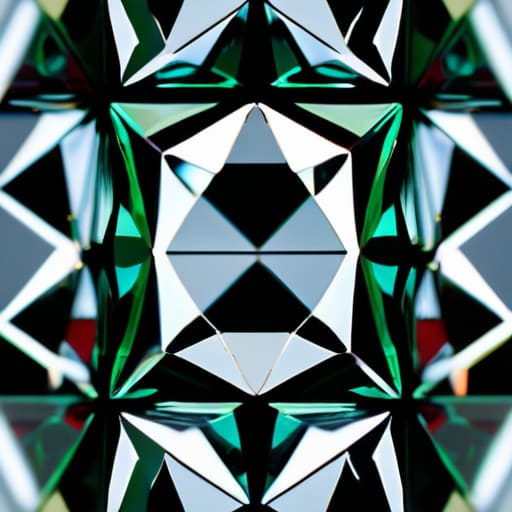
When you’re looking through a loupe, you aren’t searching for the chaotic “sparkle” you see in a round brilliant. Instead, you’re looking for order. A proper diamond facet arrangement in an emerald cut should look like a series of parallel mirrors, or the way light hits the surface of a calm fjord just before a storm. If the lines look wobbly or the steps seem to jump out of alignment, the stone wasn’t cut with much precision. I always check if those long, rectangular facets are straight; if they aren’t, the whole geometric integrity of the stone falls apart.
Because this cut is so open, it doesn’t hide much. Unlike a brilliant cut that uses tiny facets to bounce light around and mask imperfections, the emerald cut light reflection acts more like a window. You’ll see everything clearly. This means you have to pay much closer attention to emerald cut clarity and inclusions. If there is a tiny feather or a dark spot, it will sit right there in the middle of those long steps, staring back at you. It’s not a flaw in the style, but it does mean you need to be a bit more selective about the quality of the rough you’re buying.
Geometry Over Glitz the Precise Diamond Facet Arrangement
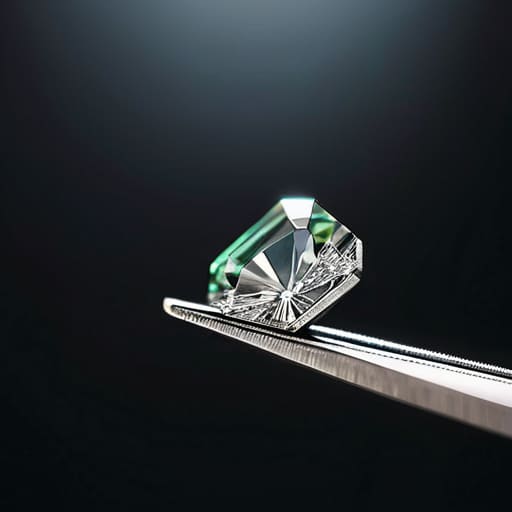
When you hold an emerald cut up to the light, you aren’t looking for the frantic, dancing sparkles you get with a round brilliant. Instead, you are looking for a steady, rhythmic architecture. The diamond facet arrangement here is deliberate; the facets are cut in long, parallel rows that descend like a staircase toward the center of the stone. This is the fundamental difference in a step cut vs brilliant cut. While a brilliant cut is designed to shatter light into a thousand tiny points, the emerald cut is designed to act more like a hall of mirrors, creating broad, clean flashes of light that travel across those flat surfaces.
Because these facets are so wide and open, they don’t hide anything. In a round stone, a tiny inclusion might get lost in the “crushed ice” effect of all those tiny facets, but in an emerald cut, the stone is an open book. This is why emerald cut clarity and inclusions are such a massive deal in grading. If there is a flaw, it sits right there in the middle of a step, staring back at you like a pebble in a clear mountain stream. You have to respect the geometry; it demands a clean stone to truly work.
Step Cut vs Brilliant Cut a Matter of Character
When you hold a brilliant cut diamond, you’re looking at a firework. It’s designed to shatter light into a thousand tiny, dancing sparks, hiding its internal flaws behind a wall of scintillation. But an emerald cut doesn’t play that game. It’s more like looking into a deep, still pool of water on a calm morning. Because of the wide, open table and the long, parallel lines of the step cut vs brilliant cut, you aren’t seeing a frantic explosion of light; you are seeing a steady, rhythmic flow.
This difference in diamond facet arrangement changes how you judge the stone. In a brilliant cut, the “crushed ice” effect can mask a lot of mess. In an emerald cut, the light doesn’t bounce around as much, meaning it travels straight through the heart of the gem. This makes emerald cut clarity and inclusions much more obvious. You can’t hide a significant feather or a cloudy patch behind a flurry of sparkles here. It requires a stone with a clean history, but once you get used to that architectural, calm glow, the frantic blinking of a round brilliant can start to feel a bit noisy.
The Mirror Effect Mastering Emerald Cut Light Reflection
When you hold an emerald cut up to the light, you aren’t looking for the frantic, splintering sparkle you get from a round brilliant. Instead, you’re looking for something more architectural. Because of the way the facets are laid out in long, parallel rows, the stone acts like a series of tiny, interconnected mirrors. This is the core of emerald cut light reflection: it’s a rhythmic flash of light that moves across the table in broad, sweeping strokes. If the stone is cut well, those flashes will look clean and deliberate, like sunlight hitting the surface of a calm fjord.
However, this “mirror effect” is a double-edged sword. In a brilliant cut, the light bounces around so much it can hide a multitude of sins, but the emerald cut is honest—sometimes brutally so. Because the light travels in such straight, wide paths, it acts like a spotlight on the interior of the gem. This is why emerald cut clarity and inclusions are so vital to consider; any tiny internal flaw or a bit of unexpected cloudiness will be magnified by those long facets. If the stone has “pepper” inside it, the mirror effect won’t hide it; it will simply frame it.
Exposing the Truth in Emerald Cut Clarity and Inclusions
Because of the way these stones are shaped, they don’t hide much. In a round brilliant cut, the tiny, crowded facets act like a chaotic disco ball, bouncing light around so quickly that a small speck of carbon or a tiny crack gets lost in the sparkle. But an emerald cut is different. It’s more like a window than a disco ball. When you look through those long, parallel step facets, you aren’t seeing a flurry of light; you’re seeing a clear view into the heart of the stone. This makes emerald cut clarity and inclusions a much bigger deal than they are in other shapes.
If there is a flaw sitting right in the center of the table, it’s going to look like a mountain range in a clear sky. You can’t rely on “glitz” to mask a mistake here. When I’m grading, I look for how the inclusions interact with the emerald cut light reflection. A tiny feather or a bit of cloudiness might be manageable, but because the diamond facet arrangement is so open and orderly, a significant inclusion will break that clean, hall-of-mirrors effect. You aren’t just buying a pretty shape; you’re buying the transparency of the crystal itself.
Choosing Your Path Among Geometric Diamond Shapes
When you start looking at different geometric diamond shapes, it’s easy to get lost in the sparkle. Most people gravitate toward the round brilliant because it’s designed to maximize fire, but that’s not for everyone. If you find yourself drawn to the structured, architectural look of an emerald cut, you have to accept a different set of rules. You aren’t buying a stone that hides its flaws behind a frantic dance of light; you are buying a window.
The real choice comes down to how you want to experience the stone’s personality. In a step cut vs brilliant cut comparison, the round stone is a strobe light, while the emerald cut is more like a calm, deep pool of water. Because the facets are long and parallel, the emerald cut light reflection behaves differently—it creates flashes of light rather than constant scintillation. You have to be comfortable with that. If you want a stone that feels steady and substantial rather than flashy, the geometry will suit you. Just remember that with this much open space, you’re choosing to see exactly what is inside.
The Truth in the Lines
People get distracted by the flash, but I’ve spent too many hours under a loupe to care about mere sparkle; I look for those long, parallel step facets, because if those lines aren’t clean and continuous, you aren’t looking at a masterpiece, you’re just looking at a mess of light.
Dagny Solheim
Final Thoughts on the Step Cut
At the end of the day, an emerald cut isn’t trying to scream at you with a thousand tiny flashes of light like a round brilliant does. It’s a different beast entirely. We’ve looked at how those long, parallel step facets act like windows rather than mirrors, and why that makes clarity so much more important than it would be in a different shape. You now know how to check for those hallmark geometric lines and how to spot the difference between a well-proportioned stone and one that’s lost its structural integrity. If you can see the way the light travels through those steps without getting lost in a muddy mess of inclusions, you’re already ahead of most buyers. It comes down to respecting the geometry and knowing exactly what you are looking at under the loupe.
Whether you are buying this stone as a lifelong investment or just because you love the way the light hits the facets like wet granite on a coastline, the choice is yours. I don’t care if you want a stone that represents a massive milestone or if you just find the mathematical precision of the cut soothing to look at. My job ends once I’ve helped you distinguish the real from the poorly cut. Once you have found a stone where the facets align and the light behaves exactly as it should, the story is yours to write.
