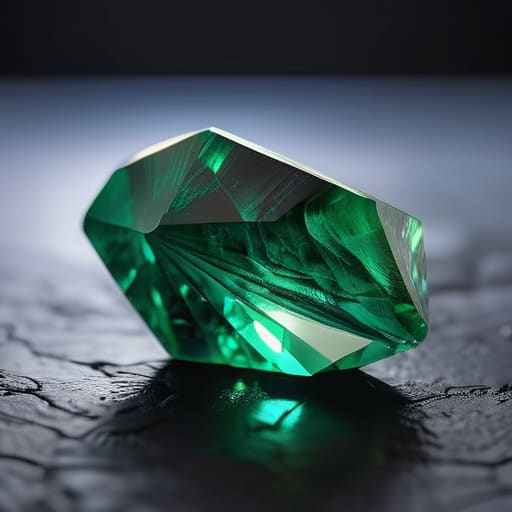
I remember sitting in a cramped grading lab in Bergen, the fluorescent lights humming overhead, staring through a loupe at a stone that looked like a lush, mossy forest after a heavy rain. It was beautiful, but my gut told me something was off. People often get caught up in the high-stakes drama of “real versus fake,” but when we talk about hydrothermal synthetic emerald and how close it gets to the natural thing, the conversation shouldn’t be about deception—it should be about chemistry. I’m tired of the mystical fluff that claims these stones lack “soul” just because they were grown in a pressurized autoclave rather than a mountain vein.
In this post, I’m going to strip away the marketing jargon and tell you exactly how these stones are constructed. I’ll show you the specific inclusions to look for under magnification so you can distinguish a lab-grown gem from a mined one. I’m not here to tell you whether you should buy one; that’s your business. My only goal is to make sure you understand the mineral composition and the reality of what you’re holding in your hand before you part with your money.
The Truth About Hydrothermal Synthetic Emerald and How Close It Gets
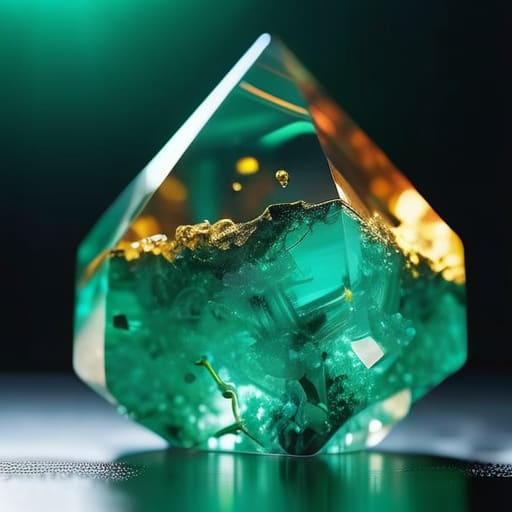
To understand these stones, you have to look at the autoclave. The hydrothermal growth process explained is essentially a high-pressure, high-temperature version of how nature does things, but instead of a slow geological crawl over millions of years, we’re using a machine to force the minerals into a solution. Because the chemistry is so controlled, the emerald gemstone chemical composition is almost an exact match for what you’d pull out of a mine in Zambia or Colombia. This is why they are so tricky; they aren’t just “look-alikes,” they are chemically identical siblings.
When I sit down with my loupe, I’m looking for the tell-tale signs of that machine. While the color can be as lush and deep as a forest floor after a heavy rain, the internal world of a synthetic stone tells a different story. Detecting synthetic emeralds under a microscope usually comes down to finding tiny, fluid-filled cavities or specific types of “fingerprint” inclusions that look a bit too organized, almost too perfect. In a natural stone, the inclusions are chaotic and messy; in a hydrothermal emerald, you might see tiny, straight lines or distinctive growth patterns that suggest a controlled environment rather than the wild, unpredictable pressure of the earth’s crust.
The Hydrothermal Growth Process Explained How Machines Mimic Nature
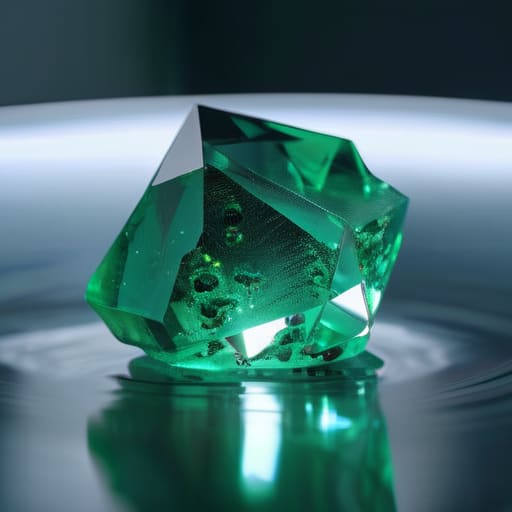
To understand how these stones are made, you have to stop thinking about a garden and start thinking about a pressure cooker. In nature, emeralds form deep in the earth over millions of years as hot, mineral-rich fluids seep through cracks in the crust. The hydrothermal growth process explained simply is that we’ve just taken that exact recipe and moved it into a high-pressure steel autoclave. We fill these machines with water, heat it to extreme temperatures, and add the necessary elements—beryllium, aluminum, and chromium—to trigger crystallization.
It is a remarkably efficient way to replicate the emerald gemstone chemical composition, but the machine lacks the chaotic, slow-motion drama of the Earth’s crust. Because the environment inside the autoclave is so controlled and stable, the crystals grow with a certain mathematical regularity. When I’m detecting synthetic emeralds under a microscope, I’m looking for that tell-tale sign: the presence of “growth tubes” or tiny, perfectly straight liquid inclusions. These look like microscopic needles or channels, often arranged in a pattern that is far too tidy to be a product of geological luck.
The Emerald Gemstone Chemical Composition Is It Truly Identical
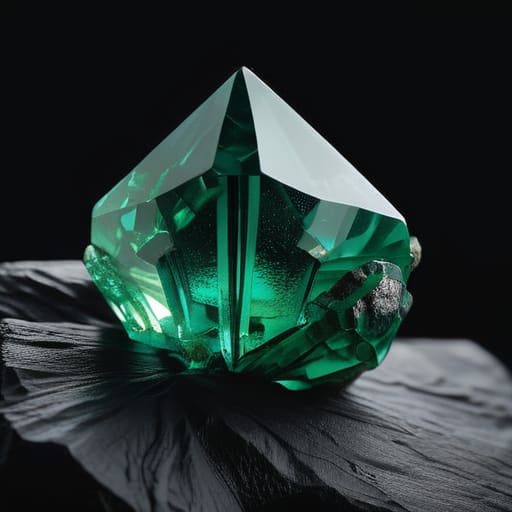
If you look at the chemistry on a spreadsheet, you won’t find much to argue about. The emerald gemstone chemical composition in these lab-grown stones is, for all intents and purposes, beryllium aluminum silicate. When the machines are dialed in correctly, they replicate the exact recipe nature uses. The chromium or vanadium that gives the stone its green—the shade of a pine needle pulled from a dark fjord—is added into the nutrient solution just like it would be in a pegmatite vein deep underground.
However, “identical” is a tricky word in gemmology. While the elements are the same, the way they settle into a crystal lattice can differ. In a natural stone, the impurities are messy and chaotic; in a hydrothermal setup, the growth is more rhythmic. This is where the optical properties of hydrothermal emeralds start to diverge from the real thing. Because the chemical environment in the autoclave is so controlled, the resulting crystal can sometimes feel “too perfect” or lack the specific trace element signatures that a geologist expects to see in a stone born from tectonic pressure and millions of years of geological patience.
Lab Grown vs Mined Emerald Characteristics What You Need to Know
When you sit down with a loupe, you aren’t just looking for color; you’re looking for the “fingerprints” left behind by the earth or a machine. In a natural emerald, the inclusions—those tiny bits of other minerals trapped inside—look like chaotic, organic debris. They might look like little needles of rutile or even tiny cracks that look like shattered ice on a fjord. But with a hydrothermal synthetic, the inclusions often follow a pattern. Because they grow in a controlled environment, you might see tiny, perfectly straight lines or even tiny bubbles that look like they were caught in a frozen bubble of sea spray.
Detecting synthetic emeralds under a microscope comes down to spotting that unnatural order. While the emerald gemstone chemical composition is virtually identical to what comes out of a mine in Zambia or Colombia, the way they hold their flaws is the giveaway. Natural stones have a messy, beautiful history of geological stress. Hydrothermals have a clean, repetitive history of pressurized water and heat. If the internal features look too much like a neatly organized library rather than a wild coastline, you’re likely looking at a lab-grown stone.
The Optical Properties of Hydrothermal Emeralds Why They Look So Perfect
When you look at a hydrothermal emerald through a loupe, the first thing that hits you is the clarity. They have this lush, saturated green that looks like a forest floor right after a heavy rain—deep, vibrant, and almost unnervingly clean. In the lab, we talk about the optical properties of hydrothermal emeralds as being “near-perfect,” which is really just a polite way of saying they lack the messy, chaotic history of a stone pulled from the earth. While a natural emerald is often interrupted by silk or mineral veining, these lab-grown versions often appear almost too suspended in their own color.
If you are detecting synthetic emeralds under a microscope, you aren’t looking for what is there, but rather what is missing. Natural stones have a specific type of “jardin”—the French word for garden—which refers to the complex web of inclusions that give a stone character. Hydrothermal stones often lack this complexity, or they present tiny, repetitive fluid inclusions that look more like bubbles in a glass than geological scars. They look like a dream of an emerald, but they lack the grit of the real thing.
Identifying Synthetic Emerald Inclusions Looking for the Tell Tale Signs
When I sit down with my loupe, I’m not looking for beauty; I’m looking for mistakes. Nature is messy, but machines are precise, and that precision is usually the giveaway. In a natural emerald, you’ll see “jardin”—a French word for garden—meaning a chaotic tangle of fractures, tiny crystals, and organic-looking inclusions. If you are detecting synthetic emeralds under a microscope, you are looking for the absence of that chaos. Instead of a garden, a hydrothermal stone often shows tiny, perfectly straight lines or even small, fluid-filled bubbles that look like they were caught in a freeze-frame.
These bubbles are a dead giveaway. In the hydrothermal growth process explained earlier, we talked about how heat and pressure move minerals through a solution, but sometimes tiny pockets of gas get trapped. These bubbles look like perfectly spherical droplets, almost like dew on a leaf, whereas natural inclusions are jagged and irregular. While the lab-grown vs mined emerald characteristics might look identical to the naked eye, the microscope reveals the truth: one was born from a tectonic struggle, and the other was grown in a controlled, quiet tank.
Detecting Synthetic Emeralds Under Microscope My Method for Finding Clarity
When I sit down at the bench, I don’t look for perfection; I look for the “story” told by the flaws. When I’m detecting synthetic emeralds under microscope, I’m specifically hunting for what the machine couldn’t replicate. In a natural stone, the inclusions look like a chaotic, beautiful mess—tiny crystals of calcite or rutile that look like they were frozen mid-fall. But in a hydrothermal specimen, the inclusions often follow a predictable pattern. I look for those tiny, needle-like shapes that sit in perfect, parallel lines, almost like they were planted in rows by a gardener.
If the stone looks too clean, that’s my first red flag. I’m looking for the subtle “fingerprints” left behind by the hydrothermal growth process explained in the previous section. While a mined emerald might have a jagged, irregular fracture that looks like cracked ice on a frozen fjord, a synthetic often shows tiny, fluid-filled bubbles or “veils” that appear strangely uniform. It’s about finding that tension between the chemical perfection of the stone and the physical reality of how it was built.
The gap between the lab and the earth
A hydrothermal emerald is a marvel of engineering; it mimics the chemistry so closely that the color looks like a forest floor after a heavy rain, lush and deep. But while the machine can replicate the perfect green, it can’t quite replicate the chaotic, messy history of a stone that spent millions of years fighting its way through tectonic plates.
Dagny Solheim
The final word on hydrothermal emeralds
At the end of the day, a hydrothermal emerald is a feat of engineering. We’ve looked at how these machines replicate the intense heat and pressure of the earth, creating a beryl crystal that is chemically nearly identical to what comes out of a mine in Colombia. You can find them by looking for those tiny, tell-tale fluid inclusions or the absence of the “jardin” that defines a natural stone. They might look like a piece of sea glass caught in a tide pool—bright, clear, and almost too perfect—but once you know to look for the specific patterns left by the growth process, the illusion breaks. Understanding the difference between a geological accident and a laboratory success is the only way to shop with your eyes open.
Whether you end up with a mined stone or a synthetic one doesn’t change the way the light hits it when you wear it. If you find a hydrothermal emerald that catches your eye, and you’re comfortable knowing exactly what it is, then buy it and enjoy it. A stone’s value isn’t just in its rarity or its price tag; it’s in the way it makes you feel when you look down at your hand. Whether it was formed by tectonic shifts over millions of years or a high-pressure autoclave in a few months, it is still a beautiful piece of chemistry that belongs to you.
