I spent six years in a grading lab looking at inclusions through a loupe, so I have a very low tolerance for people selling “magic” that isn’t there. It’s the same with hardware; you’ll see shops trying to upsell you on “premium” heavy-duty links that are really just overpriced steel with a shiny coating. People get so caught up in the marketing that they forget the physics of the metal. If you don’t actually understand the different chain types and how much weight each one takes, you aren’t just wasting money—you’re risking a snap that could take someone’s eye out.
I’m not here to sell you a specific brand or tell you that a certain alloy has “spiritual energy.” I’m going to give you the unvarnished reality of the metal, the link, and the load. I’ll break down exactly what these chains are made of and what their actual breaking points are, so you know precisely what you’re holding in your hands. Once you know the limits of your gear, what you decide to haul with it is entirely up to you.
The Metal the Link and the Load Chain Types and How Much Weight Each One Ta
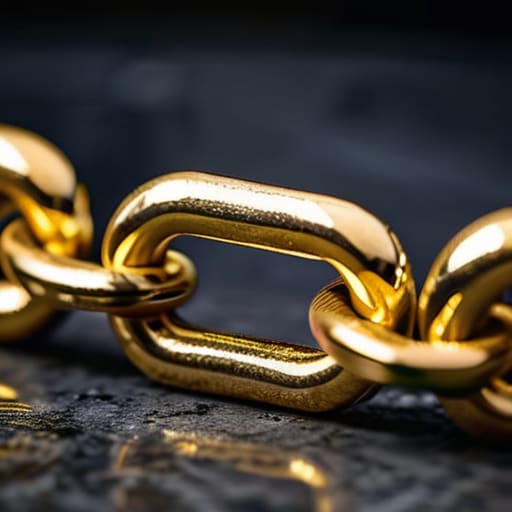
When you’re looking at a piece of jewelry, it’s easy to get distracted by the shine, but I always look at the architecture first. A chain isn’t just a pretty line; it’s a series of interconnected mechanical points. If you are selecting chains for heavy pendants, you have to stop thinking about the aesthetic and start thinking about the physics of the link. A delicate cable chain might look fine in a shop window, but it lacks the structural integrity of something more substantial. I think of it like the difference between a thin piece of sea glass and a solid piece of granite—one is for show, the other is built to endure.
You’ll often hear people talk about the difference between curb and rope chains without realizing they are discussing two completely different ways of distributing tension. A curb chain lies flat, which is great for comfort, but a rope chain’s twisted structure provides a different kind of security. You also need to pay attention to the chain gauge and durability; a thicker gauge isn’t just about looking “chunkier,” it’s about increasing the surface area of the metal to prevent snapping. I’ll tell you how much stress the metal can take, but how you wear it is your call.
Understanding Jewelry Chain Tensile Strength What the Metal Actually Promis
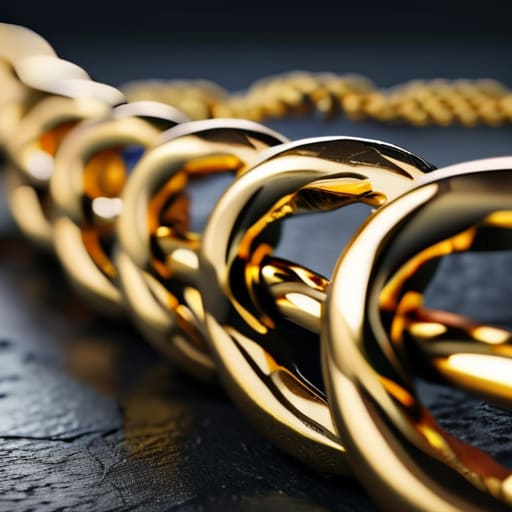
When you’re looking at a piece of jewelry, it’s easy to get distracted by the shine, but I always look for the structural integrity first. People often conflate aesthetics with physics, but jewelry chain tensile strength isn’t about how much the gold sparkles under a lamp; it’s about the point where the molecular bonds of the metal simply give up. Whether you are looking at 14k gold or sterling silver, the metal has a specific limit. If you’re selecting chains for heavy pendants, you need to stop looking at the design and start looking at the density and the way those links are fused.
I’ve seen beautiful, delicate pieces snap because the wearer didn’t account for the weight of a heavy stone or even just a sharp tug during a morning swim. You have to consider the chain gauge and durability as a single unit. A thicker gauge provides more surface area for the metal to resist tension, but a poorly constructed link can be a weak point regardless of its thickness. I don’t care if you’re wearing it for luck or just for fashion, but knowing exactly where that breaking point lies keeps your investment from ending up at the bottom of the North Sea.
The Truth About Metal Chain Load Limits and the Reality of Failure
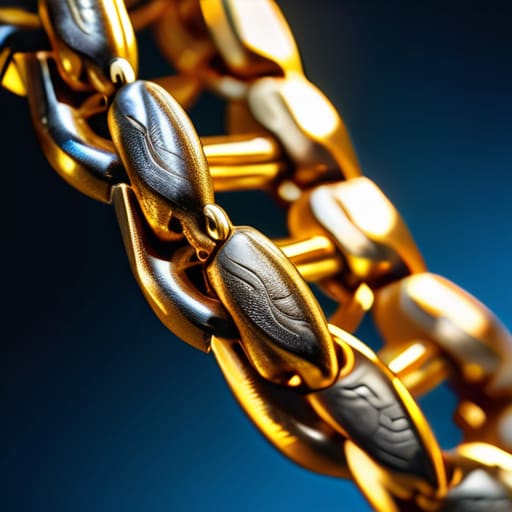
When you’re looking at a spec sheet, the numbers look clean, but metal is rarely that polite. In the lab, I’ve seen how a single microscopic flaw or a sharp nick in a link can turn a theoretical load limit into a sudden snap. You can’t just look at the weight of the gold and assume it’s invincible; you have to account for the geometry of the links. A heavy pendant doesn’t just pull down; it creates tension that concentrates on the weakest point of the metal.
This is where the practical reality of chain gauge and durability comes into play. A thin, delicate wire might look sturdy under a loupe, but it lacks the structural mass to handle constant, shifting tension. I often see people struggling with selecting chains for heavy pendants, choosing something that looks right visually but lacks the actual cross-sectional area to support the weight over time. If the metal is stretched or worn thin, that “safe” limit evaporates. It isn’t a sudden explosion; it’s a slow, quiet surrender of the metal to the physics of the pull.
The Difference Between Curb and Rope Chains Which One Holds True
When you’re looking at a curb chain, you’re looking at something designed for stability. The links are flat and sit flush against one another, which makes them incredibly sturdy because they don’t twist easily. If you are selecting chains for heavy pendants, a curb style is often your best bet because the weight is distributed evenly across those flat surfaces. It’s a predictable, honest piece of metal.
Rope chains are a different story entirely. They are made of many smaller links twisted together to mimic a cord, which gives them a beautiful, textured look—the kind of gold that looks like it’s been pulled straight from a sunlit tide pool. However, that complexity comes with a trade-off. Because of the way those tiny links interlock, the chain gauge and durability can vary wildly depending on how tightly they were spun. A rope chain might look substantial, but if the twist is loose, it can be more prone to snagging or snapping under tension than a solid curb. I always tell people to check the density; if it feels airy, don’t trust it with your heaviest heirloom.
Calculating the Breaking Strength of Gold Chains Before You Buy
When you’re looking at a piece of gold through a loupe, it’s easy to get distracted by the luster. But if you’re planning on hanging a heavy, solid gold pendant on a delicate strand, you need to look past the shine. You can’t just guess based on how thick it looks to the naked eye; you have to consider the chain gauge and durability in tandem. A fine, high-karat gold chain might look substantial, but gold is a soft metal. It stretches and yields much more readily than steel or even silver, meaning its actual breaking strength is often lower than its appearance suggests.
To get a real sense of what you’re buying, I always look at the cross-section. A rope chain has more surface area and internal structure to distribute weight than a flat curb chain, even if they look similar in length. If you are selecting chains for heavy pendants, don’t just trust the salesperson’s “it feels sturdy” line. Look for the weight of the metal itself and the thickness of the individual links. You want a margin of safety—a gap between what the pendant weighs and the actual breaking strength of gold chains—so you aren’t left staring at a broken clasp on the floor.
Selecting Chains for Heavy Pendants Without Fear of the Snap
When you’re pairing a heavy, solid gold pendant with a delicate strand, you aren’t just playing with aesthetics; you’re playing with physics. I’ve seen too many people fall in love with a piece only to have it end up on the floor because they ignored the chain gauge and durability required for the job. A heavy stone or a thick metal charm exerts a constant, downward pull. If that pull exceeds the metal chain load limits, the links won’t just stretch—they will fail.
To avoid that sinking feeling, you need to look closely at the link construction. A fine, thin cable chain might look elegant against a large piece, but it lacks the structural integrity to handle the weight over time. I usually suggest looking for a sturdier build, like a thicker wheat or a robust rope chain, where the links are tightly interlocked. When you are selecting chains for heavy pendants, don’t just look at the color or the shine. Check the thickness of the individual wire. If the pendant feels substantial in your palm, the chain needs to feel substantial, too.
Why Chain Gauge and Durability Matter More Than the Shine
When you’re looking at a piece of jewelry in a display case, the first thing that hits you is the light. It’s easy to get distracted by a high-polish finish that catches the sun like sunlight hitting a wet pebble on a North Sea beach. But shine is a superficial metric; it tells you nothing about the structural integrity of the piece. I’ve spent years looking at the physical properties of materials, and I can tell you that a bright, flashy chain can be incredibly brittle if the metal is too thin or the alloy is poor.
This is where chain gauge and durability become the real conversation. The gauge is essentially the thickness of the wire used to construct the links. A higher gauge means more metal mass, which directly impacts the jewelry chain tensile strength. If you are selecting a piece to hold a significant weight, you have to look past the luster and check the diameter of the links themselves. A thin, high-shine chain might look expensive, but it lacks the substance required to handle even moderate tension without deforming.
Beyond the luster
A chain isn’t just a pretty string of gold; it is a series of physical links subject to the same laws of tension and fatigue as any other metal. I don’t care if you’re wearing it for luck or just to hold a heavy pendant, but you should know whether you’re holding a structural tool or a delicate ornament before you put it under pressure.
Dagny Solheim
The weight of the choice
At the end of the day, choosing a chain isn’t about finding the thickest piece of metal in the display case; it’s about matching the physics of the object to the reality of the link. You have to look past the polish and consider the metal’s composition, the specific geometry of the weave—whether it’s a sturdy rope or a flat curb—and the actual gauge of the wire. If you are hanging a heavy, solid gold pendant, you cannot rely on aesthetic shine to do the heavy lifting. You need to understand the tensile strength and the breaking point before you ever clasp it around your neck. Knowing the difference between what a chain looks like and what it can actually endure is the only way to ensure your jewelry stays with you rather than ending up on a shop floor.
I know that for many, a piece of jewelry is more than just a calculation of grams and Newtons. It might be a family heirloom, a symbol of a milestone, or something you wear every single day to feel grounded. I don’t care if you buy a chain because it’s scientifically indestructible or simply because it catches the light like wet granite in the sun. My only hope is that you walk away knowing exactly what you are holding. When you understand the composition and the limits of the metal, you can wear your pieces with a sense of quiet confidence, knowing they are built to hold exactly what they were meant to carry.
