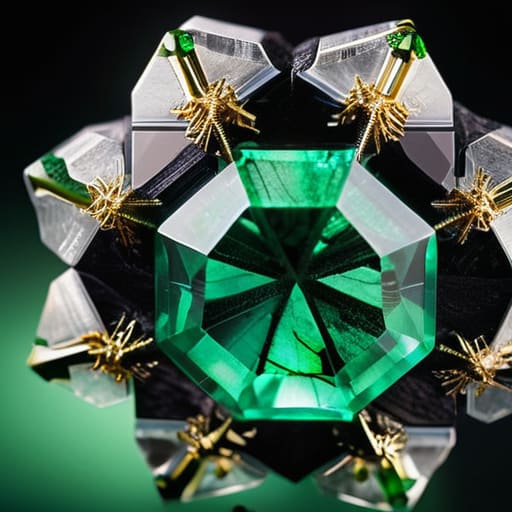
I spent six years in a grading lab where the air felt recycled and the light was always too clinical, staring through a loupe until my eyes burned. I’ve seen people pay astronomical sums for stones that were nothing more than clever lab-grown tricks, all because they were chasing a specific aesthetic. When people talk about the colombian emerald and the trapiche pattern, they often treat it like some mystical, once-in-a-lifetime cosmic alignment. In reality, it’s a fascinating geological quirk—a hexagonal crystal structure that looks like a tiny, dark star trapped in green glass—but it’s also one of the easiest ways for a dealer to overcharge a hopeful buyer.
I’m not here to sell you on the “energy” of a crystal or tell you that a specific shape will change your life. My goal is simpler: I want to show you the actual mineralogy behind the colombian emerald and the trapiche pattern so you can spot a genuine specimen from a synthetic imitation. I’ll explain how these inclusions form and what to look for under magnification. Once you know how to tell the real thing from the fake, what you choose to do with it is entirely up to you.
Understanding Colombian Emerald and the Trapiche Pattern
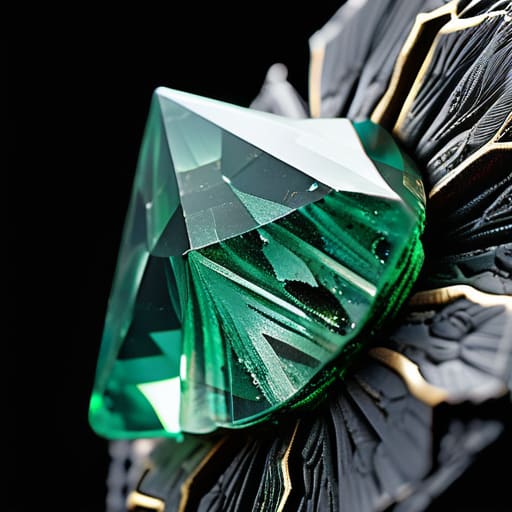
To understand what we’re actually looking at, you have to look past the marketing fluff and into the chemistry. A Colombian emerald is essentially beryl, colored by trace amounts of chromium and sometimes vanadium. When these crystals grow in the specific geological environment of the Muzo mine, something strange happens. Instead of growing into a standard six-sided prism, the crystal develops along certain axes, creating these natural emerald geometric formations that look like a wheel with spokes.
These aren’t just surface scratches or clever laser engravings. They are star-shaped emerald inclusions that exist deep within the structure of the stone. The “spokes” are actually layers of different mineral compositions—often mica or other inclusions—that grew alongside the beryl. Because these patterns are dictated by the way the crystal lattice expanded under pressure, they are incredibly difficult to replicate. When I’m looking through my loupe, I’m searching for that specific depth; a real pattern should feel like it’s suspended in a pool of green water, not just sitting on the surface like a sticker.
Key Things to Know
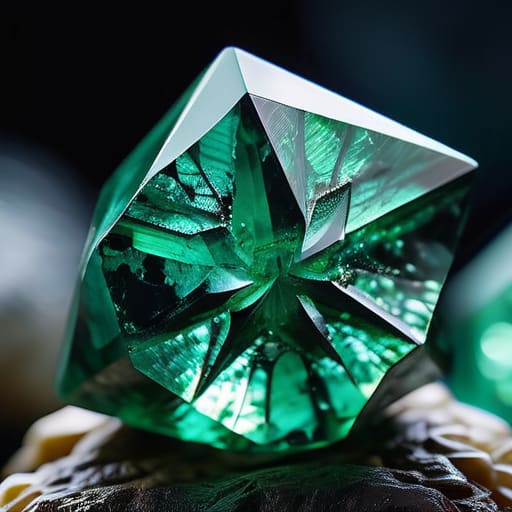
When you’re looking at these stones, you need to understand that the pattern isn’t a surface scratch or a painted design; it is a result of how the crystal actually formed deep underground. These natural emerald geometric formations occur when the hexagonal crystal grows around a central axis of inclusions, creating that distinct star-like shape. In the Muzo mine, where the heat and pressure are just right, these inclusions can create a look that is as deep and dark as the North Sea during a storm.
If you are trying to verify what you’re holding, look closely at the edges of the star. In a genuine specimen, the lines should feel integrated into the stone’s structure, not sitting on top of it. You’ll often see star-shaped emerald inclusions that follow the internal geometry of the crystal lattice. While the value of rare emerald inclusions can be a bit of a gamble depending on how much they obscure the clarity, a well-formed Trapiche pattern is a geological marvel. Just remember: if the pattern looks too perfect or too symmetrical under a loupe, it’s probably a lab-grown imitation.
Practical Tips and Steps
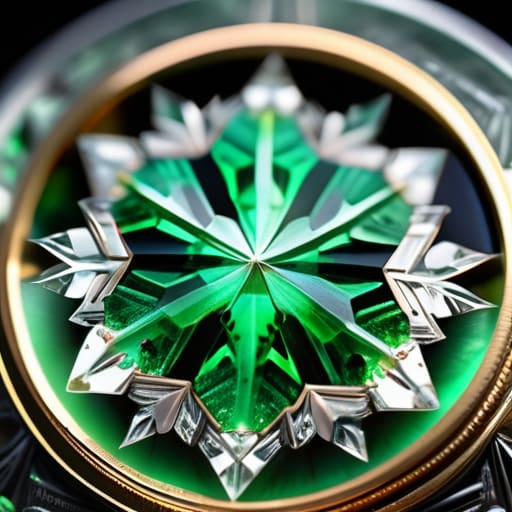
When you’re sitting at a bench with a loupe, the first thing you should do is look for the symmetry. A genuine Trapiche pattern isn’t just a smudge of green; it’s a result of specific gemstone crystal growth patterns that create those distinct, radiating arms. If the lines look blurry or lack a clear central hub, you might be looking at something else entirely. I always check the edges of those “spokes” first. In a real specimen, they should feel structured, almost like a frozen snowflake, rather than a chaotic mess of color.
I also recommend comparing the stone against known Muzo mine emerald characteristics. Since these stones often come from specific geological pockets, they tend to have a certain “glow” when light hits them—a color that reminds me of deep seawater just before a storm. If the pattern looks too perfect, like it was printed on the surface, be wary. Identifying authentic trapiche emeralds requires looking into the stone, not just at it. Once you’ve confirmed the geometry is natural and not a lab-grown imitation, the rest is up to you.
Common Mistakes to Avoid
The biggest mistake I see is people falling in love with a pattern that looks too perfect. In a lab, we look for the messy reality of gemstone crystal growth patterns. Real Trapiche emeralds aren’t drawn with a ruler; they are the result of complex mineral geometry. If you see a star that looks like a symmetrical sticker placed inside the stone, it’s likely a laser etching or a high-end synthetic. A genuine stone will have slight irregularities in those star-shaped emerald inclusions, much like how a coastline never follows a straight line.
Another trap is ignoring the host stone’s context. People often get distracted by the pattern and forget to check for standard Muzo mine emerald characteristics, like the specific oil content or the way the light interacts with the internal fractures. A beautiful geometric formation doesn’t excuse a stone that looks “glassy” or lacks the characteristic depth of a natural beryl. Don’t let a striking shape blind you to the actual quality of the gem; a perfect star in a low-quality, heavily treated stone isn’t a bargain, it’s just a pretty distraction.
Final Thoughts
At the end of the day, whether you are looking for a museum piece or just a stone that catches the light, remember that nature doesn’t work in straight lines. Those natural emerald geometric formations we call Trapiche patterns are essentially just a beautiful accident of chemistry and pressure. They aren’t perfect, and they shouldn’t be. If you find a stone where the star-shaped emerald inclusions look too symmetrical—like they were etched in by a laser rather than grown in the dark of the earth—that is your cue to walk away.
I’ve spent enough hours under a loupe to know that the value of rare emerald inclusions often lies in their imperfection. A stone with a bit of character tells a better story than a flawless, synthetic imitation ever could. Whether you want to wear a Trapiche emerald in a ring or keep it tucked away in a velvet box, just make sure you know exactly what you’re holding. Once you’ve mastered identifying authentic trapiche emeralds, the rest is just your own business.
The reality of the pattern
A real Trapiche emerald isn’t a magic charm; it’s a rare geological accident of beryl crystals growing together. When you see those dark, star-like inclusions, don’t look for a spiritual sign—look for the structural integrity of the stone, because a pattern that looks too perfect is usually just a well-placed piece of glass.
Dagny Solheim
Final Thoughts
At the end of the day, spotting a genuine Trapiche emerald comes down to respecting the science. You’re looking for that specific, star-like intersection of dark inclusions within a crystal of beryl, not just a clever pattern etched into a piece of glass or a synthetic substitute. Remember to check the hardness, look closely at how the light interacts with those internal structures, and never feel pressured to buy something that doesn’t pass a basic visual inspection. Whether the stone is a natural miracle or a well-made lab creation, knowing exactly what you are holding is the only way to ensure you aren’t paying a premium for a lie.
Once you’ve done the work and verified the chemistry, the “why” of the stone is entirely up to you. Some people want a Colombian emerald because they love the geological rarity of its formation; others want it because it feels like a lucky charm in their palm. I don’t care which side of the fence you sit on. If a stone makes you stop and stare, then it has done its job. Whether it is a high-grade specimen for a collector or a piece of jewelry meant to be worn until it’s scratched to bits, the connection you feel to the mineral is the only part of the equation that truly matters.