I spent six years staring through a loupe in a grading lab, and if there is one thing that makes my teeth ache, it’s the way people try to sell “elemental energy” as if it’s a substitute for actual mineralogy. You’ll see shops claiming they’ve captured the very essence of fire or air in a piece of glass, charging you a premium for a stone that wouldn’t pass a basic hardness test. I’m not here to tell you that a crystal won’t change your life, but I am going to tell you that the connection between the four elements and the stones that go with each should be based on something more solid than marketing fluff.
My goal here is simple: I want to give you the real chemistry behind the tradition. I’ll break down which minerals actually correspond to earth, air, fire, and water, and more importantly, I’ll show you how to spot the difference between a genuine specimen and a cheap imitation. Once you know exactly what you’re holding in your hand, what you choose to do with it is entirely up to you.
The Four Elements and the Stones That Go With Each
When people talk about matching crystals to elemental energy, they usually group them into four distinct buckets. It isn’t a scientific classification, of course, but it’s a useful way to organize how we interact with the mineral kingdom. For me, it’s about how the stone feels in the hand—whether it’s heavy and grounding like a piece of basalt, or light and airy like a cluster of clear quartz.
If you’re looking into the spiritual properties of elemental stones, you’ll find that Earth and Water often get grouped together because of their shared sense of weight. Earth stones, like Jasper or Smoky Quartz, are dense and stable. Water stones, such as Aquamarine, have a color like the North Sea on a clear day—a pale, translucent teal. Then you have the more volatile ones: Fire, represented by the stinging orange of Carnelian, and Air, which usually involves the lighter, more transparent specimens like Celestite. I don’t care much for the “energy” claims, but I do respect the way a person uses a specific stone to find their center.
Earthly Foundations Identifying Real Grounding Stones and Their Properties
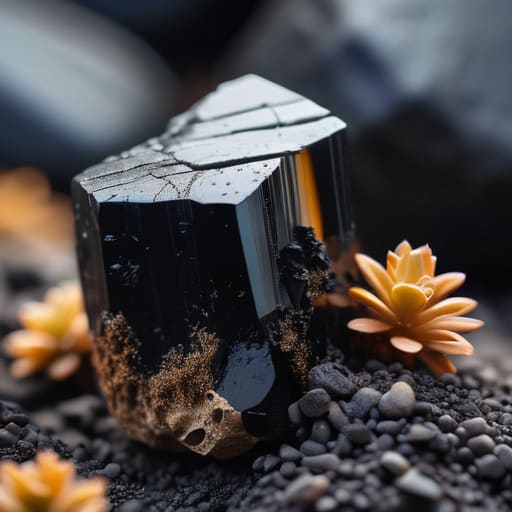
When people talk about earth energy, they usually mean stones that feel heavy and stable in the hand. For me, that usually means things like Smoky Quartz or Jasper. If you’re looking into matching crystals to elemental energy, you want something that doesn’t feel flighty. A real piece of Black Tourmaline should feel dense; if you’re holding a piece of plastic or a low-quality resin meant to mimic it, it’ll feel unnervingly light and warm. I always look for those internal inclusions—those little flaws that prove the stone actually formed under pressure deep in the crust.
I’ve spent enough time behind a loupe to know that “grounding” is often used as a catch-all term, but the spiritual properties of elemental stones shouldn’t distract you from the mineralogy. If you buy a piece of Hematite, check the weight. Real Hematite is an iron oxide; it should feel significantly heavier than it looks. If it’s too light, it’s likely just polished stone or glass. Once you’ve verified it’s the real deal, whether you keep it in a pocket for stability or use it as a centerpiece is entirely your call.
The Weight of Air Matching Crystals to Elemental Air Energy
When we talk about air, we’re talking about movement, breath, and the things that aren’t quite solid. In my experience, the stones that represent this element tend to be lighter in appearance—often translucent or even containing inclusions that look like trapped clouds. I usually look toward Celestine or Blue Lace Agate. Celestine has this pale, watery blue hue, like the sky just before a heavy rain, while Blue Lace Agate is more like a shallow tide pool over white sand. If you are interested in matching crystals to elemental energy, you’ll notice these stones don’t feel heavy in the hand; they feel like they belong to the atmosphere.
The tricky part is the market for these. You’ll see a lot of dyed Chalcedony being sold as high-grade Blue Lace Agate. If the blue looks like someone dropped a bead of ink into a glass of water, it’s likely a fake. Real Blue Lace Agate has soft, banded layers that look like ripples in a calm lake. Once you’ve verified the mineralogy, how you use them for your own practice is your call. Whether you’re looking into the spiritual properties of elemental stones or just like the way they catch the light, the goal is to find something genuine.
Taming the Flame Spiritual Properties of Fire Gemstones
When we talk about fire, we aren’t just talking about a campfire; we are talking about the chemical process of oxidation—the rapid release of energy. In the gem world, fire stones are usually those that possess a high refractive index or a saturated, warm hue. I often think of Carnelian, a variety of chalcedony, which has a color like wet, sun-baked clay. It isn’t just a pretty orange; it’s a silicate that feels substantial in the hand. People often look for the spiritual properties of elemental stones to find something that sparks motivation or courage, and Carnelian is a classic choice for that.
Then you have the heavy hitters like Spessartine Garnet. Under a loupe, the color is intense, like a drop of molten lava hitting a cold stream. It’s a manganese-rich garnet, and it’s much harder and more durable than the cheap glass imitations often sold in gift shops. When you are matching crystals to elemental energy, fire stones should feel active. They don’t sit quietly; they demand your attention. Whether you use them for meditation or just to keep on your desk to remind you to get moving, the chemistry remains the same.
Fluidity and Flow Understanding Metaphysical Uses of Water Gems
When I think of water, I think of the North Sea on a grey morning—that deep, heavy teal that looks like bruised silk when it’s moving. In the world of gemmology, we look at the chemistry, but when people talk about the metaphysical uses of elemental gems, they are usually looking for that same sense of fluidity. Water stones are often those with high transparency or a certain “wet” luster, like Aquamarine or Larimar. These stones don’t feel static; they feel like they are in motion, even when they’re sitting still on a velvet tray.
If you are interested in matching crystals to elemental energy, you’ll find that water stones are almost always used to navigate transitions. While fire stones are about the spark, these are about the flow. People use them to help with emotional regulation or to mirror the way water finds its way around a stone in a riverbed. I don’t care if you use them for meditation or just because you like the way the light hits a piece of Moonstone; I just want to make sure you know that a real, high-quality specimen has a depth that a piece of dyed glass simply can’t replicate.
Crystal Healing by Element Finding Your True Elemental Match
When people talk about crystal healing by element, they often get bogged down in complex charts or heavy mysticism. For me, it’s simpler than that. It isn’t about performing a ritual; it’s about noticing where you feel a lack in your own life. If you feel scattered and flighty, you might find yourself reaching for something heavy and dense, like a piece of smoky quartz, to pull you back down to the soil. If you feel stagnant, like a pond in mid-August, you might look for something with the movement of water to help you shift.
Matching crystals to elemental energy is really just a way of checking your own internal barometer. I don’t view it as magic, but as a way to focus your intention. If you’re leaning into the spiritual properties of elemental stones, you’re essentially using a physical object to anchor a mental state. Whether you’re using a garnet to spark a bit of drive or a celestite to quiet a racing mind, the stone is just a tool. You provide the direction; the mineral just provides the weight.
Beyond the Surface Zodiac Crystal Associations and Elemental Truths
Once you’ve sorted your stones into their elemental buckets, it’s tempting to layer on the astrology. I see a lot of shops trying to sell a specific “Leo Ruby” or “Pisces Aquamarine,” often blurring the lines between the stone’s actual chemistry and the personality traits of a star sign. While zodiac crystal associations can be a fun way to organize your collection, I prefer to look at how the element of the sign interacts with the mineral’s physical reality. An Aries isn’t just “fire” because they are energetic; they align with fire stones because the heat of their temperament matches the visual intensity of a deep, saturated garnet.
When you’re matching crystals to elemental energy through the lens of the zodiac, don’t lose sight of the geology. A Taurus might find comfort in an Earth stone like Jade, but that’s less about their birth month and more about the stone’s density and cooling touch against the skin. I’ve spent too many hours under a loupe to ignore the fact that a stone’s “vibe” is often just a reflection of its structural integrity. Whether you’re using them for astrological alignment or just because you like the way a certain silicate catches the light, keep your feet on the ground.
## The Chemistry of the Elements
Whether you’re looking for a stone to ground your spirit or just because you like the way the light hits the facets, remember that the element is just the story we tell about the mineral; the real magic is in the composition, the hardness, and the fact that a piece of quartz doesn’t care if you call it ‘Air’ or ‘Earth’, it just exists.
Dagny Solheim
A Final Look at the Elements
We’ve covered a lot of ground—from the heavy, silicate structures of Earth stones to the light, airy lattices of those we associate with the wind. We looked at how Fire stones often carry those warm, sunset-orange hues that look like a shallow tide pool at dusk, and how Water stones can hold a deep, translucent blue like the North Sea on a stormy afternoon. Whether you are looking for a piece of Jasper to keep you steady or a slice of Celestite to help you breathe, the most important thing is to remember the chemistry. Don’t let a salesperson talk you into a “magic” stone if it’s actually just dyed glass or a synthetic composite. Always check the hardness and the clarity first; once you know you have the actual mineral, the rest of the journey is yours to navigate.
At the end of the day, a stone doesn’t care what name you give it or what purpose you assign to it. A piece of Quartz is still just silicon dioxide, no matter if you use it for a scientific experiment or as a talisman for your spirit. There is a profound beauty in that simplicity. Whether you see these crystals as mere geological curiosities or as vessels for elemental energy, they are pieces of a much larger, ancient story written in the crust of our planet. So, go out, find something that speaks to you, and trust your own hands to feel its weight. Whether it’s a tool for your practice or just a beautiful bit of geology for your desk, make it your own.
