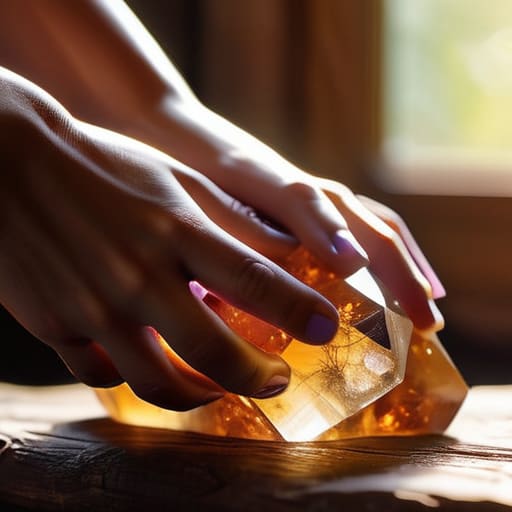
I spent six years hunched over a microscope in a grading lab, staring at inclusions that tell a much more honest story than any astrology book ever could. I’ve seen people spend hundreds on a “birthstone” only to realize it’s nothing more than dyed glass, and it always strikes me as odd when people get hung up on the idea that a calendar date dictates your entire aesthetic or spiritual identity. If you’ve ever wondered why two people born the same month reach for different stones, it isn’t because the stars are playing tricks on you; it’s usually because one person is drawn to the deep, teal-green of a wet labradorite while the other wants the sharp, clear bite of a quartz.
I’m not here to sell you on cosmic alignments or tell you that a crystal is going to rewrite your DNA. My goal is to pull back the curtain on the mineralogy and the actual physical properties that make certain stones catch the eye. I’ll explain the composition and the chemistry behind these different pulls, and I’ll show you how to spot the real thing from the fakes. Once we establish what the stone actually is, what you decide to do with it is entirely up to you.
Same Month Different Stones Ill Tell You What They Are
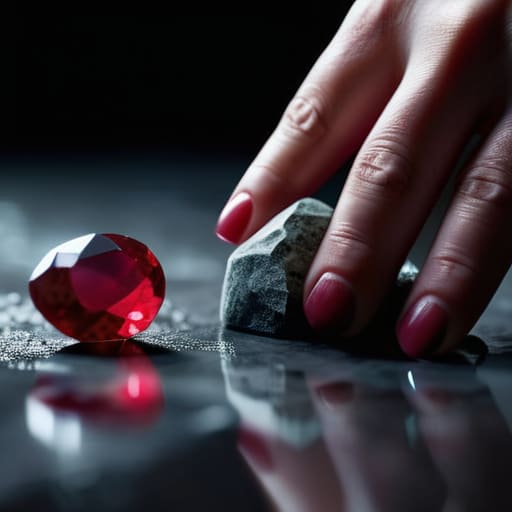
When we talk about birthstones, we’re usually looking at a calendar, not a person. If you were born in July, the standard list says you belong with Ruby. But I’ve sat in labs and seen people bypass a deep, pigeon-blood red stone to reach instead for a translucent, milky Moonstone that looks like sea foam on a grey morning. They aren’t wrong; they’re just responding to something else. While the calendar is a blunt tool, your astrological birth chart influence on crystals suggests that the celestial timing of your birth matters more than just the thirty days on the page.
It often comes down to what the stone actually is. A Ruby is a chromium-doped corundum—hard, structural, and uncompromising. A Moonstone is a feldspar with light-scattering inclusions that make it glow like wet granite under a low sun. One person might need that structural stability, while another feels a pull toward the Moonstone’s shifting light. This isn’t magic; it’s just how we react to different physical properties. You might find that your spiritual intuition in stone selection is actually just your brain recognizing a specific mineral chemistry that matches your current state of mind.
Why Two People Born the Same Month Reach for Different Stones
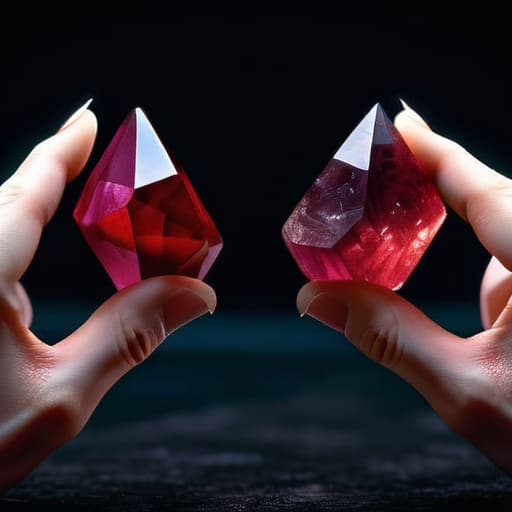
It usually comes down to what you’re actually looking for in a moment of time. If you go by the calendar, you might be told that everyone born in July belongs with a ruby. But a ruby is a corundum, a hard, red mineral that feels very specific. Someone else born in that same July might find themselves drawn to a moonstone instead. They aren’t “wrong” about their birth month; they are likely responding to a different astrological birth chart influence on crystals. One person might need the grounding weight of a heavy silicate, while another is chasing something lighter and more translucent.
I see this often when people talk about their spiritual intuition in stone selection. It isn’t magic, but it is a very real human pull. You might find that a stone’s specific chemistry—the way it refracts light or its thermal conductivity—hits a certain note in your brain. One person reaches for a garnet because they want something dense and certain; another reaches for a peridot because they want something bright and green, like the moss on a wet Norwegian rock. It’s about what the stone offers you, not just what the calendar says you should own.
Zodiac Sign vs Birth Month Stones Beyond the Calendar
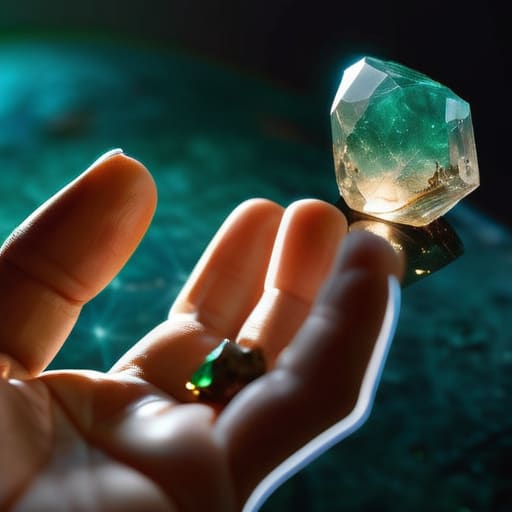
Most people stop at the calendar, but if you look at a full astrological birth chart influence on crystals, the math gets a lot more complicated than just your birth month. A month might give you a generic Emerald, but your specific degree of longitude or the position of Mars when you were born might pull you toward something much more specific. It’s the difference between wearing a standard raincoat and a custom-fitted maritime parka; both keep you dry, but one is built for the specific storm you’re actually walking into.
I often see people ignore their birthstone entirely because they feel a sudden, inexplicable pull toward a piece of Labradorite or smoky quartz. They call it spiritual intuition in stone selection, and while I can’t measure that with a refractometer, I don’t dismiss it. You might be born in May, but if your personal energy feels more aligned with the deep, forest-green of a wet Malachite than a bright Beryl, that is your prerogative. You aren’t “wrong” for skipping the traditional list; you’re just listening to a different set of data.
The Astrological Birth Chart Influence on Crystals You Feel
If you look past the standard calendar, you’ll find that most people aren’t just picking a stone because it’s July; they are responding to something deeper. This is where the astrological birth chart influence on crystals comes into play. A birth month gives you a general theme, but your chart is a complex map of where the planets were sitting the moment you took your first breath. One person might have a heavy Saturn influence, making them lean toward the grounding, dark weight of Hematite, while someone with a dominant Moon might find themselves drawn to the milky, translucent glow of Moonstone.
It isn’t magic, but it is a form of energetic resonance with gemstones. I like to think of it as a chemical reaction between your personal history and the stone’s composition. You might feel an inexplicable pull toward a piece of Labradorite that doesn’t “match” your birth month at all, simply because its specific mineral structure hits a chord with your internal temperament. Whether you call it fate or just a gut feeling, your spiritual intuition in stone selection is often just your brain recognizing a pattern that the calendar misses.
Spiritual Intuition in Stone Selection Trusting Your Own Hands
I’ve spent enough hours hunched over a microscope to know that a stone’s chemistry doesn’t change based on how you feel about it. A piece of labradorite is still a feldspar, regardless of whether you think it’s a gateway to another dimension. But there is a difference between the mineralogy and the way a person reacts to it. I often see people walk into a shop looking for their traditional birthstone, only to find themselves drawn to a piece of smoky quartz instead. They might call it spiritual intuition in stone selection, but to me, it looks like a physical response to something specific.
Maybe it’s the temperature of the surface or the way the light catches a specific inclusion. You might feel an energetic resonance with gemstones that defies what a calendar tells you. I don’t care if you think the stone is vibrating or if you just like the way it sits in your palm; if you feel a pull toward a stone that isn’t “yours” on paper, listen to that. It’s not physics, but it’s a real human experience, and it’s often more honest than following a guide.
Finding Energetic Resonance With Gemstones That Actually Fit
When you’re standing in a shop or scrolling through a website, it’s easy to get caught up in the “official” list of stones for your month. But if you pick up a piece of Citrine and it feels cold or uninteresting, don’t force it just because a calendar told you to. Finding energetic resonance with gemstones is less about following a rulebook and more about how the mineral actually sits in your hand. For me, it’s a physical sensation—a sudden weight or a specific temperature change. Sometimes, your spiritual intuition in stone selection is just your body recognizing a specific chemical frequency that matches your current state.
I’ve seen people ignore their birthstone for a piece of Smoky Quartz that looks like it was pulled straight from a rain-slicked riverbed, simply because that quartz feels “right.” This isn’t magic; it’s a personal alignment. Whether you are looking for personalized healing crystal properties to help with a specific stressor or just like the way a certain shade of blue looks when it’s wet, trust that pull. If the stone doesn’t speak to you, it’s just a pretty piece of geology. Move on to the next one.
Soul Purpose and Crystal Attraction Your Own Business
At the end of the day, I’ve spent enough hours under a microscope to know that a stone’s chemical formula doesn’t change based on who is holding it. A piece of Labradorite is still a feldspar mineral, regardless of whether you’re looking for stability or a spark of creativity. But I’ve also learned that the reason you pick up one stone over another often has nothing to do with a calendar and everything to do with where you are in your own life.
Some people use stones as anchors, seeking out the heavy, grounding weight of Smoky Quartz when things feel chaotic. Others look for something lighter, perhaps a Citrine that looks like sunlight hitting a shallow tide pool, to pull them out of a slump. This sense of soul purpose and crystal attraction isn’t something you can find in a textbook or a grading manual. It’s a private, internal compass. You might find yourself drawn to specific personalized healing crystal properties because your subconscious is asking for something your birth month doesn’t provide. Whether you’re seeking peace or a bit of grit, that choice is yours alone.
## More Than Just a Calendar Date
“A birthstone is just a mineral with a marketing budget; the reason you reach for a piece of labradorite while your twin reaches for garnet isn’t because the calendar changed, but because your hands are looking for something different to hold onto.”
Dagny Solheim
Choosing Your Own Way
At the end of the day, there isn’t one single “correct” stone for a birth month, no matter what a calendar tells you. We’ve looked at how your specific zodiac sign, the nuances of your astrological chart, and even your own gut instinct can pull you toward a piece of quartz instead of a garnet. A stone is a physical object—a specific arrangement of atoms with a set hardness and a unique way of catching the light—but the way it connects to you is a different matter entirely. Whether you are drawn to a stone because of its geological rarity or because it feels right in your palm, the decision is ultimately yours. I can tell you the difference between a real sapphire and a lab-grown imitation, but I can’t tell you which one will make you feel more grounded.
So, stop worrying about whether you are “doing it wrong” by ignoring the traditional birthstone list. If you find yourself reaching for a piece of labradorite that looks like oil on wet pavement instead of the expected emerald, listen to that impulse. The science tells us what the stone is, but your intuition tells you what it can be. Go out, find something that catches your eye, and hold it. Once you know the truth of the mineral, the rest is entirely up to you.
