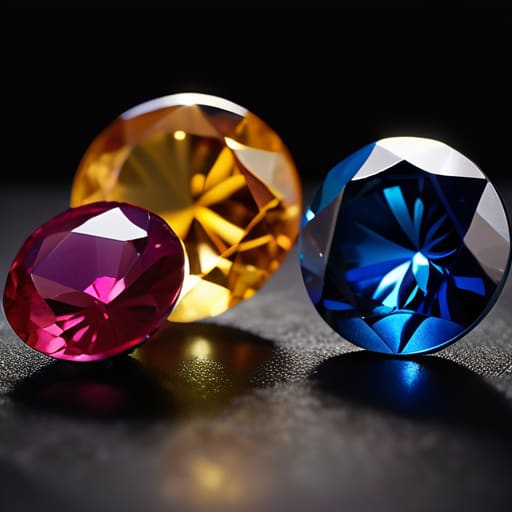
I spent six years hunched over a bench in a grading lab, peering through a loupe until my eyes burned, mostly looking for the tiny inclusions that prove a stone is real. I’ve seen enough “miracle” crystals to know that most online shops are just selling expensive glass and wishful thinking. People get so caught up in the heavy, mystical jargon surrounding the seven classical planets and the stones assigned to them that they forget they are actually holding pieces of the earth’s crust. You don’t need a high priest to tell you that a sapphire is corundum or that a garnet is a silicate; you just need to know if the thing in your hand is actually what they say it is.
My goal here isn’t to debate whether the stars can influence your mood, but to make sure you aren’t getting swindled. I’m going to break down the mineralogy of each stone in this tradition, from the deep, ink-blue lapis to the fiery carnelian, and show you how to spot a fake. I’ll give you the hard facts on their composition and hardness, and what you choose to do with that knowledge—whether it’s for a ritual or just for the beauty of the chemistry—is entirely up to you.
Decoding the Seven Classical Planets and the Stones Assigned to Them
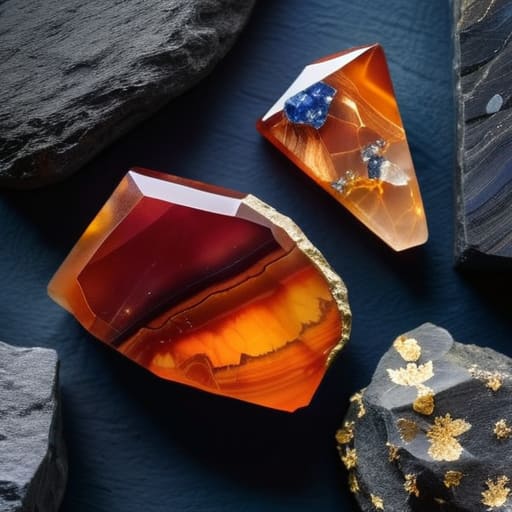
To understand why certain stones are linked to specific spheres, you have to look at how people have mapped the sky for thousands of years. These aren’t just random pairings; they are rooted in ancient astrological correspondences that date back to much of recorded history. The idea is that each of the seven moving lights in our sky carries a specific character, and certain minerals simply resonate with that frequency. For some, these are astrological talismanic stones meant to pull a specific kind of luck into a room; for me, they are just fascinating examples of how humans have tried to find order in the chaos of the cosmos.
When we talk about these planetary gemstone associations, we are looking at a blend of mineralogy and myth. You’ll find that the stones chosen—like the deep, blood-red garnet for Mars or the pale, milky moonstone for the Moon—often reflect the “personality” of the planet. I like to look at the physical properties first. A stone’s hardness or its refractive index tells a much more stable story than its supposed energy, but there is a certain poetic logic to why a person would reach for a piece of blue sapphire when they feel the influence of Jupiter.
Tracing Ancient Astrological Correspondences Through Earthly Matter
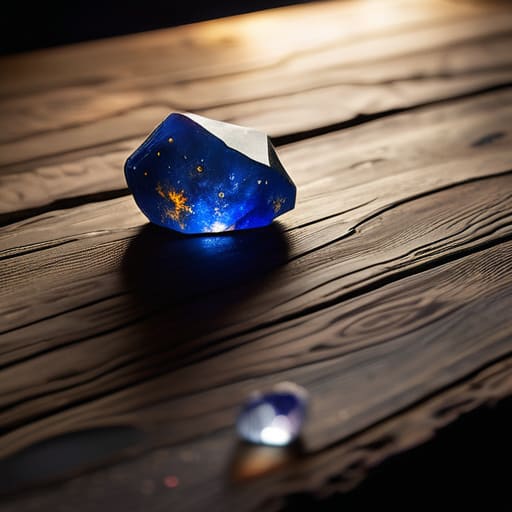
When I look at a piece of lapis lazuli or a garnet, I don’t just see mineral inclusions and crystal lattices; I see the residue of how humans have tried to map the sky onto the ground for millennia. These ancient astrological correspondences weren’t just whims. They were a way for people to feel a tangible connection to the movements above. To an ancient observer, the rhythm of the planets felt like a force, and finding a stone that shared a colour or a “vibe” with a celestial body felt like capturing a piece of that momentum in your hand.
In my years in the lab, I’ve learned that while the science of a stone is fixed, the way we use it is fluid. Whether you are looking for astrological talismanic stones to wear as a charm or you’re just drawn to the deep, wet-sea blue of a sapphire, the history remains the same. We are essentially looking at historical planetary gemology—a long, unbroken chain of people trying to find meaning in the grit and light of the earth. I’m here to make sure the stone you pick up is actually what the history books say it is.
Identifying True Planetary Gemstone Associations in a Market of Fakes
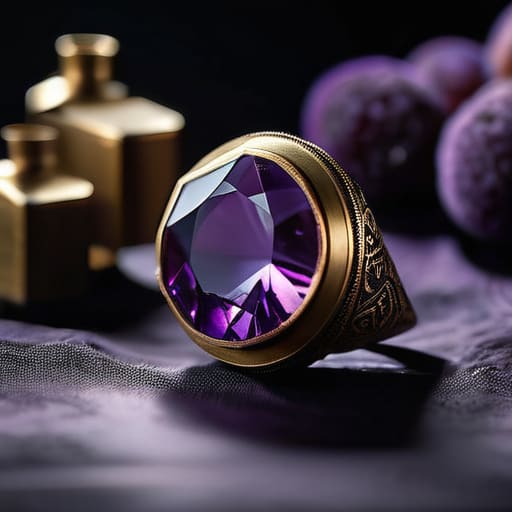
When you start looking for astrological talismanic stones, you’ll quickly realize the market is flooded with things that aren’t what they claim to be. I’ve spent enough hours hunched over a microscope to know that a “Sun stone” is often just a piece of orange glass, and a “Moon stone” might be a cheap, milky feldspar with no real character. If you are hunting for specific planetary gemstone associations, you have to look past the marketing. For instance, if you’re after a Saturnine stone like amethyst, look for the deep, saturated purples that look like bruised grapes after a heavy rain. If the color looks flat or suspiciously uniform, it’s likely a synthetic or a low-grade glass imitation.
Don’t let the high-gloss polish fool you. Real minerals have internal complexities—tiny inclusions or structural variations—that a factory-made fake simply can’t replicate. While I focus on the mineralogy, I know many people are searching for these gems to tap into a certain zodiacal planetary energy. My job isn’t to tell you if the energy is there, but to ensure that when you hold a stone, you are holding a piece of the Earth’s crust and not a lump of dyed plastic.
The Seven Celestial Bodies and Crystals Separating Substance From Superstit
When people talk about the seven celestial bodies and crystals, they often get lost in a fog of vague intentions. They’ll tell you a stone “channels” a certain frequency, but as a geologist, I find that a bit thin. To me, the connection is more interesting when you look at the history of how humans have tried to pin the sky to the ground. We are talking about historical planetary gemology, where specific minerals were chosen not just because they looked pretty, but because their physical properties—their weight, their luster, their specific hue—seemed to mirror the perceived character of a planet.
If you are looking for astrological talismanic stones to wear or keep on your desk, you should start by looking at the mineral’s reality. For instance, if someone sells you a “Mars stone” that is actually just a piece of dyed glass, the zodiacal planetary energy they promise you won’t matter, because the physical object isn’t what it claims to be. I don’t care if you use a garnet for protection or just because you like the way it looks like a crushed raspberry in the sunlight; I just want to make sure you actually have a garnet.
Navigating Historical Planetary Gemology Without the Hype
When you dig into the history of these stones, it is easy to get lost in the heavy, velvet-draped language of old grimoires. People often talk about astrological talismanic stones as if they possess a sentient, pulsing power, but I prefer to look at them as a bridge between human intention and geological reality. Historically, these associations weren’t about magic in the way modern movies portray it; they were a way for ancient observers to categorize the world. They saw a pattern in the sky and looked for its reflection in the crust of the Earth.
To navigate this without the headache, you have to separate the mineral from the myth. If someone tells you a stone holds a specific zodiacal planetary energy, they aren’t talking about chemistry, and they can’t prove it. My approach to historical planetary gemology is much more grounded: I look at the hardness, the refractive index, and the specific chemical makeup that led an ancient lapidary to choose a piece of garnet or lapis lazuli to represent a celestial body. Once you understand the physical truth of the stone, the history becomes a layer of texture, rather than a confusing cloud of hype.
Authenticating Astrological Talismanic Stones for Your Own Purposes
When people talk about using astrological talismanic stones, they usually focus on the “vibe.” I tend to focus on the inclusions. If you are hunting for a stone to represent Mars, you aren’t just looking for a red rock; you are looking for a specimen of red jasper or a garnet that holds its own. When I examine these pieces, I look for the way the light hits the internal fractures. A high-quality garnet should have a depth of color like crushed raspberries in a heavy rain, not the flat, milky look of cheap dyed glass.
Authenticating these pieces means knowing that the zodiacal planetary energy people talk about is being carried by a real mineral structure. If you’re sourcing a stone for Saturn, you want a high-quality smoky quartz or a dark sapphire. Check the refractive index; if the stone looks like it has a “plastic” sheen under a loupe, it’s a fake, regardless of what the seller claims about its celestial connection. I don’t care if you use the stone for meditation or as a paperweight, but you should at least know that you are holding actual earth, not a lab-grown imitation.
Harnessing Zodiacal Planetary Energy Once You Know the Truth
Once you have sat with a stone under a loupe and confirmed it is a genuine piece of the earth rather than a glass imitation, the conversation shifts. You’ve moved past the chemistry and into why people have been obsessed with these objects for millennia. Whether you believe in zodiacal planetary energy or you simply enjoy the weight of a well-cut sapphire in your palm, the transition from mineralogy to personal use is where the stone becomes yours.
I don’t claim that a piece of Lapis Lazuli carries the literal radio waves of Jupiter, but I do respect the ritual of it. If holding a specific stone helps you focus or feel grounded, that is a psychological reality that doesn’t require a lab report to validate. When you work with astrological talismanic stones, you are participating in a long lineage of human behavior. You are taking a physical specimen—something with a measurable Mohs hardness and a specific refractive index—and assigning it a role in your own life. Whether that role is spiritual or merely aesthetic, the stone remains the same solid, unyielding thing it was when it came out of the ground.
Substance Over Superstition
A sapphire is corundum, regardless of whether you’re using it to map the heavens or just to enjoy its deep, ocean-wet blue; I’m here to make sure you know you’re holding the real thing, because the history of the stone is far more reliable than the hype surrounding it.
Dagny Solheim
Final Thoughts on Earth and Sky
We have spent this time looking at how the ancient world tried to bridge the gap between the moving lights in the sky and the heavy, solid matter beneath our feet. We’ve walked through the mineralogy of the seven classical stones, from the deep, bruised purple of amethyst to the glassy, sun-drenched flash of citrine, and more importantly, we’ve looked at how to spot the glass and plastic imitations that often pass for them. Whether you are looking for a specific sapphire to represent Jupiter or a garnet for Mars, the goal remains the same: knowing exactly what you are holding in your hand. By focusing on the chemical composition and physical reality of these gems, you strip away the marketing fluff and get down to the actual substance.
At the end of the day, a stone doesn’t care what name you give it or what celestial body you think it represents. A diamond is just carbon, and a lapis lazuli is a complex silicate, regardless of whether you use it as a talisman or a paperweight. But there is a certain beauty in the connection, even if it’s just a human one. If holding a piece of pyrite makes you feel a bit more grounded or more like the sun, that is your experience to have. I’ll keep my focus on the hardness, the inclusions, and the light, but I hope you find something in these stones that feels meaningful to you.