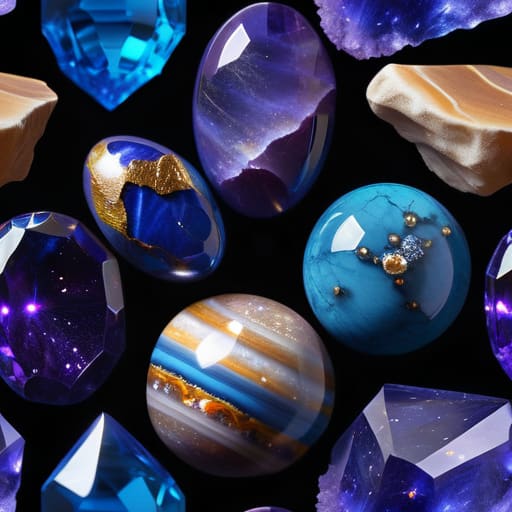
I spent six years in a grading lab, hunched over a microscope until my neck ached, looking at things most people only see in glossy catalogs. I’ve seen enough “miracle” stones to know that the marketing around jupiter and the stones tied to it is often more inflated than the crystals themselves. You’ll see vendors claiming a piece of glass is a high-vibration talisman for expansion and luck, charging you a premium for what is essentially colored junk. It’s frustrating because it muddies the water for people who actually want to understand the mineralogy behind the myth.
I’m not here to sell you on cosmic alignments or tell you that a rock can change your destiny, though I won’t judge you if you want to believe it. My goal is much simpler: I want to tell you exactly what these stones are made of—the chemistry, the hardness, and the inclusions—so you can spot a fake from a mile away. I’ll give you the hard facts on the minerals traditionally linked to Jupiter, and once you know the truth of the stone, what you do with it is entirely up to you.
The Truth About Jupiter and the Stones Tied to It

When people talk about the astrological correspondences for Jupiter, they usually lean into themes of luck or sudden windfalls. In my experience, it’s more accurate to think about expansion. Jupiter is the planet of scale—it takes what is already there and makes it larger, whether that is a sense of wisdom or a literal sense of space. Because of this, the stones people reach for are almost always about movement and opening up.
You’ll often see Lapis Lazuli marketed as a tool for deep cosmic connection, but from a mineralogical standpoint, it’s a complex rock of lazurite, calcite, and pyrite. When I look at a high-quality specimen, the blue is deep and saturated, like the North Sea just before a storm hits. While some focus on the spiritual properties of lapis lazuli to find clarity, I find its physical composition—that flecked, metallic pyrite—makes it a perfect visual metaphor for crystals for abundance and growth. It isn’t magic, but it is a solid, heavy piece of the earth that feels substantial in the hand.
Decoding the Astrology Gemstone Meanings Without the Fluff
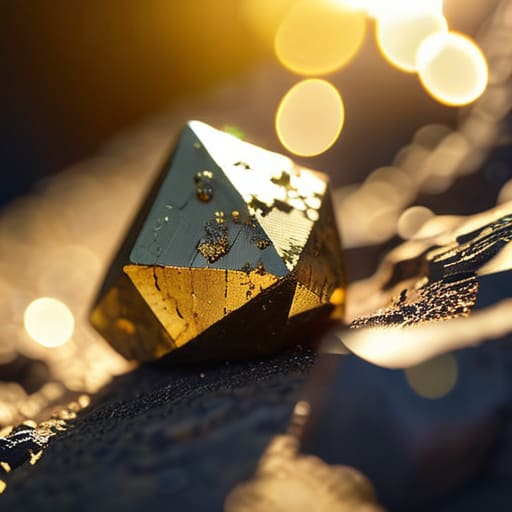
When you look up the astrological correspondences for Jupiter, you’ll find a lot of talk about “expanding energy” and “limitless potential.” To a geologist, that sounds a bit like trying to measure a cloud with a ruler. In the trade, we look at the physical reality: the density, the refractive index, and the chemical makeup. However, I understand why people seek out manifestation crystals for expansion. There is a psychological shift that happens when you hold a heavy, cold piece of pyrite in your hand; it feels substantial, like an anchor for a big idea.
If you are looking for crystals for abundance and growth, you are likely hunting for stones that mimic the feeling of prosperity. Take Lapis Lazuli, for instance. While some focus on the spiritual properties of lapis lazuli to find wisdom, I tend to look at the lazurite and the pyrite inclusions. It’s a silicate mineral, often a deep, ink-blue that looks like the North Sea just before a storm. Whether you use it to “align your chakras” or simply because you like the way the gold flecks catch the light, the stone remains the same. It is a piece of the earth, not a magic wand.
Astrological Correspondences for Jupiter More Than Just Luck
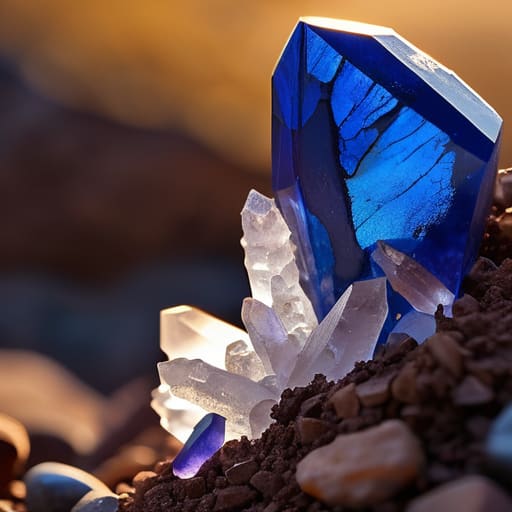
When people talk about the astrological correspondences for Jupiter, they usually drift straight into talk about “luck.” I get that. In the old texts, Jupiter is the Great Benefic, the planet of expansion and big, sweeping movements. But if we look at the stones through that lens, we aren’t just talking about winning the lottery; we are talking about crystals for abundance and growth in a much more grounded sense. It’s about having the capacity to hold more—more knowledge, more space, or more opportunity.
Take Lapis Lazuli, for instance. From a mineralogical standpoint, it’s a rock composed of lazurite, calcite, and pyrite. But when people look at its spiritual properties, they see a deep, midnight blue that looks like the ocean just before a storm. For those using it as one of their manifestation crystals for expansion, that color represents a widening of the mind. Whether you believe the stone is actually shifting your luck or you’re just using its weight and color to focus your intent, the result is the same: you’re leaning into that Jovian energy of becoming more.
Real Crystals for Abundance and Growth vs Mere Glass
When people look for crystals for abundance and growth, they often end up buying something that belongs in a recycling bin rather than a collection. I’ve spent enough hours under a loupe to know that the market is flooded with “designer glass”—mass-produced, dyed, and chemically treated bits that look great in a filtered photo but have zero mineral integrity. If you are hunting for Jupiter planetary healing stones like Lapis Lazuli, you need to look past the surface. Real Lapis should have a deep, midnight blue that looks like the ocean just before a storm; if it looks like a bright, uniform cobalt, it’s likely dyed sodalite or, worse, colored glass.
True stones have inclusions—tiny, natural “imperfections” that tell a story. In Lapis, you’re looking for those flecks of golden pyrite that look like stars caught in wet silt. If the stone is perfectly uniform and feels strangely warm to the touch, it’s likely a synthetic. I don’t care if you use these stones for manifestation crystals for expansion or just to admire their chemistry, but you should at least know you’re holding something that actually came from the earth.
The Spiritual Properties of Lapis Lazuli Fact Over Hype
When people talk about the spiritual properties of lapis lazuli, they usually lean heavily into “third eye activation” or “cosmic wisdom.” As a geologist, I look at that deep, ultramarine blue—the kind of color you see when a tide pool hits a dark patch of granite—and I see lazurite, calcite, and pyrite. It’s a rock of layers, not a singular magical essence. In the context of astrological correspondences for Jupiter, that blue represents the vastness of the sky and the expansion of the mind. It’s not that the stone has a psychic frequency, but rather that its visual depth encourages a certain kind of mental space.
If you are using it as one of your manifestation crystals for expansion, don’t expect the stone to do the heavy lifting for you. Lapis is a tool for focus. Because it is a complex mineral composite, it serves as a physical reminder of how many different elements must come together to create something beautiful and stable. Whether you view it as a conduit for planetary energy or just a very pretty piece of metamorphic rock, it’s a solid companion for anyone looking to broaden their perspective.
Using Manifestation Crystals for Expansion the Right Way
If you’re looking at manifestation crystals for expansion, I suggest you start with your intentions rather than a shopping list. People often come to me wanting a specific stone to “force” luck, but a stone doesn’t have a motor; it’s just a piece of geology. Whether you are using Jupiter planetary healing stones to mark a new chapter or simply because you like the way they look on your desk, the stone acts more like a physical anchor for your own focus. It’s a way to ground a thought that might otherwise drift away.
When people talk about using crystals for abundance and growth, they often treat them like magic pills. I don’t see it that way. I see it as a ritual of attention. If you hold a piece of Citrine or Lapis, you aren’t changing the chemistry of your bank account, but you might be changing your own mental state through the act of sitting still. Treat the stone as a tool for mindfulness, not a shortcut to a windfall. If you want to use them to help you visualize your goals, go ahead—just don’t forget that the real work happens once you put the stone back in its box.
Selecting Jupiter Planetary Healing Stones That Actually Exist
When you start looking for Jupiter planetary healing stones, the first thing you’ll notice is how much “stuff” is being sold under the guise of high-vibration minerals. Most of it is just colorful glass or dyed quartz. If you want stones that actually align with the astrological correspondences for Jupiter, you need to look for specific mineral structures. I’m talking about things like Lapis Lazuli or high-quality Citrine—though, if you’re buying Citrine, make sure it isn’t just heat-treated Amethyst, which is a common trick in the trade.
I always tell my clients to check the inclusions. A real stone has a history written in its imperfections. If you are hunting for manifestation crystals for expansion, look for stones with depth. A real piece of Lapis should have that deep, navy blue hue, like the ocean just before a storm hits, speckled with golden pyrite. If it looks too uniform or “perfectly” blue, it’s likely synthetic. You want a stone that has a weight and a temperature to it, something that feels like it was pulled from the earth, not poured into a mold in a factory.
Substance Over Symbolism
You can call a piece of blue glass ‘Jupiter’s stone’ all you like, but it won’t change the fact that it lacks the mineral structure of a real Lapis or the weight of a true Sapphire; I’m here to help you find the actual geology, because a stone with a real history is always more interesting than a bit of colored resin.
Dagny Solheim
A Final Look at the Stones
We have covered a lot of ground, moving from the chemical composition of Lapis Lazuli to the practicalities of spotting synthetic glass in a shop window. My goal wasn’t to talk about cosmic luck, but to ensure that if you decide to seek out a stone for expansion or growth, you know exactly what you are holding in your hand. Whether it is a piece of genuine sodalite or a high-quality sapphire, the most important thing is that you understand the material before you assign it a purpose. You now have the tools to distinguish between a mineral with a complex geological history and a mass-produced imitation that lacks both substance and soul.
At the end of the day, a stone is a piece of the earth’s crust that has survived millions of years of heat and pressure. It doesn’t care about your intentions, and it certainly doesn’t require a ritual to exist, but there is something deeply grounding about holding a piece of the world that is solid and real. If you find a stone that speaks to you—whether for its color, its hardness, or the way it looks like a dark sea after a storm—then keep it. Use it for your meditations, wear it as jewelry, or just keep it on your desk to remind you of the planet’s sheer tenacity. The stone is just the beginning.
