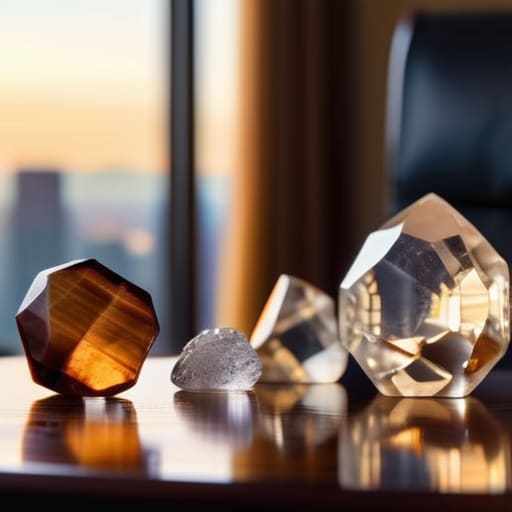
I spent six years in a grading lab, staring through a loupe until my eyes ached, and if there is one thing I’ve learned, it’s that a stone doesn’t care about your LinkedIn profile. I see so many people getting lost in expensive, flowery catalogs, convinced they need a specific, high-priced talisman to fix their professional life. There is a lot of nonsense out there regarding choosing a stone with the tenth house of work in mind, often suggesting that certain minerals possess a sort of cosmic promotion power. To me, that sounds like marketing fluff designed to separate you from your money. A stone is a physical object—a specific arrangement of atoms with a measurable hardness—not a magic wand for your career trajectory.
What I can do, however, is help you navigate the actual geology of the matter. I’m going to show you which minerals actually align with the energy of ambition and, more importantly, how to tell a genuine specimen from a mass-produced piece of glass. I’ll give you the facts on their composition and their durability, so you know exactly what you’re holding. If you want to wear a piece of pyrite to feel more grounded during a board meeting, that is entirely your business, but at least you’ll know it’s pyrite.
The Raw Matter Choosing a Stone With the Tenth House of Work in Mind
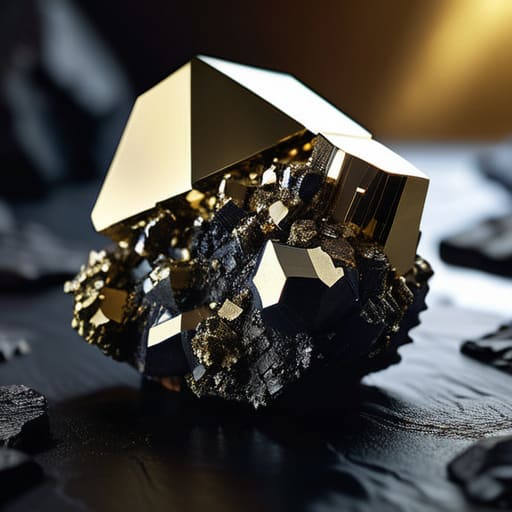
When people talk about the tenth house, they are usually talking about the part of the chart that governs how the world sees you—your public standing and your professional legacy. If you are looking for crystals for professional reputation, you shouldn’t just grab the first shiny thing you see on a shop shelf. You need to look at the mineralogy. For someone trying to build a sense of authority, I often look toward stones with a high degree of structural integrity, like Pyrite or even certain types of Garnet. These aren’t just pretty; they have a hardness and a density that feels substantial.
If you are searching for astrological career advancement gems, my advice is to match the stone’s physical properties to the energy you want to project. If your goal is to command a room, you might want something with a deep, saturated color—think of the dark, bruised purple of a wet amethyst. If you are seeking clarity in leadership, a clear Quartz might suit, provided it isn’t a glass imitation. I don’t care if you think the stone is physically shifting your luck, but I do care that you know you’re holding a piece of silicate and not a bit of colored plastic.
Decoding Midheaven Zodiac Stone Meanings Without the Fluff

When you start looking into midheaven zodiac stone meanings, you’ll quickly run into a lot of prose that sounds more like a greeting card than a geological report. People love to claim that a specific crystal will magically rearrange your corporate hierarchy or force your boss to give you a raise. I don’t buy that. A piece of pyrite doesn’t have a plan for your LinkedIn profile. However, if you are looking for crystals for professional reputation, I understand the impulse to find a physical anchor for the persona you want to project.
If your Midheaven is in a fiery sign, you might gravitate toward garnets or carnelian—stones that look like they’ve just been pulled from a tide pool and are still glowing with heat. If you are looking for astrological career advancement gems to help with a more stoic, Capricorn-style climb, you’re likely looking at something with more structural integrity, like smoky quartz or even a well-cut obsidian. I look at the mineralogy first: the hardness, the cleavage, the way it holds light. If the stone feels solid in your hand, it serves its purpose as a reminder of the professional identity you are trying to build.
Crystals for Professional Reputation and the Weight of Public Standing
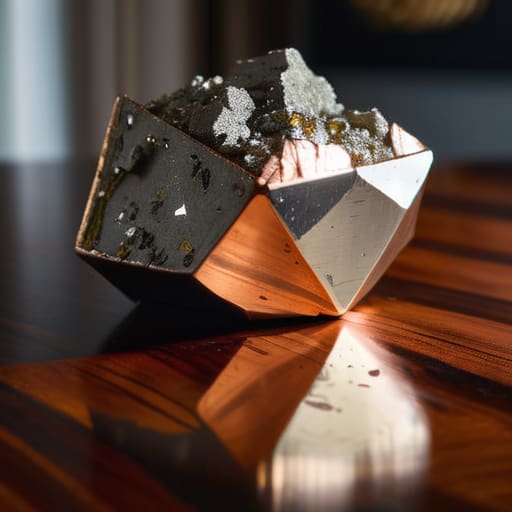
When people talk about reputation, they usually mean how they want the world to see them. In the context of the tenth house, that often translates to a need for clarity and presence. I often suggest looking toward stones that possess a certain structural integrity. Take Pyrite, for example. It’s iron disulfide, a metallic mineral that looks like a chunk of gold if you aren’t looking closely, but it has a much more honest, brassy sheen—like a wet, polished copper kettle. It’s a grounding stone, and if you’re using it as one of your crystals for professional reputation, you’re likely looking for that sense of stability and “showing up” in a boardroom.
If you are searching for astrological career advancement gems, you might lean toward something like Lapis Lazuli. It’s a rock, not a single crystal, composed of lazurite, calcite, and pyrite. It has a deep, ultramarine hue that reminds me of the North Sea just before a storm. People use it to project authority, which is fine by me. Whether you’re using these stones for manifesting career success with crystals or just because you like the way the light hits the facets, the goal is the same: finding a specimen that matches the weight of the role you’re stepping into.
Astrological Career Advancement Gems What the Earth Actually Holds
If you are looking for astrological career advancement gems, I suggest starting with the hard stuff. In my lab, I learned that the more pressurized the environment, the more interesting the result. For someone trying to navigate the tenth house, I tend to look toward stones that have survived immense geological stress. Take Pyrite, for instance. It isn’t gold, though it’s often sold as such to the unwary, but its brassy luster looks exactly like sunlight hitting a shallow tide pool. It’s a sulfide mineral, sturdy and sharp, and it carries a certain weight that feels appropriate for building a reputation.
When people ask me about tenth house astrology healing stones, they are often looking for something to ground their public persona. I usually point them toward Garnet. It’s a silicate mineral, typically deep red, and when it’s wet, it looks like freshly spilled wine on a dark stone. It isn’t magic, but its physical durability is a good metaphor for a career that needs to last. Whether you believe these stones influence your trajectory or you just like the way they feel in your hand, choosing something with actual structural integrity is a better bet than buying glass.
Tenth House Astrology Healing Stones and Their Physical Realities
When people talk about tenth house astrology healing stones, they often drift into vague metaphors about “energy flows.” I prefer to look at the physical properties. If you are looking for a stone to ground your public image, you might gravitate toward something like Pyrite. It’s iron disulfide, quite hard, and has a metallic luster that looks like polished brass left out in a coastal storm. It feels heavy and substantial in the hand, which is a practical sensation when you’re trying to feel centered during a high-stakes presentation.
However, if you are searching for astrological career advancement gems, you have to be careful with the market. You’ll see people selling “sunstone” for Leo midheavens that is actually just orange-tinted glass or feldspar with heavy inclusions. Real sunstone has a schiller effect—a metallic glitter caused by tiny plates of hematite. It should look like sunlight hitting a shallow tide pool. Whether you use that shimmer to help with manifesting career success with crystals or just to admire the mineralogy, the key is knowing you’re holding the real thing.
Zodiac Signs Tenth House Stones Aligning Specimen to Sign
When you start looking at zodiac signs tenth house stones, you have to bridge the gap between a personality type and a mineral’s actual chemistry. If you are an Aries looking to climb the ladder, you might gravitate toward Pyrite. It’s iron disulfide, quite hard, and has a metallic luster that looks like sunlight hitting a shallow tide pool. It’s not “magical,” but its structural stability and brassy sheen certainly command a room. For a more grounded approach, a Capricorn might find more use in a piece of Black Tourmaline. It’s a complex borosilicate that carries a heavy, matte weight in the hand—nothing flashy, just solid.
The trick is matching the stone’s physical properties to the specific energy of your Midheaven. If your career path is fluid or creative, perhaps you want something like Aquamarine, which is beryl and looks like the sea just after a storm has passed. If you are looking for astrological career advancement gems that feel more authoritative, look for stones with high refractive indices or deep, saturated colors. I don’t care if you think the stone is talking to your soul; I just want you to know that a well-cut, high-quality specimen will always hold its own in a professional setting.
Manifesting Career Success With Crystals a Practicaler Approach
I’m not interested in telling you that a piece of quartz will magically land you a promotion. If that’s what you’re looking for, you’ve come to the wrong corner of the internet. What I can tell you is that if you are manifesting career success with crystals, the most effective way to do it is to treat the stone as a physical anchor for your own intent. When I’m sitting at my desk, I don’t look at a stone and see a miracle; I see a specific mineral structure that reminds me of the discipline I need to apply to my own work.
If you want to use these objects as tools for your professional life, start by choosing something with a weight that feels substantial in your hand. Whether you are looking into midheaven zodiac stone meanings or simply picking a specimen that matches your desk aesthetic, the goal is consistency. A heavy piece of pyrite or a polished labradorite acts as a tactile reminder of the professional persona you are trying to project. It isn’t about the stone changing the world; it’s about the stone changing how you hold yourself while you navigate it.
On Purpose and Composition
Whether you’re looking for a stone to anchor your reputation or just something that looks right on your desk, remember that the mineral doesn’t care about your promotion; it only cares about its own structure. I’ll help you find a specimen that’s chemically honest, but what you do with that energy in your career is entirely your own business.
Dagny Solheim
Final Thoughts on the Stone
We have covered a lot of ground, moving from the chemical hardness of a specimen to the way it might align with your Midheaven. Whether you are looking for a carnelian to bolster your public reputation or a piece of smoky quartz to ground your professional ambitions, the core principle remains the same: know your mineral. Don’t get distracted by the marketing fluff or the promise of instant promotion. Focus on finding a stone that is physically sound, properly identified, and carries a weight that feels right in your hand. At the end of the day, a stone is a piece of the earth’s history, and understanding its composition is the best way to respect it.
I don’t care if you keep your stone in a velvet box on your desk or if you use it as a focal point for a morning meditation before a big presentation. If the ritual helps you step into your professional self with a bit more clarity, then it has served a purpose. I’ve spent enough time looking through a loupe to know that stones don’t change the laws of physics, but they can certainly change your perspective. Find something that speaks to you—not because a book told you to, but because the specimen itself feels right. Go find your piece of the earth and make it work for you.
