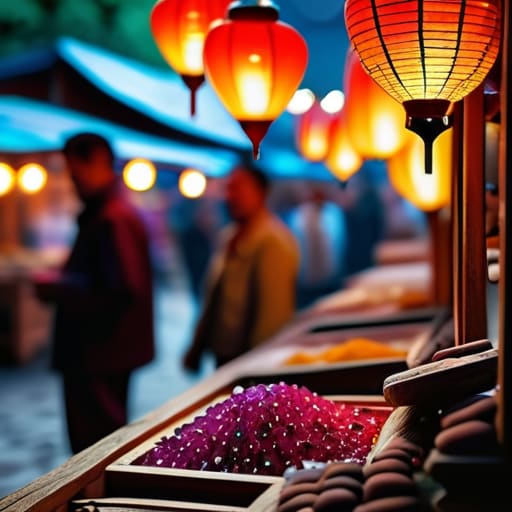
I remember sitting in a humid stall in Bangkok, the air thick with the smell of diesel and street food, watching a vendor press a “ruby” into a tourist’s palm. It had that sickly, uniform glow—the kind of red you see in a plastic bead dropped in a puddle—and the poor woman was beaming, thinking she’d found a treasure. It’s frustrating because people think they need a PhD or a massive budget to avoid gemstone scams in tourist markets, but they really just need to stop listening to the sales pitch and start looking at the chemistry.
I’m not here to tell you which stones are “lucky” or how they’ll align your chakras, because that isn’t my field. I’m here to tell you what the mineral is actually made of and how to spot the glass or dyed quartz being passed off as the real thing. I’ll give you the practical, unvarnished truth about what to look for under a loupe and what to walk away from. Once you know the difference between a natural crystal and a factory fake, what you decide to do with the stone is entirely up to you.
The Truth About Gemstone Scams in Tourist Markets
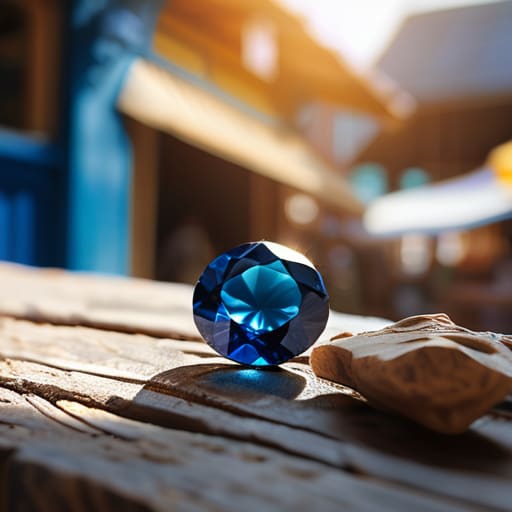
Most of what you’ll find in a street stall isn’t necessarily a malicious “scam”—it’s often just a massive misunderstanding of what is being sold. You’ll see a vendor holding up a piece of glass that looks like a sapphire, a blue so bright it looks like the sea just before a storm hits. They call it a sapphire because that’s what you want to hear. In reality, you’re looking at colored glass or, more commonly, a lab-grown spinel. Learning how to identify synthetic gemstones starts with realizing that nature is rarely perfect; if a stone looks too symmetrical or too “clean,” your gut should start questioning it.
The real trouble begins when they mix the two. I’ve seen sellers take a genuine, low-grade quartz and coat it in a thin layer of resin to mimic the depth of an emerald. This is one of the more common jewelry fraud techniques I encountered during my years in the lab. They rely on the fact that you’re tired, sunburnt, and excited to be traveling. They want you to make a decision based on a feeling, rather than the mineral’s actual hardness or refractive index.
Distinguishing Real vs Fake Crystals in a Crowded Stall
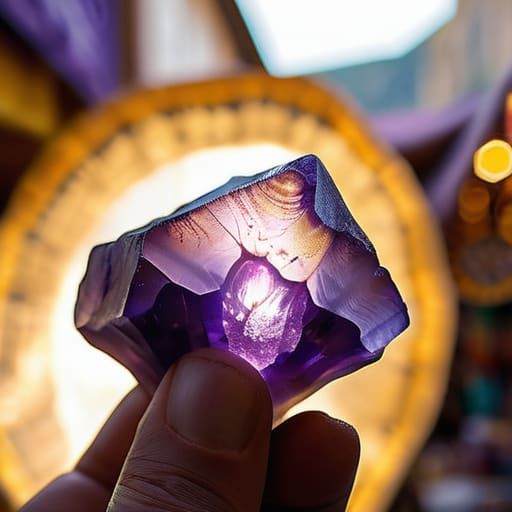
When you’re standing in a crowded stall, the heat and the noise make it easy to rush. That’s exactly when the most common jewelry fraud techniques start working on you. My first tip is to stop looking at the “magic” and start looking at the structure. Pick up a piece of quartz or amethyst; if it’s a fake, it often feels unnaturally heavy or strangely warm, like it’s been sitting under a heat lamp. Real crystals usually have a certain internal complexity. If you look through a piece of glass or plastic meant to look like fluorite, the inclusions will look like random bubbles or smears. A real stone has its own history written in its flaws—tiny fractures or growth patterns that look like frozen water.
If you’re serious about distinguishing real vs fake crystals while you’re on the move, bring a small, high-powered loupe. It’s the only way to see if those “rainbow inclusions” in a quartz are actually natural silk or just oil slicks painted onto the surface. If a stone looks too perfect—too symmetrical, too bright, like a piece of candy—it’s likely a synthetic.
How to Identify Synthetic Gemstones Before You Pay
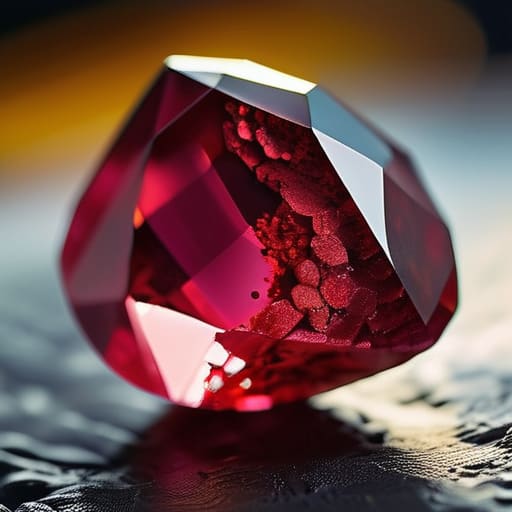
If you’re standing in a humid market stall, you won’t have a refractometer or a spectroscope at your disposal. You have to rely on your eyes and a bit of tactile intuition. When looking at something like a ruby or a sapphire, look for the “perfection” problem. Natural stones are rarely perfect; they have inclusions—tiny crystals or liquid bubbles trapped inside during formation. If a stone looks as clear and flawless as a piece of glass, it’s likely a lab-grown synthetic. Real stones have a bit of struggle in their history, which shows up as internal characteristics.
Another thing to watch for is how the light behaves. Synthetics are often made through processes that create very uniform, almost mechanical-looking color distributions. A natural emerald, for instance, often has a color that looks like deep forest moss after a heavy rain, with subtle shifts in tone. If the color looks too “even,” it might be a giveaway. While I can’t teach you every gemstone authenticity testing method in a single afternoon, learning to spot these patterns is your best defense. If you’re unsure, ask for a certificate, but remember that even paperwork can be faked in these environments.
Unmasking Common Jewelry Fraud Techniques Used on Travelers
It isn’t always about a blatant swap; sometimes, it’s about the way the story is told. I’ve seen vendors use high-intensity LED lights tucked under a velvet cloth to make a piece of glass look like it has the depth of a sapphire. They’ll lean into the “once-in-a-lifetime” pitch, making you feel like you’re catching a glimpse of a treasure before the next tourist arrives. These common jewelry fraud techniques often rely more on your adrenaline and the heat of the market than on the actual quality of the stone.
Another trick is the “enhancement” trap. A vendor might show you a stone that looks like a deep, wet forest green—likely a real emerald—but then slip a heavily treated, color-filled piece into your hand when you aren’t looking. They might claim a stone is natural when it has actually been irradiated to change its hue. This is why understanding gemstone authenticity testing methods, even just a basic scratch test or a simple loupe inspection, is vital. They want you to buy the emotion, but I want you to buy the mineral.
Reliable Gemstone Authenticity Testing Methods You Can Use
If you can’t get a lab to look at a stone, you have to rely on what your hands and eyes can do. One of the most basic gemstone authenticity testing methods is the temperature test. Real stones, like sapphire or emerald, are excellent thermal conductors. If you press a cold stone against your cheek, it should feel biting and cold for a few seconds before it warms up. If it feels like lukewarm plastic or glass, put it back. It’s a simple trick, but it works more often than you’d think when you’re buying precious stones while traveling.
Another thing to watch for is weight and light. A real gemstone has a specific gravity that makes it feel “heavier” than it looks. If a piece of quartz feels strangely light, like a hollow bead, it might be dyed glass. Also, take a flashlight—or even your phone—and look through the stone. I always look for inclusions; tiny, natural imperfections that look like trapped smoke or tiny needles. If a stone is too perfect, it’s usually a sign that you’re looking at a synthetic or a mass-produced imitation rather than a piece of the earth.
Why Gemstone Certification Importance Cannot Be Overstated
When you’re buying precious stones while traveling, there is a massive difference between a vendor’s word and a piece of paper from a reputable lab. I’ve sat in grading labs where a stone looked perfect under the light, only for a professional spectroscope to reveal it was a lab-grown nothingness. A certificate isn’t just a receipt; it is a chemical biography. It tells you if that emerald is natural, heated, or a treated composite. Without it, you are essentially betting your money on a stranger’s handshake, and in a crowded market, those handshakes are rarely honest.
The gemstone certification importance comes down to the fact that some fakes are becoming nearly impossible to catch with the naked eye. Even if you are skilled at distinguishing real vs fake crystals using basic gemstone authenticity testing methods, you might miss a subtle diffusion treatment or a high-end synthetic. A certificate from a recognized gemmological institute provides a level of scientific certainty that a handheld loupe simply cannot match. If a seller refuses to provide one for a high-value piece, that should be your signal to walk away.
Buying Precious Stones While Traveling Without Losing Your Shirt
If you’ve decided to pull the trigger on a piece of jewelry after a long day of exploring, my best advice is to slow down. The heat and the bustle of a market can make you feel rushed, and that is exactly when people start using common jewelry fraud techniques like aggressive sales tactics or “limited time” offers. Before you hand over your cash, take a breath. If a stone looks too perfect—like a piece of sea glass that’s been polished until it’s unnaturally bright—it probably is.
I always tell people that buying precious stones while traveling should feel like a discovery, not a transaction. If the vendor gets defensive when you ask about a stone’s origin or its hardness, that’s a massive red flag. You don’t need a lab to know when something feels off; trust your gut and your eyes. If you can’t see the natural inclusions or the slight, beautiful imperfections that tell the stone’s history, you aren’t looking at a piece of the earth. You’re just looking at something manufactured.
The Difference Between a Memory and a Mistake
A vendor will try to sell you a feeling or a miracle, but I’d rather you look at the refractive index and the inclusions. If you walk away with a piece of glass thinking it’s a sapphire, you haven’t just lost your money; you’ve lost the chance to actually own a piece of the earth’s history.
Dagny Solheim
Final Thoughts Before You Head Back to the Stall
At the end of the day, navigating a crowded market is about balancing your excitement with a bit of healthy skepticism. We’ve covered a lot—from spotting the tell-tale signs of glass imitations to understanding why a certificate is often worth more than the stone itself. Remember that a real gemstone has a specific chemistry and a physical history that a factory-made synthetic just can’t replicate. If a deal feels too good to be true, it usually is, and if the vendor won’t let you look closely at the inclusions, walk away. You don’t need to be a professional gemmologist to avoid a bad deal; you just need to trust your eyes and your gut when something feels off.
Whether you are looking for a rare sapphire to wear for a lifetime or just a piece of amethyst to sit on your desk, the goal is to walk away feeling good about what you’ve found. I don’t care if you buy a stone for its mineralogical perfection or because you think it holds a certain energy; my only concern is that you know exactly what you are holding in your hand. There is something deeply grounding about owning a piece of the earth that is actually what it claims to be. So, take your time, keep your loupe handy, and enjoy the hunt. The real treasures are always worth the extra effort.
