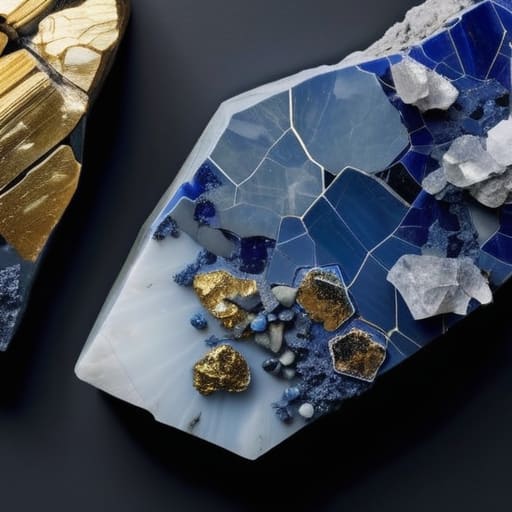
I spent six years in a grading lab, hunched over a microscope until my neck ached, and if there is one thing I’ve learned, it’s that the gemstone market loves a good lie. You’ll see vendors online claiming every deep blue stone is a rare treasure, but more often than not, you’re just looking at a piece of sodalite masquerading as the real thing. It’s frustrating because people want to believe in the magic, but they shouldn’t have to pay a premium for a misunderstanding. I want to strip away the marketing fluff and get into the actual mineralogy of sodalite and how to tell it from lapis so you don’t get caught out.
I’m not here to give you a lecture on “energetic vibrations” or tell you which stone will fix your life. My goal is much simpler: I’ll show you the physical reality of these stones—the calcite veins, the pyrite flecks, and the way the light hits the surface. I’ll give you the practical, hands-on tests I used in the lab to distinguish a common silicate from a true metamorphic rock. Once you know exactly what you’re holding in your hand, what you choose to do with it is entirely up to you.
Understanding Sodalite and How to Tell It From Lapis
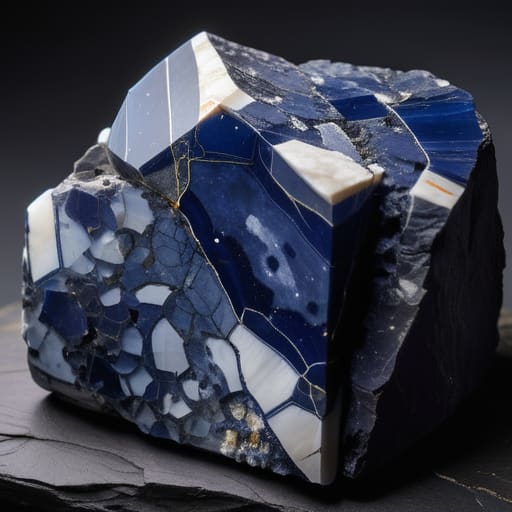
Sodalite is a tectosilicate mineral, primarily composed of sodium aluminum silicate. When you look at a specimen, the colour usually reminds me of the North Sea on a particularly overcast afternoon—a deep, somewhat muted navy. It isn’t a “pure” blue; it’s often interrupted by white patches of sodalite calcite. If you are looking at the visual characteristics of blue stones, you’ll notice that sodalite has a matte, almost chalky quality to it when it’s unpolished. It lacks the intense, royal saturation that people usually crave when they ask for “true blue.”
Lapis lazuli, on the other hand, is a rock, not a single mineral. It’s a complex mixture, and that’s the easiest way to start distinguishing blue minerals by sight. While sodalite is consistent and a bit dull, lapis is a chaotic, beautiful mess. You’ll almost always see bright, golden flecks of pyrite inclusions in lapis lazuli, looking like tiny bits of glitter trapped in the stone. You might also see white veins of calcite. If the stone looks too uniform—too “perfectly” blue without those metallic sparks or white streaks—it’s likely sodalite.
Key Things to Know
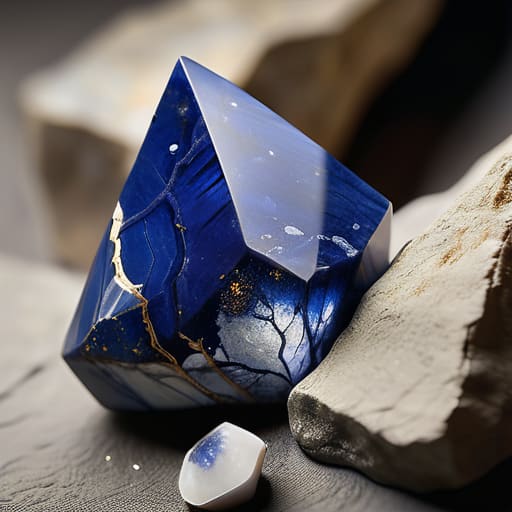
If you’re looking at a piece of deep blue stone, the first thing I do is check the “sparkle.” Lapis lazuli almost always has those tiny, brassy flecks of pyrite inclusions scattered through it. It looks like gold dust caught in a dark tide. Sodalite, on the other hand, is much more matte and consistent. If you see those golden glints, you’re likely looking at lapis; if the blue is solid and perhaps interrupted by white veins, it’s more likely sodalite.
I also find it helpful to look at the white bits. In sodalite, those white patches are usually calcite, appearing like chalky streaks against a navy background. Lapis tends to have a more mottled, uneven distribution of colors. When you’re distinguishing blue minerals by sight, don’t just look at the hue. Look at the texture. Lapis feels “busy” and complex, whereas sodalite has a certain structural simplicity to it. It’s like comparing a stormy sea to a deep, still lake. One is full of movement and debris, the other is just… blue.
Practical Tips and Steps
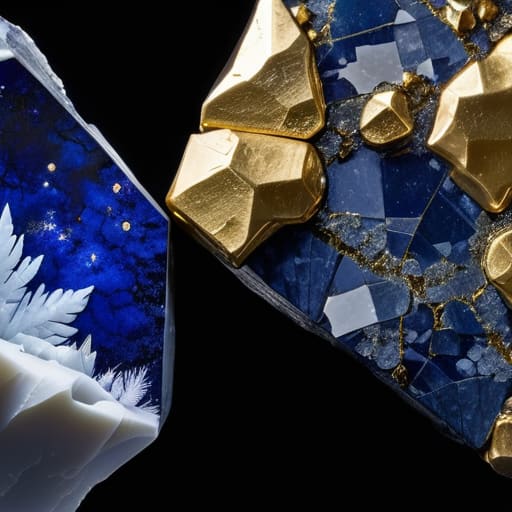
If you’re standing in a shop or looking at a listing online, start with your eyes and a bit of patience. I always reach for my loupe first, but you can do a lot just by looking at the patterns. Lapis lazuli is famous for those tiny, glittering flecks of pyrite inclusions in lapis lazuli; it looks like a night sky caught in a stone. Sodalite, on the other hand, tends to have white veins running through it that look like cracks in ice. If you see those white lines, you’re likely looking at calcite streaks in sodalite rather than the deep, celestial gold of true lapis.
Next, think about the texture. Lapis often feels a bit more “substantial” or dense, whereas sodalite can sometimes look a bit more matte. If you have a scratch test kit handy, remember the hardness scale of sodalite and lapis is quite similar, but they aren’t identical. Lapis sits around 5 to 5.5, while sodalite is a bit tougher at 5.5 to 6. Don’t go scratching your jewelry, though—just use your eyes to check if the blue looks like a solid, deep ocean or a scattered, starry sky.
Common Mistakes to Avoid
The biggest mistake I see is people assuming that “blue equals lapis.” It’s a trap. I’ve seen countless buyers walk away from beautiful, deep-blue specimens because they didn’t see those bright, metallic flecks they expected. If you are looking for pyrite inclusions in lapis lazuli as your only proof of authenticity, you might miss a stunning piece of genuine sodalite. Sodalite doesn’t need gold-colored glitter to be valid; it relies on its own internal structure and subtle, cloudy depths.
Another error is ignoring the way the stone reacts to light and touch. Some sellers try to pass off dyed marble or even certain plastics as high-end minerals, but they can’t fake the visual characteristics of blue stones under a loupe. I often see people forget to check for the presence of white calcite streaks in sodalite, which are a natural part of its composition rather than a flaw. Don’t let a lack of “perfect” gold flecks convince you that a stone is fake, and don’t let a lack of white veining convince you that a stone is real lapis. Look at the grain, not just the glitter.
Final Thoughts
At the end of the day, whether you are holding a piece of genuine lapis or a chunk of sodalite shouldn’t change how much you enjoy looking at it. If you’ve done the work to check for those tell-tale pyrite inclusions in lapis lazuli or looked for the white calcite streaks in sodalite, you’ve already learned more than most collectors ever bother to. You’ve moved past just seeing a “pretty blue rock” and started seeing the actual mineralogy.
I don’t care much for the debates over whether a stone’s energy is real or just a projection of our own minds. My interest lies in the reality of the object itself—its chemistry, its formation, and its grit. Understanding the hardness scale of sodalite and lapis or knowing why the light hits a facet a certain way doesn’t strip the magic away; if anything, it makes the stone feel more substantial. You know what you have now. Whether you keep it in a velvet box or wear it as a talisman, just make sure you know exactly what you’re holding.
## The truth is in the inclusions
“I don’t care if you want the stone for its supposed ‘throat chakra’ or just because it looks good on a silver ring; my job is simply to make sure you aren’t paying Lapis prices for a piece of Sodalite. One is a complex silicate with pyrite flecks that look like gold caught in wet sand, and the other is a much simpler sodium aluminum silicate—learn to see the chemistry, and you’ll never get cheated again.”
Dagny Solheim
Wrapping It All Up
At the end of the day, distinguishing these two comes down to paying attention to the details that a salesperson might try to gloss over. Look for that tell-tale white calcite veining in the sodalite, and keep an eye out for the golden flecks of pyrite that give real lapis its character. Remember that sodalite is a sodium aluminum silicate, while lapis is a complex rock containing lazurite; they are chemically different beasts entirely. If you take the time to check the hardness or look closely at the inclusions under a loupe, you won’t be left wondering if you’ve bought a piece of blue glass or a clever imitation. It really is just about knowing what you are holding in your hand before you reach for your wallet.
Whether you are a collector looking for a specific specimen or someone who just loves the deep, ocean-tide blue of a polished stone, there is a certain satisfaction in knowing the truth of your treasures. I don’t care if you keep your stones in a velvet-lined box or if you wear them as talismans to help you get through a long Tuesday. What matters to me is that you respect the mineralogy of the earth. Once you strip away the marketing and the mystery, you are left with something solid, ancient, and real. Enjoy your stones, whatever they may be.
