I spent six years in a windowless grading lab, staring through a loupe until my eyes felt like they were full of sand, and if there is one thing I learned, it’s that the industry loves to hide behind jargon. You’ll see a stone with a wild, swirling pattern and a salesperson will start whispering about “artistic expression” and “unique energy,” but usually, they’re just using fancy terminology to mask the fact that the stone couldn’t be cut into a standard brilliant shape without shattering. People get so caught up in the mysticism of fantasy and freeform cuts and who buys them that they forget a stone is first and foremost a physical object with specific structural limits.
I’m not here to sell you on the “magic” of a jagged edge or a lopsided facet. My goal is to strip away the marketing fluff and tell you exactly what is happening when a cutter decides to ditch the calipers for a more organic silhouette. I’ll explain the technical difference between a deliberate artistic choice and a stone that was simply too flawed for a traditional cut, and I’ll show you which collectors are actually looking for these shapes. Once you understand the composition and the geometry, you can decide if a stone speaks to you or if it’s just overpriced rubble.
Beyond the Standard Facet Fantasy Cut vs Traditional Faceting
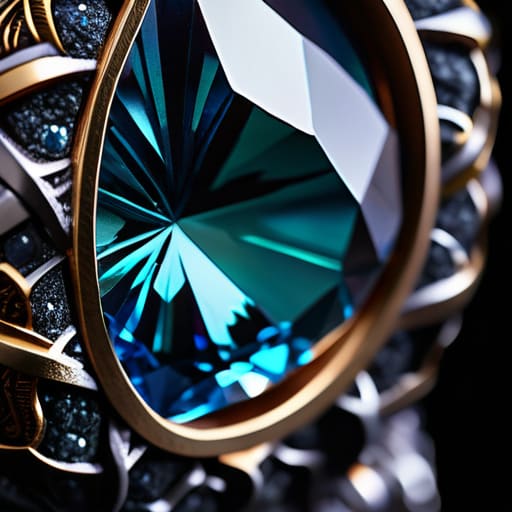
When you look at a traditional round brilliant cut, you’re looking at geometry designed for a specific purpose: light return. The math is rigid, the angles are calculated to bounce light back to your eye, and the goal is maximum sparkle. It’s predictable, which is why it dominates the commercial market. But when we talk about fantasy cut vs traditional faceting, we’re shifting the goalposts from physics to sculpture. In a fantasy cut, the lapidary isn’t just trying to hit a light target; they are carving patterns, textures, and even three-dimensional landscapes into the mineral itself.
Instead of a predictable table and crown, you might see swirling motifs or architectural facets that follow the natural contour of the rough. This is where we see a massive shift in lapidary art market trends. While a standard cut relies on the stone’s refractive index to do the heavy lifting, a fantasy cut relies on the artist’s hand. You aren’t just buying a carat weight anymore; you are buying a specific piece of work that can never be replicated exactly the same way twice.
The Anatomy of an Artisan Understanding Fantasy and Freeform Cuts and Who B
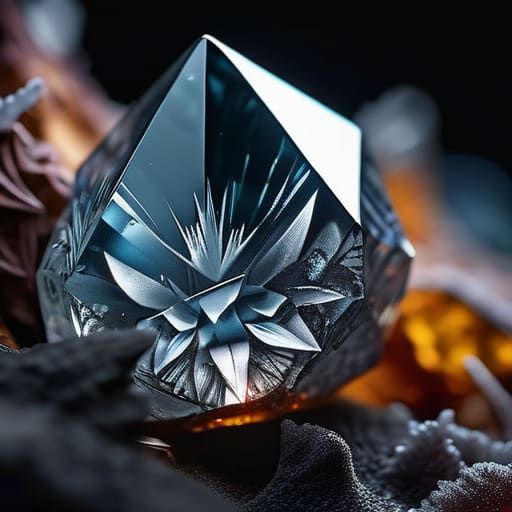
When you look at a traditional round brilliant, you’re looking at math. It’s a predictable geometry designed to bounce light back to your eye in a very specific way. But when I pick up a fantasy cut stone, I’m looking at a piece of sculpture. These cuts often involve complex surface patterns—think of them like etched ice on a frozen fjord—that transform the stone from a simple light-reflector into something with depth and texture. Because these patterns are carved into the facets themselves, they require a level of skill that separates a technician from an artist.
This shift from precision math to creative expression is exactly why we see such a specific collector demand for unique gems. You aren’t just buying a carat weight; you are buying a specific moment in a lapidary’s career. This is a huge driver in custom gemstone jewelry design, where a designer wants a stone that dictates the shape of the metal, rather than the other way around. While a standard cut might hold its value based on weight and clarity, these artisan pieces trade on soul and scarcity. One person sees a high-risk investment, but another sees a one-of-a-kind masterpiece that can never be replicated.
Cracking the Code of Collector Demand for Unique Gems
When I look at the current lapidary art market trends, I see a shift away from the predictable. For decades, the industry was obsessed with the “perfect” round brilliant—a stone that does one thing and does it mathematically well. But lately, the conversation has changed. People aren’t just looking for a way to show off carat weight; they are looking for a conversation piece. This is where the collector demand for unique gems really takes hold. These buyers aren’t interested in a stone that looks like every other diamond in a velvet tray; they want something that feels like it was pulled from a dream, or at least something that shows the hand of the person who shaped it.
This demand is driving a massive surge in custom gemstone jewelry design. Designers are moving away from “cookie-cutter” settings because they finally have stones that demand a bespoke approach. If you are selling artisan cut stones, you aren’t just selling a mineral; you are selling a specific moment of creativity. While some worry about the long-term gemstone investment value of a non-standard shape, the reality is that a truly exceptional fantasy cut can hold its own because it occupies a niche that mass-produced stones simply cannot touch.
Navigating the Shifting Lapidary Art Market Trends
The market for stones isn’t a static thing; it breathes and shifts like the tide back home in Bergen. Lately, I’ve noticed a distinct move away from the rigid symmetry of the round brilliant toward something more organic. We are seeing significant lapidary art market trends that favor stones that look like they were shaped by a river rather than a machine. It’s a pushback against mass production. People are tired of seeing the same mathematically perfect sparkle in every mall jeweler’s window; they want something that feels like it has a soul, or at least a bit of grit.
This shift is driving a massive surge in custom gemstone jewelry design. Designers are no longer looking for a standard shape to fit a pre-made setting; they are hunting for a specific, irregular slab of labradorite or a sculptural quartz that dictates the entire piece. For those of us looking at the gemstone investment value, this means the “perfect” stone isn’t always the one with the highest carat weight or the most precise facets. Sometimes, the value lies in the sheer audacity of the cut itself.
The Real Gemstone Investment Value in Non Traditional Cuts
When people talk about gemstone investment value, they usually point toward a perfectly proportioned, round brilliant diamond. It’s the safe bet. But if you’re looking at the lapidary art market trends, the math changes. In a freeform or fantasy cut, you aren’t just paying for the carat weight or the mineral’s chemical composition; you are paying for the artist’s specific vision. A masterfully carved garnet or a uniquely shaped sapphire can hold its value because it functions more like a painting than a commodity. You aren’t just buying a stone; you’re buying a piece of someone’s skill.
The risk, of course, is liquidity. It is much easier to sell a standard trillion-cut emerald than it is to find the right person for a highly experimental, sculptural piece. However, for those involved in custom gemstone jewelry design, these non-traditional cuts are the primary driver of value. A designer needs a stone that tells a story, not just one that fits a standard setting. If you are thinking about selling artisan cut stones, remember that your buyer isn’t a speculator—they are a collector looking for something that can’t be replicated by a machine.
How to Master the Art of Selling Artisan Cut Stones
If you are looking into selling artisan cut stones, you have to stop thinking like a wholesaler and start thinking like a curator. When I was working in the lab, we dealt in symmetry and carat weight—metrics that satisfy a spreadsheet but do nothing for the soul. To move these pieces, you aren’t just selling a mineral; you are selling the way the light hits a specific, irregular facet. You need to lean into the story of the cut. Don’t just list the hardness or the refractive index; describe how the stone looks when it’s held up to the sun, perhaps with a color as deep and saturated as a wet piece of moss on a granite slab.
Success in this niche often comes down to finding the right partners. I see a massive uptick in interest from those involved in custom gemstone jewelry design, where the stone dictates the setting rather than the other way around. Instead of trying to compete with the mass-produced brilliance of a standard round brilliant, find the designers who crave character. They aren’t looking for perfection; they are looking for a centerpiece that feels like it was pulled straight from the earth, exactly as it is.
Fueling the Fire of Custom Gemstone Jewelry Design
When a jeweler moves away from the standard round brilliant, they aren’t just changing a shape; they are changing the entire conversation of the piece. In custom gemstone jewelry design, a freeform stone acts as the anchor. You aren’t trying to force a mineral into a predictable geometry to maximize light return; instead, you are letting the natural morphology of the rough dictate the setting. I’ve seen designers take a slab of labradorite with a heavy flash—the kind of blue that looks like a deep fjord under a storm cloud—and wrap it in organic gold wires that follow the stone’s unique perimeter.
This approach is a massive driver in the current lapidary art market trends. High-end clients are increasingly tired of the “cookie-cutter” look you see in big-box retail. They want something that feels singular. When a stone has a custom, asymmetrical silhouette, it becomes impossible to replicate. It shifts the value from the mere carat weight to the artistic synergy between the cutter and the setter. Whether you’re a collector or a maker, that’s where the real magic happens: when the stone stops being a commodity and starts being a sculpture.
The Soul of the Stone
A standard round brilliant is a feat of engineering, designed to bounce light like a mirror, but a freeform cut is a conversation with the mineral itself. I’ve spent enough hours under a loupe to know that when a lapidary follows the natural grain of a stone instead of forcing it into a geometric cage, they aren’t just cutting a gem—they’re revealing its history. Collectors aren’t buying a predictable mathematical formula; they’re buying the fact that no two of these stones will ever be the same.
Dagny Solheim
Final Thoughts on the Unconventional
We have looked at how the market is shifting away from the rigid, predictable symmetry of standard brilliant cuts toward something far more individualistic. Whether you are a lapidary artist trying to find your niche, a jeweler looking for a centerpiece that tells a story, or a collector chasing that one-of-a-kind specimen, the takeaway is the same: the value in fantasy and freeform cuts isn’t found in a mathematical formula, but in the intentionality of the design. You have to understand the mineral’s chemistry and the way light interacts with a non-traditional facet to truly appreciate what you are holding. It is a complex dance between geology and artistry, and once you learn to spot the difference between a masterfully carved stone and a poorly shaped one, the market becomes much clearer.
At the end of the day, I don’t care if you buy a stone because it has a stable resale value or because the way the light hits the inclusions reminds you of a storm over the North Sea. My job is to help you understand the physical reality of the object—the hardness, the composition, and the cut. If a freeform sapphire makes you feel something, then it has done its job. Stones have existed for millions of years before we arrived, and they will be here long after we are gone; celebrate the ones that catch your eye and don’t worry too much about whether they fit into a standard grading box.
