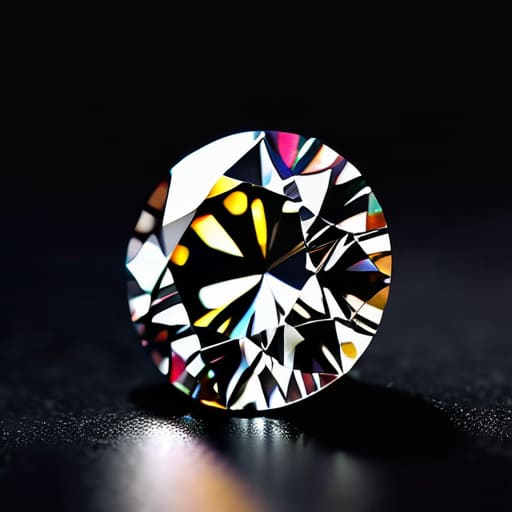
I spent six years hunched over a bench in a grading lab, staring through a loupe until my eyes felt like they were filled with sand. I’ve seen enough stones to know that the industry loves to wrap simple things in layers of expensive-sounding nonsense. People will try to tell you that the round brilliant is the only “correct” way to cut a diamond, as if there’s some divine law written in the carbon. They make it sound like magic, but the truth about how the round brilliant became the default shape is much more about math and light physics than it is about some mystical perfection.
I’m not here to sell you on a dream or tell you that a specific cut will change your life. My job is to strip away the marketing fluff and look at the actual geometry. I’ll explain the mechanics of how this cut maximizes light return and why it eventually won the battle against every other shape on the market. I’ll show you what to look for so you don’t get stuck with a stone that looks dull and lifeless under the lights. Once you understand the science, you can decide what you want to do with your money.
The Raw Truth of Why the Round Brilliant Became the Default Shape
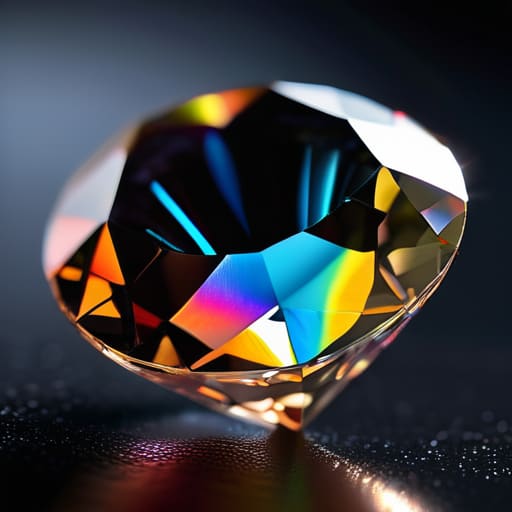
Before we had the math to prove it, we just had intuition. For centuries, cutters were essentially guessing, trying to find the sweet spot where light wouldn’t just leak out the bottom of the stone like water through a sieve. It wasn’t until the early 20th century that things changed from guesswork to something resembling a science. A mathematician named Marcel Tolkowsky published his diamond cut theory, which basically provided a blueprint for how to arrange facets to maximize what we call diamond light refraction and brilliance. He wasn’t just making it look pretty; he was calculating how to trap light inside the stone so it bounces back to your eye instead of disappearing into the table.
This shift changed everything. Before these standardized proportions, you might find a stone with a beautiful color but a “dead” look because the facets were poorly placed. Once the industry embraced these ideal diamond proportions, the round brilliant became the benchmark. It wasn’t just about tradition; it was about the physics of light. While a princess cut might offer a different kind of flash, the round brilliant remains the king because it handles light with a predictable, mathematical grace that other shapes struggle to match.
Before the Math the Evolution of Gemstone Cutting Techniques
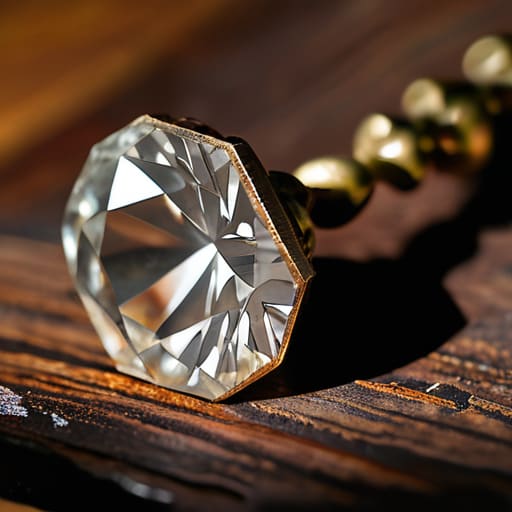
Before we had computers to calculate angles, people just cut what they saw. If you look at stones from the 17th or 18th centuries, they don’t look like the polished discs we see today. They were often “rose cuts” or “table cuts”—flatter, shallower things that looked more like a puddle of water caught in a shallow basin than a firework. Back then, the history of diamond facet patterns was really just a history of trial and error. A cutter would look at a rough stone and try to preserve as much weight as possible, even if it meant the light just leaked out the bottom like water through a sieve.
It wasn’t until the early 20th century that things shifted from guesswork to something resembling science. People started obsessing over how to trap light inside the stone rather than letting it escape. This era saw the rise of the Marcel Tolkowsky diamond cut theory, which finally gave us a mathematical blueprint for what a “perfect” stone should look like. He wasn’t just making things pretty; he was trying to master the way light bounces around inside the carbon structure. It turned cutting from a craft into a discipline.
Cracking the Code of Diamond Light Refraction and Brilliance
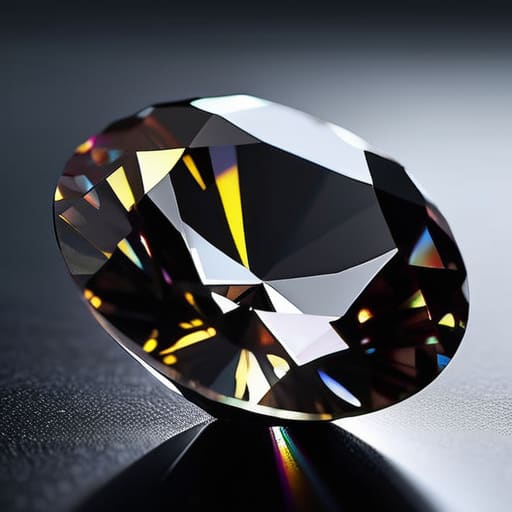
To understand why we stopped just hacking at stones and started calculating them, you have to look at how light actually behaves when it hits a carbon lattice. For a long time, cutters worked by eye, hoping for a bit of flash. But everything changed when we applied actual geometry to the problem. It wasn’t just about making a stone pretty; it was about managing diamond light refraction and brilliance so that the light doesn’t just pass straight through the bottom and disappear. If the angles are off by even a fraction of a degree, the stone looks “dead,” like a piece of glass pulled from a murky tide pool.
The real turning point was the introduction of Marcel Tolkowsky’s diamond cut theory in the early 20th century. He was one of the first to use mathematical models to determine the perfect relationship between the crown and the pavilion angles. He wanted to maximize the way light bounces internally before hitting the eye. It’s a delicate balance of physics—if the pavilion is too deep, you get a dark center; too shallow, and the light leaks out the sides. He essentially provided the blueprint for what we now call the “ideal cut,” turning a craft into a precise science.
Marcel Tolkowsky Diamond Cut Theory and the Pursuit of Perfection
By 1919, we stopped guessing. Before this, cutting was largely a matter of a craftsman’s intuition—a steady hand and a good eye for what looked “right” under a lamp. But then came Marcel Tolkowsky. He wasn’t a cutter; he was a mathematician who looked at a diamond and saw a geometry problem. His work, specifically the Marcel Tolkowsky diamond cut theory, attempted to move the industry away from guesswork and toward a repeatable science. He wanted to find the mathematical sweet spot where light wouldn’t just enter the stone, but would be trapped and bounced back to the eye with maximum efficiency.
He focused on the relationship between the crown angle and the pavilion depth, trying to solve for the perfect balance of fire and brilliance. It wasn’t about making the stone bigger; it was about making it smarter. While his specific ratios are still debated by modern labs, his pursuit of ideal diamond proportions explained through physics changed everything. He turned the diamond from a mere hunk of carbon into a precision-engineered engine for light. It’s the reason why, even today, we still use his blueprints as the benchmark for what a “good” stone should look like.
The History of Diamond Facet Patterns and Their Hidden Logic
Before we had the precision of modern lasers, people were essentially playing a high-stakes game of trial and error with light. If you look at old sketches of diamonds from the 1700s, you won’t see the symmetrical, organized patterns we expect today. Instead, you’ll see “Old Mine” or “Old European” cuts—stones that were often deep, chunky, and somewhat irregular. These cutters weren’t obsessed with mathematical perfection; they were obsessed with surviving the stone. They cut to preserve carat weight first, and brilliance second. The facet patterns back then were designed to catch light in a heavy, flickering way, almost like sunlight hitting a tide pool in the North Sea.
As the history of diamond facet patterns progressed, the logic shifted from mere survival to a systematic pursuit of fire. We moved away from those deep, dark centers toward shallower, more organized arrangements. This wasn’t just an aesthetic choice; it was a mechanical one. Every new facet added was an attempt to master diamond light refraction and brilliance, steering the light back toward the eye rather than letting it leak out the bottom of the stone. It was a slow, messy transition from heavy lumps of carbon to the precise instruments of light we see in jewelry shops today.
Ideal Diamond Proportions Explained What You Are Actually Buying
When you look at a grading report, you’re going to see a lot of numbers regarding table percentage, crown angle, and pavilion depth. It feels like a math exam, but it’s actually just a blueprint for how the stone handles light. If the pavilion is too deep, the light leaks out the bottom like water through a sieve; if it’s too shallow, the stone looks “glassy” and flat. I like to think of it like the surface of the North Sea—if the waves are too choppy or too flat, you lose that specific, deep shimmer.
The goal of these measurements is to hit that sweet spot of diamond light refraction and brilliance that makes a stone jump to life. This isn’t just arbitrary; it’s the practical application of the Marcel Tolkowsky diamond cut theory we discussed earlier. You aren’t just buying a piece of carbon; you are buying a specific geometric arrangement designed to bounce light back to your eye instead of letting it vanish into the setting. If the proportions are off, even the highest quality D-color stone will look dull.
Brilliant Cut vs Princess Cut Sparkle Knowing the Real Difference
When you lay a round brilliant next to a princess cut on a velvet tray, the difference isn’t just about the silhouette; it’s about how they handle light. The round brilliant is a master of scintillation—those tiny, rhythmic flashes of light that dance as you move your hand. Because it follows the principles of Marcel Tolkowsky diamond cut theory so closely, the light is directed back through the top in a predictable, organized way. It feels steady, like a calm sea.
The princess cut, on the other hand, is much more aggressive. It’s a square, which changes the geometry of how the light hits the pavilion facets. Instead of that even, circular glow, you get these sharp, sudden bursts of brightness that feel almost electric. When comparing brilliant cut vs princess cut sparkle, you’re really choosing between a continuous shimmer and a series of high-contrast flashes. One is a soft, constant light; the other is a series of bright, jagged sparks. Neither is “better,” but they certainly tell different stories about the stone.
More Than Just a Pretty Sparkle
We call it the ‘default’ shape because it’s the one that wins the math, but it’s really just a triumph of geometry over raw nature. We took a chaotic, unformed piece of carbon and forced it into a specific pattern of facets just to see if we could trap enough light to make it dance. It isn’t magic; it’s just very clever engineering.
Dagny Solheim
The Final Verdict on the Round Brilliant
At the end of the day, the round brilliant isn’t just a shape; it is the result of a century-long obsession with physics and light. We’ve looked at how we moved from crude, hand-chipped stones to the mathematical precision of Tolkowsky’s theories, and why that specific geometry is so effective at bouncing light back to your eye. Whether you are comparing the classic sparkle of a round cut to the sharp, modern lines of a princess cut, the takeaway is the same: the industry settled on this shape because it is the most efficient way to turn a piece of carbon into a firework of light. Understanding the proportions and the history behind the facets means you aren’t just buying a trend; you are buying centuries of engineered brilliance.
I spent years staring through a loupe at stones that looked like little frozen puddles of seawater, and I’ve learned that while the math is perfect, the stone is still just a piece of the earth. You can obsess over the “ideal” cut and the exactness of the pavilion angle, or you can simply hold a stone up to the light and feel that sudden, sharp intake of breath when it catches the sun. Science tells us why the light moves the way it does, but it doesn’t dictate how much you should love it. Buy the stone that speaks to you, whether it’s mathematically perfect or just beautifully flawed.
