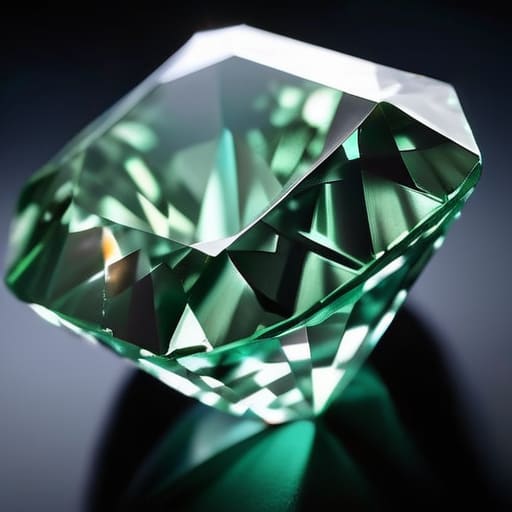
I spent six years hunched over a bench in a grading lab, my eyes aching from staring through a loupe at nothing but light and tiny, jagged imperfections. I remember one particular afternoon, staring at a stone that looked absolutely perfect in the velvet display case, only to have it look like a cracked frozen puddle the moment I brought it under the lens. People will try to sell you on the “elegance” of the shape to distract you from the reality of the physics, but if you don’t understand the emerald cut and why it shows every inclusion, you are essentially walking into a trap. This cut isn’t designed to hide secrets; it’s designed to showcase them.
I’m not here to sell you on some mystical energy or a marketing gimmick. My goal is simple: I want to show you exactly how these step-cut facets act like a clear pane of glass rather than a disco ball. I’ll explain the mineralogy behind what you’re seeing and give you the practical tools to spot a stone that’s hiding a mess behind its polish. By the time we’re done, you’ll know exactly what to look for so you can buy with total confidence.
The Naked Truth of the Emerald Cut and Why It Shows Every Inclusion
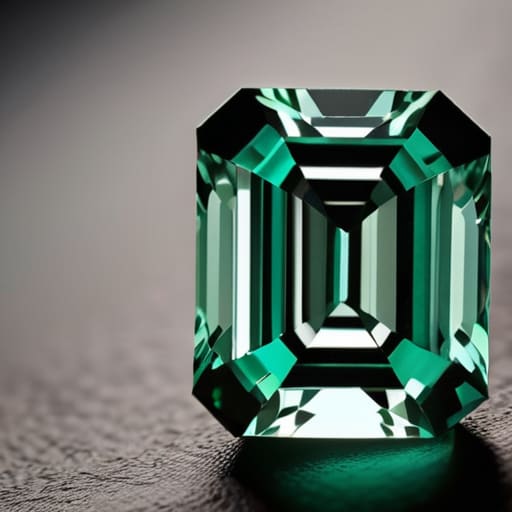
The reason this happens comes down to the geometry. While a round brilliant diamond is designed to bounce light around in a frantic, sparkly mess that hides a multitude of sins, the emerald cut is different. It uses long, parallel facets that create a “step cut” effect. Instead of a chaotic dance of light, you get these broad, open planes that act like a series of windows. When you look into one, you aren’t seeing a kaleidoscope; you’re seeing a clear view into the heart of the stone.
This is why emerald cut vs round brilliant inclusions is such a common debate in the lab. In a round stone, a tiny carbon spot might get lost in the scintillation, but in an emerald cut, that same spot sits right in the middle of a flat facet like a smudge on a clean pane of glass. Because of this, you can’t just pick a mid-range clarity grade and hope for the best. You have to be much more disciplined with your diamond clarity grades for step cuts. If you want a stone that looks perfect to the naked eye, you really need to aim for eye clean territory, or you’ll spend the whole time staring at the flaws instead of the fire.
The Hall of Mirrors How Light Refraction Affects Diamond Flaws
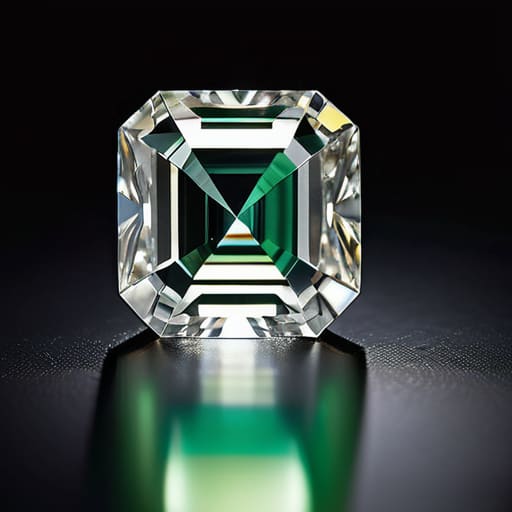
Think of the light inside a diamond like a person walking through a hallway of mirrors. In a round brilliant cut, the facets are crowded and chaotic; they bounce light around so quickly and intensely that the eye often misses the small stuff. But an emerald cut is different. It’s built on long, parallel facets that create a “step” structure. Instead of a frantic dance, the light moves in orderly, rhythmic planes. This is exactly how light refraction affects diamond flaws; because the light travels in such straight, predictable paths, it doesn’t scatter the inclusions. Instead, it illuminates them.
When you look down into a high-quality step cut, you aren’t seeing a sparkle-storm; you’re seeing a clear window. If there is a tiny feather or a dark crystal trapped inside, the light doesn’t jump over it. It hits that flaw and stays there, making it stand out like a piece of grit on a clean pane of glass. This is why diamond clarity grades for step cuts are notoriously unforgiving. You can’t hide a mediocre stone behind a clever cut like you can with a round diamond; the geometry simply won’t allow it.
Why the Chopping Effect in Emerald Cuts Exposes the Stones Soul
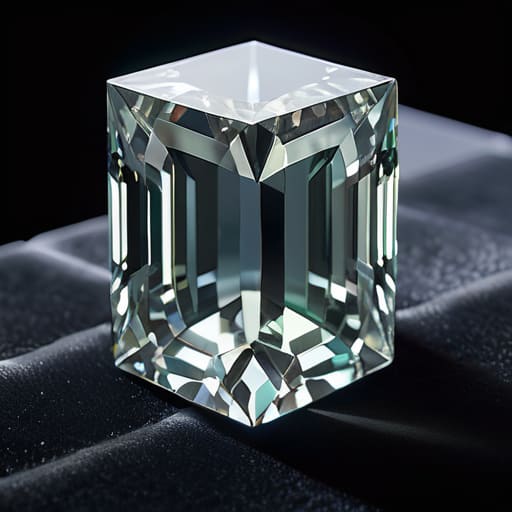
Think of the way a round brilliant cut works like a disco ball; it’s designed to bounce light around so frantically that your eye can’t quite pin down a single speck of dust. But the emerald cut doesn’t do that. Instead, it uses long, parallel facets that act like a series of stairs. This is what we call the chopping effect in emerald cuts. Rather than scattering light into a million directions, the light travels in straight, orderly lines down into the heart of the stone and back out again.
Because the light isn’t being “scrambled,” it hits any internal characteristic—a tiny feather, a dark crystal, or a cloud—with total clarity. It’s like looking through a clean pane of glass versus looking through a frosted window. This is exactly why diamond clarity grades for step cuts are so much more unforgiving than they are for other shapes. If you are shopping for one of these, you can’t just settle for a “good” grade and hope for the best. You really need to aim for eye clean emerald cut diamonds, or you’ll find yourself staring at a dark spot right in the middle of your centerpiece.
Emerald Cut vs Round Brilliant Inclusions a Study in Honesty
If you’re comparing an emerald cut to a round brilliant, you’re essentially comparing a transparent window to a disco ball. A round brilliant is designed to bounce light around so frantically that it practically hides its own secrets; those tiny internal feathers or clouds get lost in the sparkle. But an emerald cut doesn’t play those games. Because of the long, parallel facets, it doesn’t use “scintillation” to mask its flaws. Instead, it offers a clear view of the interior.
When looking at emerald cut vs round brilliant inclusions, the difference in strategy is massive. For a round stone, you can often get away with a lower clarity grade because the light is too busy dancing to notice a small inclusion. With a step cut, however, the rules change. You have to be much more disciplined with your diamond clarity grades for step cuts. If you want a stone that looks clear to the naked eye, you shouldn’t settle for “just okay.” You should be hunting specifically for eye clean emerald cut diamonds, because once you see a dark spot in that open hall of mirrors, there is no amount of sparkle in the world that will make you forget it’s there.
Demanding Perfection Step Cut Diamond Clarity Requirements Explained
Because of that window-like effect we talked about, you can’t just shop for an emerald cut the way you would a round brilliant. With a round stone, the facets are like a frantic disco ball; they bounce light everywhere, which helps mask the tiny bits of carbon or mineral trapped inside. But with an emerald cut, the light travels in straight, predictable lines. If there is a speck of dust or a tiny crack sitting in the center, the stone isn’t going to hide it—it’s going to frame it.
When you are looking at diamond clarity grades for step cuts, you need to be much more demanding than you think. A “Very Good” grade on a round stone might look perfectly fine, but that same grade in an emerald cut might look like a pebble with a hair stuck in it. I always tell my clients to aim for at least VS2 or even higher. If you want eye clean emerald cut diamonds, you have to look past the official certificate and actually put the stone under a loupe. You’re looking for a clear, calm pool of light, not a cluttered landscape.
Navigating Diamond Clarity Grades for Step Cuts Without Fear
When you’re looking at a grading report for a step cut, you have to stop thinking like you’re buying a round brilliant. With a round stone, you can often hide a little bit of “pepper” or tiny clouds in the center because the facets are busy scattering light everywhere. But with an emerald cut, you don’t have that luxury. You need to look closely at the diamond clarity grades for step cuts specifically. If you’re aiming for something that looks clear to the naked eye, you’re looking for eye clean emerald cut diamonds, which usually means aiming for a VS2 or higher.
Don’t let the fancy terminology intimidate you. If a jeweler tells you a stone is “Very Good,” ask them to show it to you under a loupe. Because of the way the facets are laid out, a single tiny crystal or a small feather can look like a structural crack if it sits right in the middle of that window. I always tell my clients: don’t chase the highest grade just for the sake of the certificate. Instead, find the stone where the inclusions are tucked away near the edges, where they won’t ruin the view.
Finding the Sweet Spot of Eye Clean Emerald Cut Diamonds
So, how do you actually buy one without feeling like you’ve been tricked? You aren’t looking for a flawless specimen that costs more than a house in Bergen; you’re looking for eye clean emerald cut diamonds. This means that while a professional with a 10x loupe will see every tiny crystal or feather, your naked eye won’t notice a thing when you’re wearing it. You want to find that threshold where the inclusions are tucked away in the corners or are so minute they don’t interrupt the clarity of the “window.”
When you’re looking at the certificate, don’t get hung up on the highest possible grades. Because of the way how light refraction affects diamond flaws in a step cut, a VS2 might look just as clean as a VVS1 to the casual observer. I always tell people to ignore the math for a second and just look at the stone. If the inclusions aren’t dancing in the center of the table, you’ve found your winner. It’s about finding that balance between a sensible price and a stone that looks as clear as a still mountain lake.
The Window vs. The Sparkle
A round brilliant cut is like a disco ball, throwing light around to hide its secrets, but an emerald cut is a window. It’s clear, it’s honest, and if there’s a tiny speck of grit or a fracture inside that stone, it’s going to look as obvious as a pebble on a wet beach.
Dagny Solheim
The Final Look
At the end of the day, choosing an emerald cut is a decision to stop hiding. We’ve talked about how those long, step-cut facets act like a pane of glass rather than a disco ball, and how that lack of “scintillation” means you can’t use sparkle to mask a messy interior. If you go for this cut, you have to respect the chemistry of the stone. You can’t just pick a diamond based on carat weight and hope for the best; you have to look for that eye-clean sweet spot where the inclusions are part of the history, not a distraction. It’s about understanding that the geometry of the cut dictates exactly how much truth you’re willing to see under the loupe.
I’ve spent enough hours in dark labs looking at carbon structures to know that no stone is truly perfect. Even the most flawless diamond has a story written in its lattice. If you find a stone that has a tiny bit of character—a small feather or a slight cloud that looks like a smear of grey sea foam on a granite rock—don’t let it ruin the moment for you. An emerald cut doesn’t demand a sterile, laboratory-perfect specimen; it demands an honest one. Once you stop fighting the inclusions and start appreciating the clarity you’ve actually found, the stone stops being a math problem and starts being something beautiful.
