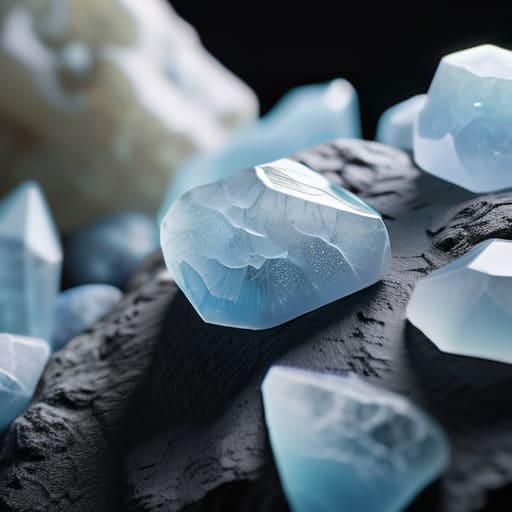
I spent six years hunched over a microscope in a grading lab, and if there is one thing that makes my skin crawl, it’s seeing a shop owner charge a premium for a stone simply because they’ve slapped a fancy name on it. People get so caught up in the mysticism of “healing energies” that they completely overlook the actual mineralogy of chalcedony and the family it belongs to. You’ll see some vendor try to sell you a piece of dyed glass or a low-grade agate as if it’s some rare, celestial gift, but once you understand the microcrystalline structure of the quartz family, the marketing nonsense falls away pretty quickly.
I’m not here to sell you a dream or tell you that a stone is going to change your life through magic. What I am going to do is strip the mystery back to the basics: the chemistry, the hardness, and the visual tells that separate the real deal from the cheap imitations. I’ll show you exactly how to identify the different varieties within the quartz family so you can stop guessing. Once you know what you’re actually holding in your hand, what you decide to do with it is entirely up to you.
The Truth About Chalcedony and the Family It Belongs to
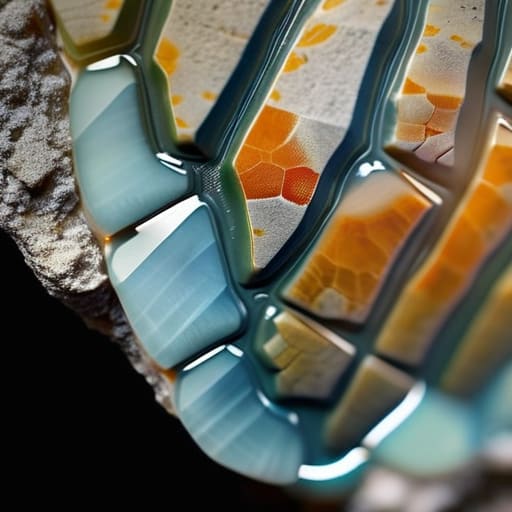
To understand chalcedony, you have to stop thinking about crystals with sharp, visible faces. Instead, think of a microcrystalline quartz structure—so tiny that the individual grains are invisible to the naked eye. It belongs to the broader silica mineral group, much like amethyst or citrine, but it lacks that dramatic, geometric growth. When I look at a specimen under my loupe, I’m not looking for points; I’m looking at how the light interacts with a dense, fibrous mass. It has a waxy luster that reminds me of how a smooth granite pebble looks when you pull it out of the North Sea.
People often get tripped up by the chalcedony vs agate differences, but the distinction is mostly about pattern. Agate is essentially a subset of chalcedony that has decided to show off with colorful, concentric bands. If the stone is solid and uniform, it’s just chalcedony; if it’s striped like a topographical map, it’s an agate. Regardless of the pattern, the hardness of chalcedony on the Mohs scale sits at a steady 6.5 to 7. It’s a durable, reliable piece of geology that doesn’t need to shout to be significant.
Cracking the Code of the Microcrystalline Quartz Structure
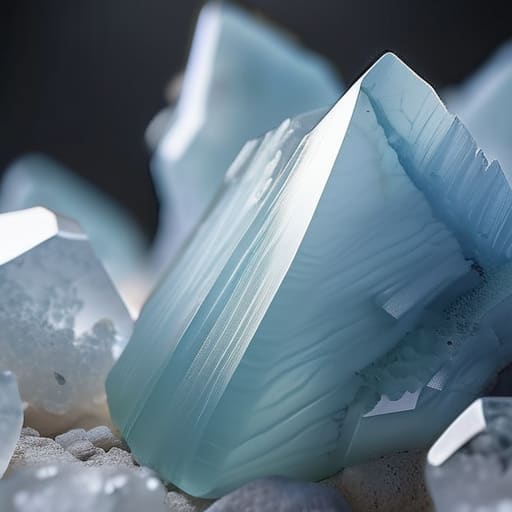
To understand chalcedony, you have to stop looking for big, flashy crystals. If you’re expecting the giant, clear points of amethyst or citrine, you’re going to be disappointed. Chalcedony is part of the silica mineral group, but it grows differently. Instead of forming large, distinct geometric shapes, the quartz crystals are so tiny they are microscopic. This creates a dense, interlocking microcrystalline quartz structure that lacks the visible cleavage or large faces you see in macrocrystalline quartz.
When I look through my loupe, I’m looking for that specific, waxy luster. Because the crystals are so tightly packed, the light doesn’t bounce off a single surface; it sinks in slightly, giving the stone a glow that looks like a pebble pulled straight from a tide pool. This is where you start to see the chalcedony vs agate differences. While agate is technically a type of chalcedony, it’s defined by those distinct, rhythmic bands of color. Pure chalcedony is more uniform—think of the color of a grey sky just before the rain hits, or a pale, milky blue like the North Sea on a misty morning.
Navigating the Complex Silica Mineral Group Without Getting Lost
Trying to map out the silica mineral group is a bit like trying to navigate the fjords in a thick fog; everything looks similar until you actually get close to the shore. Because these stones are all built from the same basic building blocks, the lines between them get incredibly blurry. You’ll find people tossing around terms like “agate” and “chalcedony” as if they are different families entirely, but in reality, they are more like cousins sharing the same DNA.
The real trick is understanding the chalcedony vs agate differences through the lens of pattern. If you see distinct, rhythmic bands of color—like the layers of sediment in a riverbed—you’re likely looking at an agate. If the color is more even, or looks like a solid wash of light, you’re in chalcedony territory. It’s all about how the crystals grew. Even though the hardness of chalcedony on the Mohs scale sits at a solid 6.5 to 7, making it quite durable, its true identity isn’t found in how tough it is, but in the way the light moves through its structure.
Hardness of Chalcedony on Mohs Scale What to Expect
When you’re holding a piece of chalcedony, you aren’t dealing with something fragile like a celestite or a soft fluorite. On the Mohs scale, the hardness of chalcedony on Mohs scale sits firmly at a 6.5 to 7. Because it belongs to the silica mineral group, it has a certain structural integrity that makes it much more resilient than many other decorative stones. If you’ve ever scraped a piece against a steel knife, you’ll know it doesn’t give way easily. It’s tough, which is why it has been used for everything from ancient seals to modern beads without turning into dust.
However, “hard” doesn’t mean “indestructible.” While it can handle a bit of wear, it can still be scratched by harder minerals like topaz or even quartz. I always tell people that understanding these gemstone mineralogy basics is the best way to protect your collection. If you leave a piece of chalcedony sitting on a granite countertop or tucked in a box with harder stones, you might find it loses that smooth, waxy luster I love so much. Keep it away from the heavy hitters, and it’ll hold its edge for a lifetime.
Gemstone Mineralogy Basics for the Discerning Eye
When you’re looking at a specimen through a loupe, you have to stop looking for “magic” and start looking for geometry. Understanding gemstone mineralogy basics isn’t about memorizing a textbook; it’s about training your eye to see how light interacts with the internal architecture of the stone. In the case of the silica mineral group, you aren’t looking for the big, flashy crystal faces you see in amethyst points. Instead, you are looking for the subtle, waxy luster that comes from a dense, interlocking arrangement of microscopic crystals.
If you want to get technical, the real trick lies in distinguishing the chalcedony vs agate differences. While they are cousins under the same umbrella, agate usually displays those distinct, concentric bands—think of the way a shoreline looks when the tide is pulling back, leaving layered patterns in the sand. Chalcedony tends to be more uniform and translucent, often looking like a piece of sea glass that’s been polished by the North Sea for a decade. If a stone looks too perfect, or if the color seems “painted” on rather than part of the structure, your geologist brain should start asking questions.
Decoding the Many Types of Chalcedony Varieties
Because chalcedony is part of such a broad silica mineral group, the names we throw around can get messy fast. Most people use the terms interchangeably, but if you look closely at the grain, you’ll see the nuances. Take Agate, for instance. It’s essentially chalcedony with distinct color banding—think of the way a pebble looks when you pull it out of the North Sea and it’s still dripping. When people ask about chalcedony vs agate differences, the answer is usually just about the pattern. If the colors flow in rhythmic, concentric circles, you’re looking at an agate. If it’s a solid, waxy hue, it’s just plain chalcedony.
Then you have the more specialized varieties that catch the eye. You’ll see Carnelian, which has a warm, orange glow like a sunset hitting a wet pier, or Chrysoprase, which holds a bright, apple-green tint. These aren’t different minerals; they are just chalcedony with specific trace elements tucked into that microcrystalline quartz structure. Understanding these types of chalcedony varieties isn’t about memorizing a textbook; it’s about learning to recognize the specific “flavor” of the silica.
The Real Chalcedony vs Agate Differences You Must Know
This is where most people—and even some tired shopkeepers—get tripped up. Technically, agate is a variety of chalcedony, but in the trade, we use the terms to distinguish between two different looks. Think of it like this: chalcedony is the broad umbrella, while agate is the specific version with the “show.” When I look at a specimen, I’m looking for those distinct, concentric bands of color. If the stone has those rhythmic, swirling layers, it’s an agate. If it’s smooth, translucent, and looks like a piece of frozen sea mist—that pale, milky blue you see after a heavy rain—it’s true chalcedony.
To spot the difference, you have to look past the surface. Because they both share a microcrystalline quartz structure, they feel identical in the hand and share the same hardness of chalcedony on the Mohs scale. You won’t scratch one with the other. Instead, look at the light. Agate is about the pattern; chalcedony is about the depth of the glow. If the banding is messy or non-existent, you’re likely looking at a plain chalcedony variety.
## Beyond the Label
People get hung up on the name, but chalcedony isn’t a single thing; it’s a massive, sprawling family of microcrystalline quartz. It’s less about finding one perfect specimen and more about understanding the way silica weaves itself together—whether it’s the milky translucence of a common stone or the banded rhythm of an agate. Once you understand the chemistry, the labels matter a lot less.
Dagny Solheim
Final Thoughts on the Silica Family
We have covered a lot of ground, from the microscopic lattice of microcrystalline quartz to the specific ways you can tell a true piece of chalcedony apart from a common agate. Remember that the “family” this stone belongs to is vast, and its beauty lies in that subtle, waxy luster rather than the flashy, large crystals you see in amethyst or citrine. Whether you are looking at the milky translucence of a standard specimen or the banded patterns of an agate, the key is understanding that you are looking at silica in a very specific, compact form. If you can identify the hardness and the way light interacts with that dense structure, you won’t be fooled by the mass-produced imitations that lack the depth and character of the real thing.
At the end of the day, my job is to give you the chemistry and the clarity, but the connection you feel to a stone is entirely your own. I don’t care if you buy a piece of blue lace chalcedony because its color reminds you of the North Sea after a storm, or if you keep it simply because it feels cool and heavy in your palm. A stone is a physical record of time, pressure, and heat; once you understand the geological reality of what it is, you can appreciate it on your own terms. Whether you treat it as a scientific specimen or a personal talisman, just make sure it is the genuine article.
