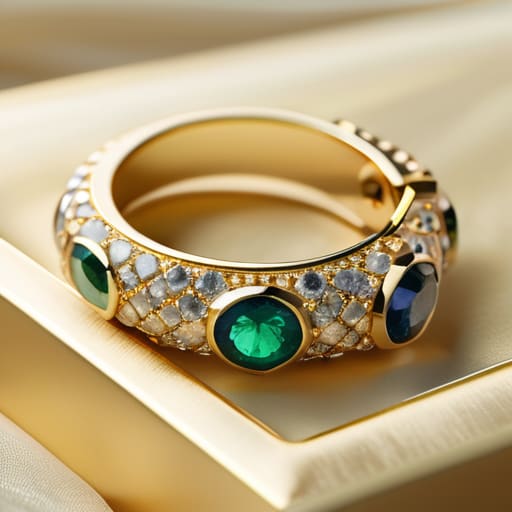
I spent six years hunched over a bench in a grading lab, staring through a loupe until my eyes burned, and if there is one thing I’ve learned, it’s that the jewelry industry loves to wrap simple minerals in layers of expensive nonsense. You’ll see shops claiming that certain hoops set with gemstones and what they can hold will fundamentally shift your personal energy or align your chakras, but let’s be honest: a stone is a physical object with a chemical composition, not a magic wand. I’ve seen stones the color of wet moss being sold as high-end emeralds when they were nothing more than treated glass, and frankly, the hype is exhausting.
I’m not here to sell you on mysticism or tell you that a piece of quartz will solve your problems. What I am going to do is give you the actual science behind the stones in those hoops—what they are made of, how to spot a synthetic fake, and how to tell if the cut is actually worth the price tag. I’ll help you understand the physical reality of your jewelry, and once you know what you’re actually wearing, what you choose to believe about them is entirely up to you.
The Raw Truth About Gemstone Hoop Earrings and What They Can Hold
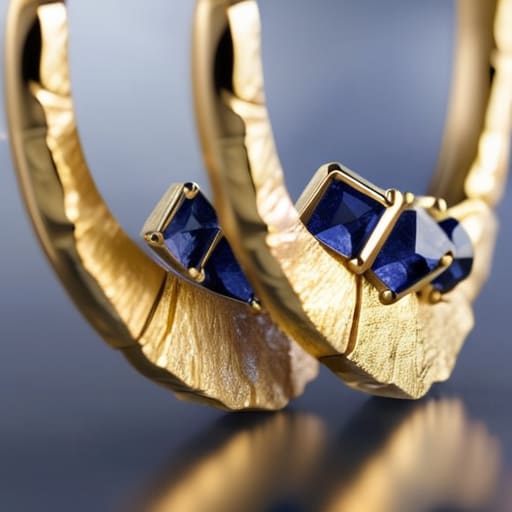
When you look at a pair of gemstone hoops, you aren’t just looking at a piece of jewelry; you’re looking at a specific mineral held in place by metal. Most of what you see in shop windows falls into two camps: precious stones like sapphires or semi-precious minerals like labradorite or quartz. If you’re looking at a pair of deep blue hoops, I want you to check if that blue looks like the ocean after a storm—dark, saturated, and slightly opaque—or if it’s a glass imitation that looks too perfectly uniform. Real stones have inclusions, tiny internal “birthmarks” that tell you they grew in the earth rather than being poured in a factory.
The way the stone is gripped matters just as much as the chemistry. You’ll mostly see bezel vs prong settings for hoops when browsing. A bezel setting wraps the metal entirely around the edge of the stone, which is great if you want something sturdy that won’t snag on a sweater. Prongs, on the other hand, lift the stone up, letting more light hit the facets. I’ve spent years looking at different jewelry mounting styles for hoops, and I always tell people: the setting is just the stage. Whether you want a heavy gold bezel to protect a turquoise or delicate prongs to show off a diamond, the metal is there to serve the stone.
Distinguishing Real Treasures From the Fakes Youre Being Sold
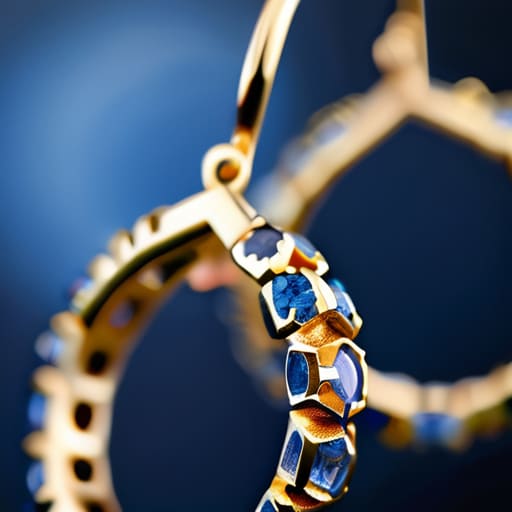
When you’re looking at gemstone earring settings, your eyes can easily be tricked by a well-polished surface. If you’re eyeing a pair of hoops and the color looks too uniform—like a piece of plastic dipped in dye—be suspicious. Real stones have inclusions, tiny internal landscapes that tell their geological story. For instance, a natural sapphire shouldn’t look like a perfectly clear blue bead; it should have character, perhaps a slight silkiness that looks like frozen mist on a fjord. If the stone looks too perfect, it’s likely glass or a lab-grown synthetic.
The way the stone is held also tells you something about its quality. I often see a distinction in the jewelry mounting styles for hoops; high-end pieces usually opt for a bezel vs prong setting for hoops depending on the stone’s hardness. A soft stone like an opal needs the protection of a bezel to keep it from chipping, whereas a hard diamond or sapphire can sit proudly in prongs. If the stone seems to be “floating” in a cheap, flimsy metal frame, it’s a sign the maker wasn’t prioritizing the stone’s longevity.
Choosing the Right Types of Stones for Hoop Earrings
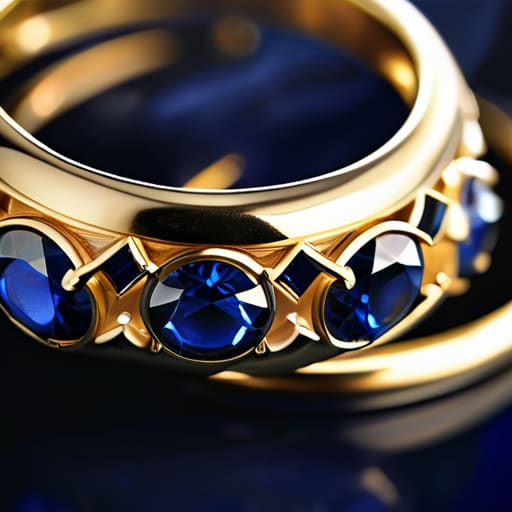
When you’re looking at different types of stones for hoop earrings, you have to think about more than just the color. I always think about how the light hits the facet. If you’re picking something like a sapphire, you want a stone that has a depth to it—something that looks like the deep, dark navy of the North Sea just before a storm. For smaller hoops, I usually lean toward stones with high durability, like garnets or sapphires, because they can handle the constant movement and occasional bumps against your jawline without losing their luster.
The way the stone is held is just as important as the mineral itself. If you choose a stone with a slightly irregular shape, you might find that bezel vs prong settings for hoops makes a massive difference in how the piece feels. A bezel setting wraps the metal around the edge, which is great if you want something smooth that won’t snag on your hair or a sweater. If you want the light to dance through the stone, though, you’ll want prongs to let that brilliance out. It’s all about whether you want a solid, protective feel or something that catches every stray beam of light.
Bezel vs Prong Settings for Hoops Which Holds Better
When you’re looking at different jewelry mounting styles for hoops, the first thing I always check is how much of the stone is actually being protected. If you’ve gone for a prong setting, you’re looking at those tiny metal claws that grip the edges of the gem. It’s a classic look that lets a lot of light in, which is great for making a faceted stone dance. However, those prongs can snag on a wool sweater or a silk scarf without warning. If you’re choosing stones that are a bit softer—think something like an opal that looks like wet sea glass—you might find those prongs a little precarious for everyday wear.
On the other hand, if you want something more robust, the bezel setting is your best friend. This is where a thin rim of metal completely encircles the stone, holding it tight against the hoop. It’s a much more secure way to secure your gems, and it creates a very clean, modern aesthetic. Because the metal covers the edge, it’s much harder to chip the stone or lose it to a stray thread. When comparing bezel vs prong settings for hoops, I usually suggest the bezel if you’re someone who lives an active life or if you’re wearing precious stone earring aesthetics that you don’t want to worry about every time you get dressed.
Mastering Precious Stone Earring Aesthetics for Your Own Style
Once you’ve settled on the stone and the metal, the final step is figuring out how it actually sits against your skin. To me, precious stone earring aesthetics aren’t about following a trend; they are about how the light hits the facet when you turn your head. If you are looking at something like a deep, teal sapphire—the color of the North Sea right after a storm—you might want a setting that lets the light dance through the pavilion. This is where you start weighing your options between different jewelry mounting styles for hoops.
If you prefer something that feels more grounded and architectural, you might lean toward more substantial, enclosed designs. Some people love the way a thick gold rim protects a stone, while others want that delicate, airy look where the gem seems to float. When exploring custom gemstone hoop designs, I always suggest thinking about your daily rhythm. Are these for a quiet morning coffee, or are they meant to catch the light at a dinner party? There is no wrong answer, as long as the stone feels like it belongs to you.
Navigating Jewelry Mounting Styles for Hoops Without the Nonsense
When you start looking at custom gemstone hoop designs, you’ll notice the metal is doing a lot more work than the marketing suggests. It isn’t just about looking pretty; it’s about structural integrity. If you’re leaning toward a delicate, thin hoop, you have to be careful with how the stones are anchored. A heavy, high-set stone on a flimsy wire is a recipe for a lost gem. I’ve seen too many people buy a beautiful pair only to have a stone pop out the moment they catch them in a breeze or a sudden movement.
The choice between different gemstone earring settings usually comes down to how much of the stone you actually want to see. If you want the light to hit the facets from every angle, you’ll want prongs, but they require a bit of maintenance to ensure the claws haven’t loosened. If you prefer something more streamlined, a bezel setting wraps the metal around the edge of the stone, making it feel like one solid piece. It’s a much more secure way to wear your stones if you lead an active life, and it keeps the profile of the hoop much smoother.
Designing Custom Gemstone Hoop Designs That Actually Last
If you’re moving away from off-the-shelf pieces and looking into custom gemstone hoop designs, you need to stop thinking about just the look and start thinking about the mechanics. I’ve spent enough hours under a loupe to know that a beautiful stone is useless if it’s constantly rattling or chipping because the metal wasn’t built to handle the weight. When you’re designing from scratch, you have to balance the visual weight of the stone against the gauge of the hoop itself. A heavy sapphire or a chunky garnet requires a sturdier foundation; otherwise, the hoop will warp and pull on your earlobe every time you move.
Don’t get caught up in purely decorative trends when deciding on your gemstone earring settings. If you are choosing stones that are prone to impact—think something like an opal or a softer turquoise—I always lean toward a bezel. It wraps the metal around the girdle of the stone like a protective hug. If you want that classic, light-catching look with prongs, make sure the jeweler is using enough of them to secure the stone without creating a snagging hazard. It’s about making sure the piece survives your daily life, whether that’s a busy workday or a quick dip in the ocean.
A Matter of Composition
A gemstone in a hoop isn’t a magic charm; it’s a specific arrangement of atoms held in place by metal. Whether you’re wearing a sapphire because you love its deep, Atlantic-tide blue, or because you think it brings luck, the physics remains the same: the stone’s hardness determines if it survives your life, and the setting determines if it stays with you.
Dagny Solheim
Final Thoughts on Your Hoops
We have covered a lot of ground, from the chemical reality of what makes a stone a gemstone to the mechanical reality of how a bezel setting keeps it from falling out. You now know that a sapphire isn’t just a blue spark; it is corundum, and if it looks like a piece of cheap sea glass, it probably is. Whether you are looking for a hard spinel that can handle daily wear or a softer stone that requires a more protective mounting, the goal is the same: understanding the physical limits of what you are buying. By paying attention to the setting, the stone’s hardness, and the way the metal holds the weight, you ensure that your investment doesn’t end up at the bottom of a drain or lost in a coat pocket.
At the end of the day, once you have verified the mineralogy and confirmed the craftsmanship is sound, the science stops and the personal part begins. Maybe these hoops are a piece of armor for a difficult meeting, or perhaps they are just a bit of color that reminds you of the ocean after a storm. I don’t care if you wear them for their geological history or because they make you feel powerful; I just want you to own something real. Buy the stone for what it is, wear it for what it means to you, and let the rest of the world worry about the mysticism.
