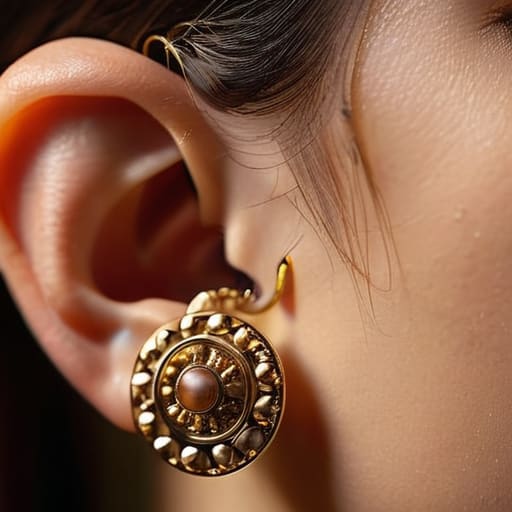
I remember sitting in the grading lab during my third year, staring through a loupe at a pair of heavy, teardrop-shaped labradorite studs. They were stunning—a deep, oily blue like the North Sea just before a storm—but as I leaned in, I noticed the client’s ears. The skin was pulled taut, a thin, angry red ring forming around the piercing. It’s a common mistake to get so caught up in the refractive index or the saturation of a stone that you forget the physics of the human body. People spend thousands on gemstones only to ignore the brutal reality of earring weight and what it does to the lobe, treating the jewelry as if it’s floating in a vacuum rather than hanging from living tissue.
I’m not here to sell you on “healing vibrations” or tell you that certain stones will magically lift your skin back into place. I’m going to give you the unvarnished truth about density, carat weight, and the structural limits of your anatomy. I’ll help you distinguish between a lightweight, high-refraction cubic zirconia and a heavy, dense natural sapphire so you can choose pieces that look incredible without causing permanent damage. Once you understand the math of the metal and the stone, what you decide to wear is entirely up to you.
The Heavy Truth About Earring Weight and What It Does to the Lobe
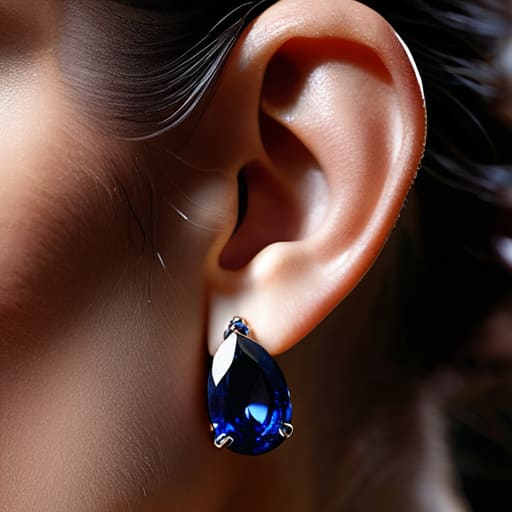
When you’re looking at a pair of statement earrings, you’re usually looking at the sparkle, not the mass. But once you actually put them on, gravity takes over. If you’re wearing large, solid pieces—think thick brass hoops or heavy labradorite drops—you’ll feel that pull almost immediately. It isn’t just a sensation; it’s mechanical stress. Over time, that constant downward tension affects earlobe elasticity and jewelry compatibility. If the stone is dense, like a garnet or a sapphire, it’s going to tug harder than a lightweight piece of glass or plastic.
I’ve seen people ignore that dull ache for too long. The danger isn’t just a bit of discomfort; you have to watch for the actual signs of earlobe tearing, like a thinning of the skin or a widening of the piercing hole that never seems to snap back. If you notice the hole looks more like an oval than a circle, your body is telling you the weight is too much. It’s about finding that balance between a stone you love and the physical reality of your anatomy.
How to Spot the Quiet Signs of Earlobe Tearing
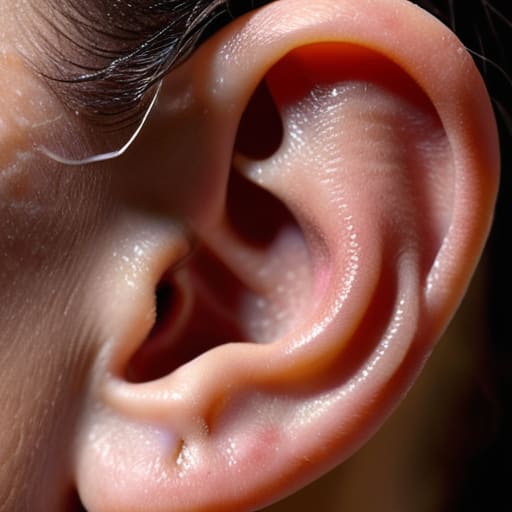
You won’t wake up one morning with a sudden rip in your ear, but the damage is usually a slow, quiet process. I always look for the subtle changes first. It starts with a slight, persistent ache—the kind you might mistake for a dull headache—or a strange, pulling sensation that feels like the skin is being tugged toward the floor. If you notice your piercing hole looking more like an oval than a circle, or if the skin around the entry point looks thin and shiny, like wet sea glass, you are seeing the early signs of earlobe tearing.
Another red flag is a loss of “snap.” When you touch the lobe, it should feel firm and spring back quickly. If it feels doughy or stays indented for a second after you press it, your earlobe elasticity and jewelry are no longer in a healthy balance. This loss of tension is a warning that the structural integrity of the tissue is failing. Once that elasticity goes, the skin loses its ability to hold the weight, and that is when the real risk of a tear begins.
The Real Physics of Earlobe Elasticity and Jewelry
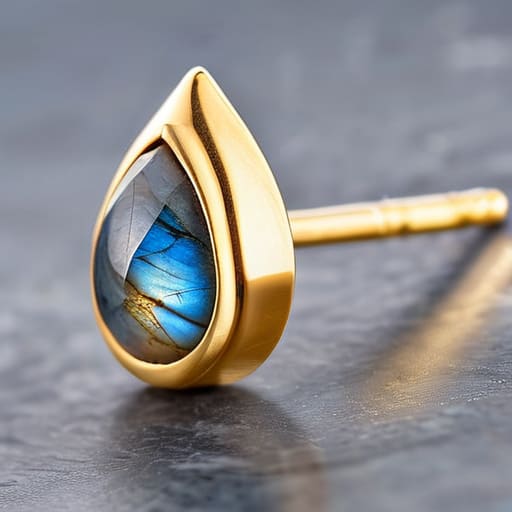
Think of your earlobe like a piece of wet, heavy leather left out in the rain. It has a certain amount of structural integrity, but that integrity relies on the collagen and elastin fibers holding everything in place. When you hang a heavy pair of labradorite drops or dense garnet studs in a piercing, you aren’t just wearing jewelry; you are applying a constant, downward gravitational pull on those fibers. If the weight exceeds what the tissue can support, those microscopic fibers begin to micro-tear. This is the core of earlobe elasticity and jewelry—it’s a tug-of-war between the density of the mineral and the biological limits of your skin.
Once those fibers snap or overstretch, they don’t just “bounce back” like a rubber band. Instead, they undergo permanent deformation. This is why people often worry about heavy jewelry piercing damage; the damage isn’t always a sudden rip, but a slow, creeping thinning of the tissue. If you notice your piercing hole looking more like an oval than a circle, the physics have already shifted in favor of the stone.
What Heavy Jewelry Piercing Damage Looks Like Under the Surface
When I was working in the lab, I spent hours looking at microscopic inclusions in sapphires, but I’ve learned that the most telling fractures aren’t always in the stone—they’re in the tissue holding it. If you look closely at a piercing that’s been under constant tension, you might see more than just a larger hole. You’ll see a change in the texture of the skin, almost like the way a piece of shale looks when it starts to delaminate. The skin can become thin, shiny, and translucent, losing that healthy, matte quality. This is one of the subtle signs of earlobe tearing that most people miss until the skin actually gives way.
Beyond the surface, the internal structure of the lobe begins to change. The collagen fibers, which act like the structural matrix in a fine crystal, start to pull apart and lose their ability to snap back. This loss of earlobe elasticity and jewelry compatibility means the tissue becomes more prone to micro-tears. You might notice a slight redness or a feeling of warmth, similar to the color of a garnet after it’s been pulled from a cold stream. If you see this, it’s a signal to switch to something lighter immediately.
Practical Ways of How to Reduce Earring Weight
If you’ve already fallen in love with a pair of heavy statement pieces, you don’t necessarily have to leave them in the jewelry box. The simplest trick is to swap out the backing. Those standard butterfly backs often pull the metal against the skin, creating a lever effect that increases the strain. Switching to threaded or screw-back posts provides a more secure, centered anchor that distributes the load more evenly. I also suggest looking at the post length; if the post is too long, the stone will tilt, putting uneven pressure on the hole.
Another way to tackle how to reduce earring weight is to rethink the material of the setting itself. A heavy, solid gold or platinum casting might look stunning, but it’s essentially a dead weight hanging from your skin. Look for hollowed-out settings or lighter metals like titanium if you want the visual impact without the physical toll. If you notice any redness or thinning, take it as a cue to switch to studs for a few weeks. It’s all about managing that tension to protect your earlobe elasticity and jewelry longevity.
A Guide to Effective Earlobe Stretching Prevention
If you’ve noticed your holes looking a bit more like teardrops than circles, don’t panic, but do pay attention. Effective earlobe stretching prevention starts with a change in how you view your jewelry collection. I’ve spent years looking at mineral structures under a loupe, and I see a similar logic here: it’s all about tension and recovery. If you feel that familiar, dull ache after a few hours, your skin is telling you it’s reached its limit. This is the time to pivot toward lighter studs or hollow-core gold pieces to help with how to reduce earring weight on the tissue.
If you are already dealing with some minor sagging, the goal shifts toward stability. You can’t “fix” a tear with a crystal, but you can manage the environment. Focus on healing stretched earlobes by giving them frequent breaks—think of it like letting a muscle rest after a heavy lift. Avoid wearing heavy metals or dense stones for a few weeks, and if you notice any redness or thinning, go back to the basics with lightweight titanium or small, high-quality studs.
The Honest Path Toward Healing Stretched Earlobes
If you’ve already seen the signs of earlobe tearing—that telltale thinning of the skin or a hole that looks more like a slit than a circle—the first thing you need to do is stop the gravity from winning. I’ve spent years looking at microscopic inclusions in stones, and I can tell you that once a structure is compromised, it needs stability to recover. This means a total moratorium on heavy jewelry. You aren’t just resting your ears; you are allowing the collagen fibers to attempt a rebuild without being constantly pulled toward the floor.
The process of healing stretched earlobes isn’t about magic; it’s about patience and reducing tension. I suggest switching to lightweight titanium studs or even small, hollow hoops that don’t put pressure on the piercing site. If you’ve been ignoring the heavy jewelry piercing damage for a while, the tissue might feel tender or look slightly shiny and translucent, like a pebble smoothed by a river. Treat the area with saline, keep it clean, and most importantly, stop testing the weight of your collection for a few months. Let the biology do its work.
## Gravity and the anatomy of an earring
“A gemstone doesn’t care about the physics of your skin, but your earlobes certainly do; whether it’s a heavy piece of labradorite or a dense chunk of quartz, gravity is always pulling, and eventually, the tissue will either hold its shape or start to yield like wet sand.”
Dagny Solheim
Finding your balance
At the end of the day, it comes down to the math of your own anatomy. We’ve looked at how gravity pulls on the collagen fibers, how to spot that tell-tale redness before a tear actually happens, and the practical ways you can swap out heavy, solid gold clusters for something lighter without losing the aesthetic. Whether you are dealing with the slow stretch of daily wear or trying to heal tissue that has already been pushed too far, the goal is the same: respecting the limits of your skin. You don’t have to stop wearing beautiful things, but you do need to listen to what your body is telling you through that dull ache or the way your lobes sit when you look in the mirror.
I spent years looking at stones through a loupe, obsessed with their hardness and their chemical makeup, but even the most beautiful sapphire isn’t worth a permanent injury. Jewelry is meant to be an extension of who you are, not a burden you have to endure. If you choose to wear heavy pieces, do it with your eyes open and a plan in place. If you decide to scale back, do it because you value your comfort. Ultimately, the most precious thing you own isn’t the gemstone in your ear, but the physical self that carries it. Wear what makes you feel like yourself, but keep the weight in check.
