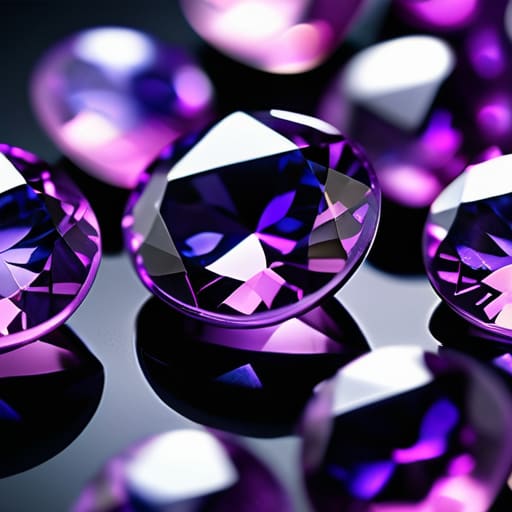
I spent six years hunched over a bench in a grading lab, staring through a loupe until my eyes felt like they were full of sand. I’ve seen it all: people paying a premium for “mystical” violet stones that are actually just dyed glass or low-grade quartz. It’s frustrating because the market is saturated with hype, making it hard to find actual substance when you’re looking for purple gemstones beyond amethyst. Most people think purple means amethyst, and if it isn’t that, it must be something “rare” or “magical,” but the truth is usually much more interesting than the sales pitch.
I’m not here to sell you on the energy of a stone or promise you that a crystal will change your life. My goal is to tell you what these minerals are actually made of—their hardness, their chemistry, and their true color—so you don’t get swindled. I’ll show you how to distinguish a genuine Tanzanite from a cheap imitation, and how to spot a real Kunzite when it looks like a piece of grape jelly. Once you know the science, what you do with them is entirely up to you.
Understanding Purple Gemstones Beyond Amethyst
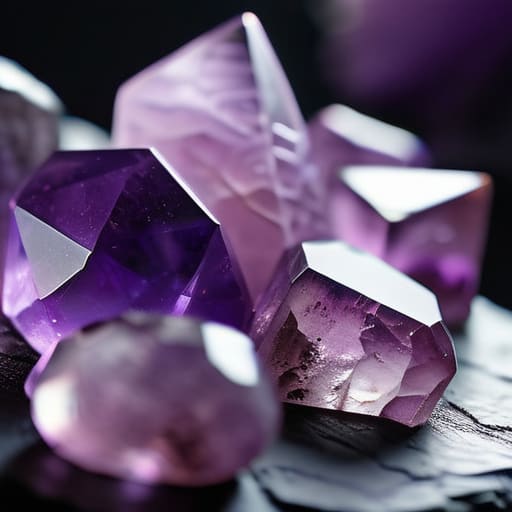
When you start looking past the mass-market amethyst, you realize that purple isn’t just one single note; it’s a whole spectrum of chemistry. Some stones get their hue from trace amounts of iron, others from manganese, and a few from radiation hitting the crystal lattice. This is why you see such a massive range in saturation. You might find a piece of fluorite that looks like a pale, misty morning on a fjord, or a sapphire that holds a color so intense it reminds me of a bruised sky just before a storm.
If you are building a deep violet gemstone collection, you have to look at the structural details. For instance, when examining lavender fluorite characteristics, I always look for that specific cubic cleavage that tells me it’s the real deal and not some dyed glass. Then you have the harder hitters, like the purple sapphire varieties that can withstand a lifetime of wear in a ring without losing their luster. Each stone has its own specific hardness and light refraction, which is far more interesting to me than any supposed “energy” it might hold.
Key Things to Know
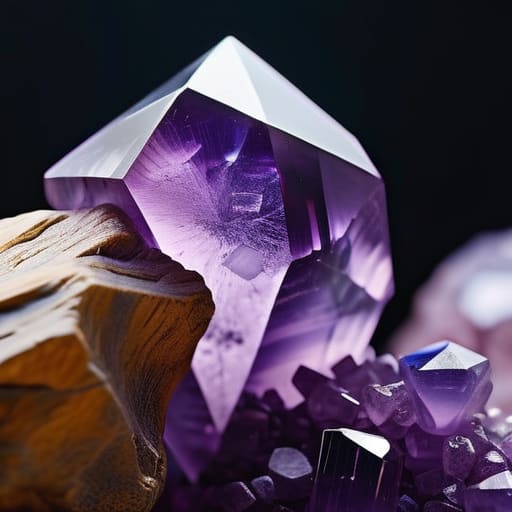
First, you need to look at the chemistry. Most people think “purple” is a single category, but in a lab, it’s a spectrum of different atomic structures. For instance, if you are looking at lavender fluorite characteristics, you’re seeing calcium fluoride that has been slightly altered by radiation or impurities. It’s a soft stone—only a 4 on the Mohs scale—so it won’t survive a rough life in a ring. On the other end, you have corundum, which gives us those incredibly tough purple sapphire varieties. One is a delicate, translucent crystal; the other is a hard, durable mineral that can take a beating.
You also have to watch out for the “deal” that looks too good to be true. I’ve seen plenty of glass-dyed quartz being sold as high-end specimens. When I look through my loupe, I’m checking for how the color sits within the crystal structure. In a real stone, the color is part of its identity, not something painted on the surface. If the hue looks like wet grape soda—too uniform and too bright—it’s likely a synthetic or a treated piece rather than a genuine mineral.
Practical Tips and Steps
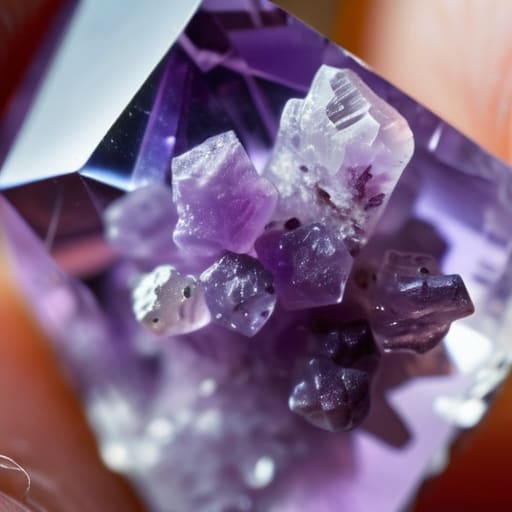
When you’re sitting there with a stone in your hand, don’t just take the seller’s word for it. Start with a simple loupe—the same kind I used to use for six years in the lab. If you’re looking at what’s being sold as purple sapphire varieties, look for those tiny, natural inclusions. A stone that is too perfect, too “clean,” is often just glass or a synthetic. If you find yourself looking at something that looks like a cluster of soft, lilac-colored cubes, you’re likely seeing lavender fluorite characteristics. Check the hardness; fluorite is soft, so if it scratches easily, it’s probably the real deal, but if it’s stubborn, you might have something else entirely.
If you are trying to build a deep violet gemstone collection, keep a small notebook. Record the light refraction and how the color shifts when you tilt it. I always look for how the color behaves when it’s “wet”—does it look like a deep, saturated bruise, or a pale, washed-out lilac? This habit helps you distinguish between genuine rare violet mineral specimens and cheap, dyed quartz. Once you know what you’re holding, the rest is up to you.
Common Mistakes to Avoid
The biggest mistake I see is people assuming that “purple” is a single category. In the lab, I’ve seen collectors spend a fortune on what they thought were rare violet mineral specimens, only to realize they’ve bought glass or dyed chalcedony. If a stone has a color that looks too uniform—like a bucket of purple paint—be suspicious. Real stones have internal life. Even in purple sapphire varieties, you should expect to see subtle shifts in saturation or tiny inclusions that tell the story of how the crystal grew.
Another trap is ignoring the physical reality of the stone in favor of its supposed “energy.” I don’t care if you use a stone for meditation or as a paperweight, but you shouldn’t let the marketing blind you to the chemistry. For instance, someone might hunt for exotic purple quartz types based on a spiritual description, only to find they’ve purchased a soft, fragile material that won’t survive being worn in a ring. Always check the Mohs hardness scale before you commit; a beautiful stone is no good to you if it turns to dust in your pocket.
Final Thoughts
At the end of the day, whether you are hunting for rare violet mineral specimens to display in a cabinet or looking for a ring that won’t scratch when you hit it against a desk, the goal is the same: knowing what you actually hold in your hand. I’ve spent enough hours under a microscope to know that the market is flooded with glass and dyed quartz, but the real treasures—the ones with actual geological grit—are well worth the effort.
If you decide to start a deep violet gemstone collection, do it because you love the way the light hits a specific facet or the way a stone looks like a bruised plum after a heavy rain. You don’t need a degree in mineralogy to appreciate them, but a little bit of skepticism goes a long way. I’ll give you the science so you don’t get swindled, but once the stone is in your palm, the magic is entirely up to you. Whether it’s a piece of lavender fluorite or a high-end sapphire, just make sure you know exactly what you’re paying for.
On the nature of purple
Most people see a purple stone and immediately think of amethyst, but once you look past that one common crystal, you realize the spectrum is much wider—from the deep, bruised violet of tanzanite to the pale, washed-out lavender of fluorite. I don’t care if you bought it for its chemical stability or because you think it holds a certain energy; I just want you to know exactly what you’re holding in your hand.
Dagny Solheim
Wrapping It All Up
At the end of the day, finding a purple stone that isn’t amethyst comes down to knowing your chemistry. Whether you are hunting for the deep, ink-stained violet of a Tanzanite or the soft, bruised-plum hue of Kunzite, remember to check the hardness and look closely at how the light interacts with the crystal structure. Don’t let a shiny surface or a low price tag trick you into buying glass or dyed quartz; always verify the mineral identity before you open your wallet. I’ve spent enough hours behind a loupe to know that the real value lies in the stone’s actual composition, not the marketing story wrapped around it.
Once you’ve done the homework and confirmed you have a genuine piece of the earth in your hand, the science ends and your journey begins. Maybe you want to study its refractive index, or maybe you just want to hold a piece of something that looks like the dark, swirling tide against a Norwegian cliffside at dusk. I don’t care if you see it as a geological marvel or a source of personal comfort. Just make sure that what you are holding is honest, real, and exactly what you thought it was.
