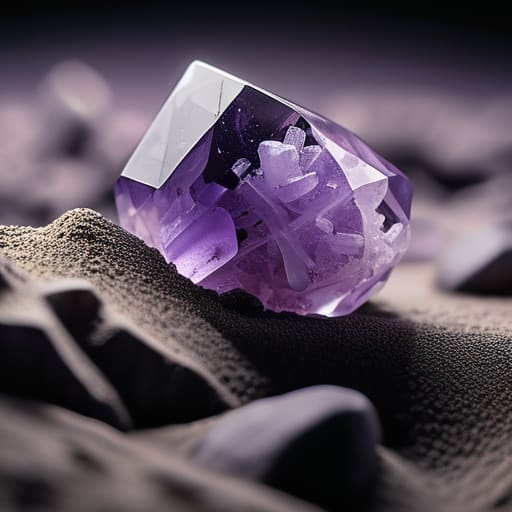
I spent six years hunched over a bench in a grading lab, staring through a loupe until my eyes felt like they’d been scrubbed with sand. I’ve seen it all: the glass-paste fakes, the heat-treated tricks, and the endless, flowery marketing fluff that tries to turn a simple mineral into a spiritual miracle. Most people walk into a shop looking for that perfect, misty violet, but they often get sold a lie because the market is flooded with dyed quartz or low-grade amethyst that looks more like a bruised grape than a delicate petal. When you start looking into lavender gemstones and how rare the colour is, you quickly realize that the true, pale violet hues are far harder to find than the shopkeepers want you to believe.
I’m not here to sell you on “energy” or tell you a stone will change your life, though if it makes you happy, that’s your business. What I am going to do is give you the actual geology. I’ll show you which minerals actually produce that specific, washed-out lavender shade—the kind that looks like a pale sky just after a rainstorm—and how to spot the difference between a natural rarity and a cheap, chemically-tinted imitation.
Understanding Lavender Gemstones and How Rare the Colour Is
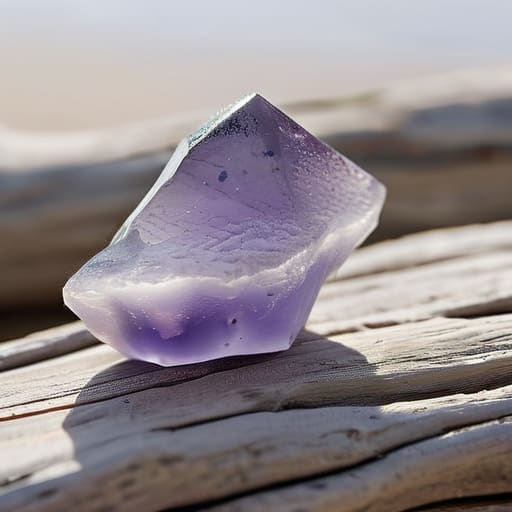
When we talk about lavender in the mineral world, we aren’t looking for the saturated, royal purples that jump out at you. I’m looking for that specific, desaturated shade—the color of the North Sea just before a storm breaks, or a piece of sea glass that’s been tumbled by the tide until it’s soft and milky. This particular part of the gemstone color spectrum rarity is tricky because it sits right on the edge of being “colorless.” In a lab, you see it often: stones that are technically purple but lack the punch to be called violet.
The truth is, finding true lavender in high-end stones is a bit of a scavenger hunt. You’ll often find yourself weighing the merits of lavender amethyst vs sapphire; while amethyst is plentiful, finding it in that specific, pale, misty tone requires a certain luck in the geological formation of purple gems. Most people want the loud, neon colors, so the subtle, quiet stones often get overlooked. They aren’t “weak” stones; they just require a more patient eye to appreciate the way the light sits inside them.
Key Things to Know
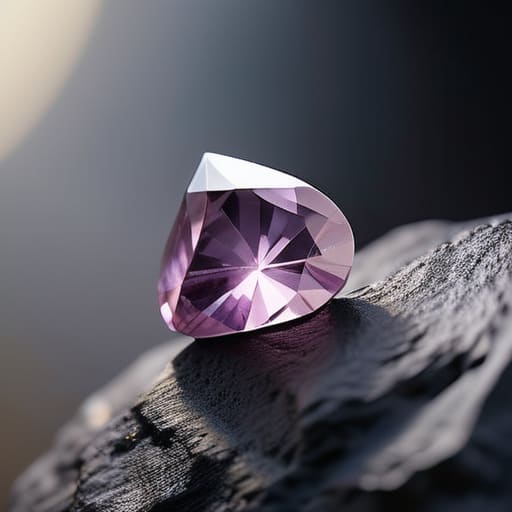
First, you need to understand that “lavender” isn’t a single mineral; it’s a shade. In my time in the lab, I’ve seen that color pop up in wildly different structures, from quartz to spinel. When you are looking at light purple precious stones, the first thing I check is the clarity and the way the light hits the inclusions. A real lavender amethyst, for instance, should look like a pale lilac sky just before a storm—soft, but with a certain depth. If it looks like a piece of washed-out grape candy, it’s likely been heat-treated to force a color that the crystal lattice didn’t want to hold in the first place.
You also have to be wary of the market’s tendency to conflate everything. I often see people comparing lavender amethyst vs sapphire without realizing they are looking at two different worlds of chemistry. A sapphire’s purple comes from trace amounts of iron or titanium, whereas amethyst is all about irradiation in the earth. If you find a stone that claims to be a rare violet mineral specimen but looks too uniform, it’s probably glass. A natural lavender hue in jewelry usually has tiny, imperfect variations in saturation that make it feel alive.
Practical Tips and Steps
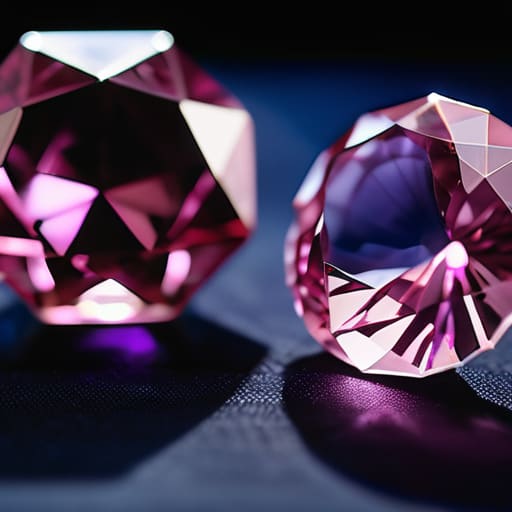
When you’re sitting at a jeweler’s bench or just browsing a shop window, don’t let the marketing speak for you. If you’re looking for something truly special, start by asking for the stone’s origin and its specific mineral name. A common pitfall is confusing a treated quartz with a genuine lavender amethyst vs sapphire comparison; one is a common variety of silica, while the other is a corundum that requires specific trace elements to achieve that shade. I always suggest looking at the stone under a steady light—ideally natural sunlight—to see if the color sits within the crystal or if it looks like a surface stain.
If you are hunting for rare violet mineral specimens, keep an eye on the saturation. Real lavender hues tend to have a certain depth, much like the color of the North Sea just before a storm hits. If the purple looks too uniform or “neon,” it’s likely a synthetic or a glass imitation. Check the inclusions under a loupe; natural stones will have tiny, characteristic imperfections that tell the story of their geological formation. If it looks too perfect to be true, it probably is.
Common Mistakes to Avoid
The biggest mistake I see is people assuming that a soft, lilac shade automatically means a stone is high-value or rare. In the trade, we often see “lavender” used as a catch-all term for anything that isn’t quite blue or quite pink. This leads to a lot of confusion, particularly when people are comparing lavender amethyst vs sapphire. Amethyst is quite easy to find in these shades, but it’s a different beast entirely from a true violet sapphire. If you see a stone that looks like a pale, washed-out grape—almost like a bruised sky after a storm—check the hardness. If it scratches easily, it isn’t the precious gem you think it is.
Another pitfall is falling for heat-treated stones that have been forced into a specific tint. Some sellers use irradiation to push a stone toward a certain part of the gemstone color spectrum rarity, but the result often looks unnatural and static. A genuine, natural lavender hue in jewelry usually has a bit of life to it; it shifts slightly as you move it under the light, much like the color of a shallow tide pool. If the color looks too perfect, too uniform, or like it was painted on, walk away.
Final Thoughts
At the end of the day, whether you are looking for a centerpiece for a ring or just a small piece of polished quartz for your desk, knowing the difference between a lab-grown tint and a natural lavender hue in jewelry matters. I’ve spent enough hours under a microscope to know that the most beautiful stones aren’t always the ones with the most intense saturation. Sometimes, it is that subtle, washed-out look—like a piece of sea glass after a storm—that tells you the stone is genuine.
If you find yourself staring at a tray of stones, don’t feel pressured to hunt for perfection. The geological formation of purple gems is a messy, unpredictable business, and that unpredictability is exactly why they are interesting. Whether you are collecting rare violet mineral specimens or just a handful of light purple precious stones, remember that the chemistry is what stays constant. You know what the stone is, and you know its history. What you choose to do with that knowledge—and that stone—is entirely up to you.
The Reality of the Hue
Most people call any pale purple stone ‘lavender’ to make it sound more poetic, but in the lab, we know that true lavender saturation is a geological accident. You aren’t just looking for a color; you’re looking for a specific chemical trace that happened to survive the heat and the pressure.
Dagny Solheim
A Final Look at the Lavender Spectrum
At the end of the day, finding a stone with that specific, pale violet tint is more about understanding chemistry than chasing a trend. Whether you are looking at a genuine amethyst, a rare lavender jadeite, or a spinel, the key is to look past the marketing and focus on the mineralogical reality. Remember to check the hardness, observe how the light interacts with the inclusions, and never be afraid to ask for a certificate if the price seems too good to be true. If you can distinguish a natural lavender hue—which often looks like the faint, misty purple of a shoreline at dusk—from a glass-dyed imitation, you’ve already won half the battle.
Whether you intend to set these stones into a bespoke piece of jewelry or simply keep them in a velvet pouch on your nightstand, the value is yours to define. I don’t care if you see them as a geological marvel or a source of quiet comfort; to me, there is something deeply satisfying about holding a piece of the earth that managed to capture such a delicate, fleeting shade. Once you know what you are holding, the stone belongs to you. Go find your own piece of the spectrum.
